
Halley’s comet may be named after the wrong person
- Date:
- May 13, 2026
- Source:
- Leiden University
- Summary:
- A medieval monk may have beaten Edmond Halley to one of astronomy’s greatest discoveries by nearly 700 years. Researchers say Eilmer of Malmesbury recognized that the blazing comet seen in 1066 was the same one he had witnessed in 989. At the time, comets were viewed as terrifying omens tied to war and royal deaths, adding even more drama to the famous celestial event shown in the Bayeux Tapestry. The discovery is sparking debate over whether Halley’s Comet deserves a different name.
- Share:
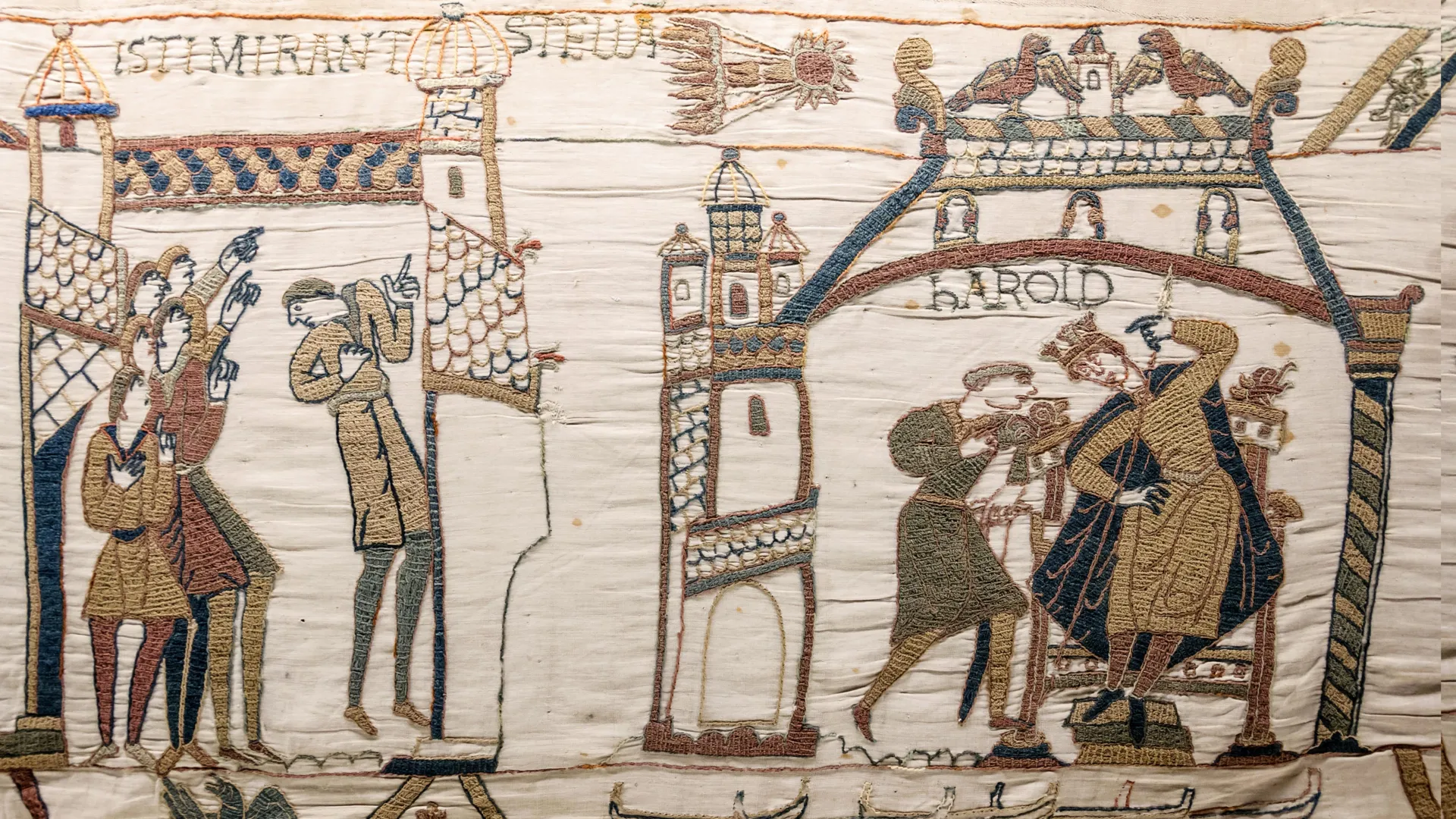
Researchers say the famous comet known as Halley's Comet may have been identified as a repeating object centuries before British astronomer Edmond Halley gave it his name. According to new research involving Professor Simon Portegies Zwart, an English monk named Eilmer of Malmesbury appears to have recognized that the same comet returned to the skies decades apart during the 11th century.
The discovery comes from accounts written by the 12th century historian William of Malmesbury. Although scholars have long known about the writings, researchers say the significance of the descriptions was overlooked until now. Portegies Zwart and researcher Lewis argue that the monk, also known as Aethelmaer, witnessed the comet during two separate appearances and understood they were connected events.
Their work appears in the book 'Dorestad and Everything After. Ports, townscapes & travelers in Europe, 800-1100'.
Edmond Halley and the Famous Comet
Edmond Halley later became famous for identifying the periodic nature of the bright comet now officially called 1P/Halley. He concluded that the comets recorded in 1531, 1607, and 1682 were actually the same object returning roughly every 76 years.
That discovery eventually led to the comet being named after him.
Halley's Comet Over Medieval Europe
The comet's appearance in 1066 drew attention across much of the world. Historical records show it was observed in China for more than two months. Although the comet reached peak brightness on April 22, 1066, it was not visible in Brittany and the British Isles until April 24.
The comet became one of the most famous symbols associated with the year 1066 and even appears in the Bayeux Tapestry, the medieval artwork depicting the Norman conquest of England.
Medieval Fears and Royal Omens
Halley's Comet crossed the skies during the short reign of King Harold Godwinson, who ruled England from January 6 to October 14, 1066. Research by Portegies Zwart and Lewis found references to comet sightings on five occasions during the surrounding centuries.
At the time, comets were widely viewed as warnings of disaster. Oral traditions linked them to famine, war, and the deaths of kings throughout the British Isles. The researchers also point to reports of another comet connected to the death of Archbishop Sigeric of Canterbury in 995, even though no such comet appears in surviving chronicles. They suggest this may represent a medieval form of "fake news," or perhaps an exaggerated story intended to frighten people with warnings of divine punishment.
By 1066, Eilmer (or Aethelmaer) of Malmesbury was likely already an old man. When he saw the comet return, he reportedly realized he had witnessed the same object decades earlier in 989. As was common during the medieval period, the king was warned that the comet signaled approaching catastrophe.
Calls To Reconsider the Comet's Name
The researchers believe the comet's history raises questions about whether it should continue carrying Halley's name, since earlier observers may already have recognized its repeated appearances centuries before Halley's work.
Portegies Zwart said: "This research was great fun to do, but I also found it challenging to work within such an interdisciplinary project alongside a historian. Nevertheless, we plan to carry out further research into this kind of periodic comet."
Story Source:
Materials provided by Leiden University. Note: Content may be edited for style and length.
Cite This Page: