
2700-year-old teeth reveal the hidden lives of Iron Age Italians
Ancient teeth from Iron Age Italy have uncovered childhood hardships, diverse diets, and even a taste for fermented foods—2,700 years later.
- Date:
- March 4, 2026
- Source:
- PLOS
- Summary:
- Iron Age teeth from southern Italy have become time capsules, preserving intimate details of childhood and diet. Growth lines in the enamel reveal moments of early-life stress, while hardened plaque holds microscopic remains of cereals, legumes, and fermented foods. The findings suggest a community with diverse food resources and strong Mediterranean connections. Even a small sample offers a striking glimpse into how people lived, grew, and ate nearly three millennia ago.
- Share:
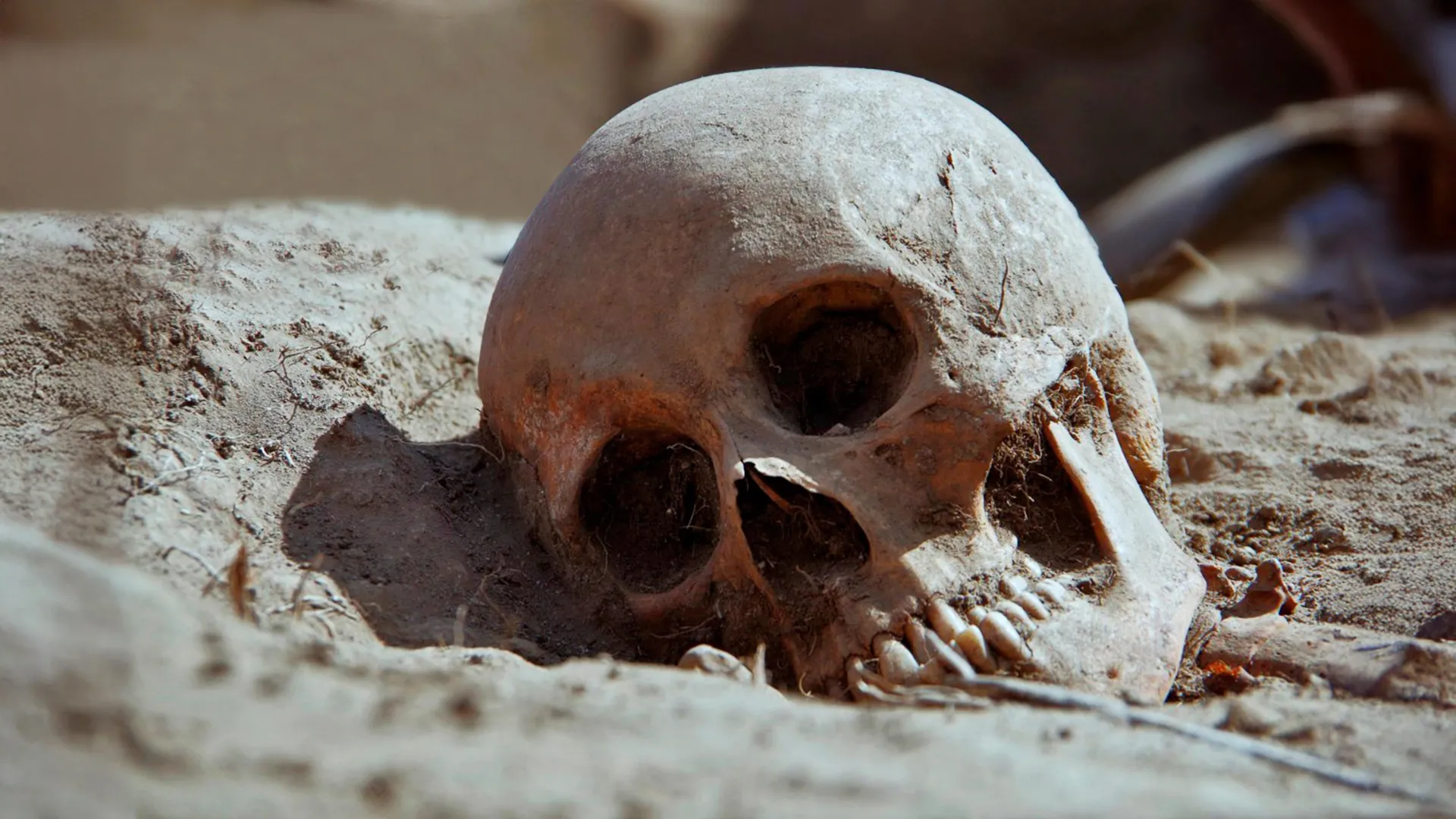
Teeth can hold remarkable clues about how people lived thousands of years ago. A new study published in the open access journal PLOS One, led by Roberto Germano of Sapienza University of Rome and colleagues, shows how the teeth of Iron Age Italians preserve detailed evidence about their health, diet, and early life experiences.
Understanding daily life in ancient cultures depends on reliable biological records. Teeth are especially valuable because they are extremely durable and retain microscopic signs of growth and change. By combining several types of dental analysis, the researchers examined individuals buried at Pontecagnano, an Iron Age site in southern Italy dating to the 7th and 6th centuries BC.
Childhood Stress Recorded in Dental Growth
The team studied growth patterns in the dental tissue of 30 teeth from 10 individuals. By comparing canine and molar teeth, they reconstructed patterns of development during the first six years of life. The enamel showed subtle disruptions around one year and again around four years of age. These stress signals likely reflect sensitive stages of early childhood, when shifts in diet and behavior can increase vulnerability to illness.
Iron Age Diet Revealed in Dental Plaque
The researchers also analyzed dental plaque, known as calculus, to uncover what these individuals ate as adults. Inside the hardened plaque, they found microscopic remains of cereals, legumes, plant fibers, and yeast spores. The findings point to a carbohydrate rich diet and provide strong evidence that fermented foods and beverages were regularly consumed.
These results are consistent with earlier research suggesting that contact with Mediterranean cultures expanded available food resources during this period. The evidence supports the idea that Iron Age communities in this region were adapting to changing environmental and social conditions.
First Histological Data From Pontecagnano
This research offers the first histological data from the Iron Age community of Pontecagnano. It also demonstrates how combining multiple dental techniques can generate detailed reconstructions of individual life histories. However, because the study included only 10 individuals, the findings should not be viewed as representative of the entire population. Instead, they provide in depth insights into specific lives.
The authors note that future research using larger sample sizes and additional tools such as isotopic analysis could significantly deepen our understanding of ancient communities.
Roberto Germano adds: "The teeth of Pontecagnano's Iron Age inhabitants opened a unique window onto their lives: we could follow childhood growth and health with remarkable precision and identify traces of cereals, legumes, and fermented foods in adulthood, revealing how this community adapted to environmental and social challenges."
Alessia Nava adds: "The study of the histomorphometry of deciduous and permanent teeth from individuals found in ancient necropolises makes it possible to go beyond the narrow focus on the period close to their death and brings to the forefront the life of each of them during their early years. This and other modern approaches represent a major technological and disciplinary advancement that is revolutionizing the study of the biocultural adaptations of past populations."
Emanuela Cristiani adds: "In the case of Pontecagnano, the analysis of dental calculus revealed starch granules from cereals and legumes, yeast spores, and plant fibers, providing a very concrete picture of the diet and some daily activities of these Iron Age communities, and offering strong evidence of the regular consumption of fermented foods and beverages."
Funding: Carmen Esposito (CE) was supported by the European Union's Horizon Europe programme under the Marie Skłodowska Curie Actions Postdoctoral Fellowship, Grant Agreement No. 101065320 (TULAR). Dental calculus analyses were carried out in a laboratory funded by the European Research Council (ERC) Starting Grant HIDDEN FOODS, Grant Agreement No. 639286 (PI: Emanuela Cristiani, EC). Alessia Nava (AN) received funding from the European Research Council (ERC) under the European Union's Horizon Europe program, Grant Agreement No. 101077348 (MOTHERS). Roberto Germano (RG) received support from the Environmental Biology Doctoral School, Sapienza University of Rome. The funders had no role in study design, data collection and analysis, decision to publish, or preparation of the manuscript.
Story Source:
Materials provided by PLOS. Note: Content may be edited for style and length.
Journal Reference:
- Roberto Germano, Owen Alexander Higgins, Emanuela Cristiani, Alessia Galbusera, Carmen Esposito, Dulce Neves, Carmine Pellegrino, Alessandra Sperduti, Giorgio Manzi, Luca Bondioli, Alessia Nava. Health and lifestyle in the Iron Age Italian community of Pontecagnano (Campania, Italy, 7th-6th century BCE). PLOS One, 2026; 21 (1): e0338448 DOI: 10.1371/journal.pone.0338448
Cite This Page: