
A simple blood test could detect multiple cancers and reveal where they started
A promising new UCLA blood test could one day act like a health radar, spotting multiple cancers and organ diseases early from a single vial of blood.
- Date:
- August 10, 2026
- Source:
- University of California - Los Angeles Health Sciences
- Summary:
- UCLA researchers have created a blood test that can scan DNA signals for multiple cancers, liver diseases, and signs of organ damage—and even indicate where trouble may be developing. Early results suggest the inexpensive approach could bring medicine closer to a single blood test capable of catching a wide range of diseases before they become harder to treat.
- Share:
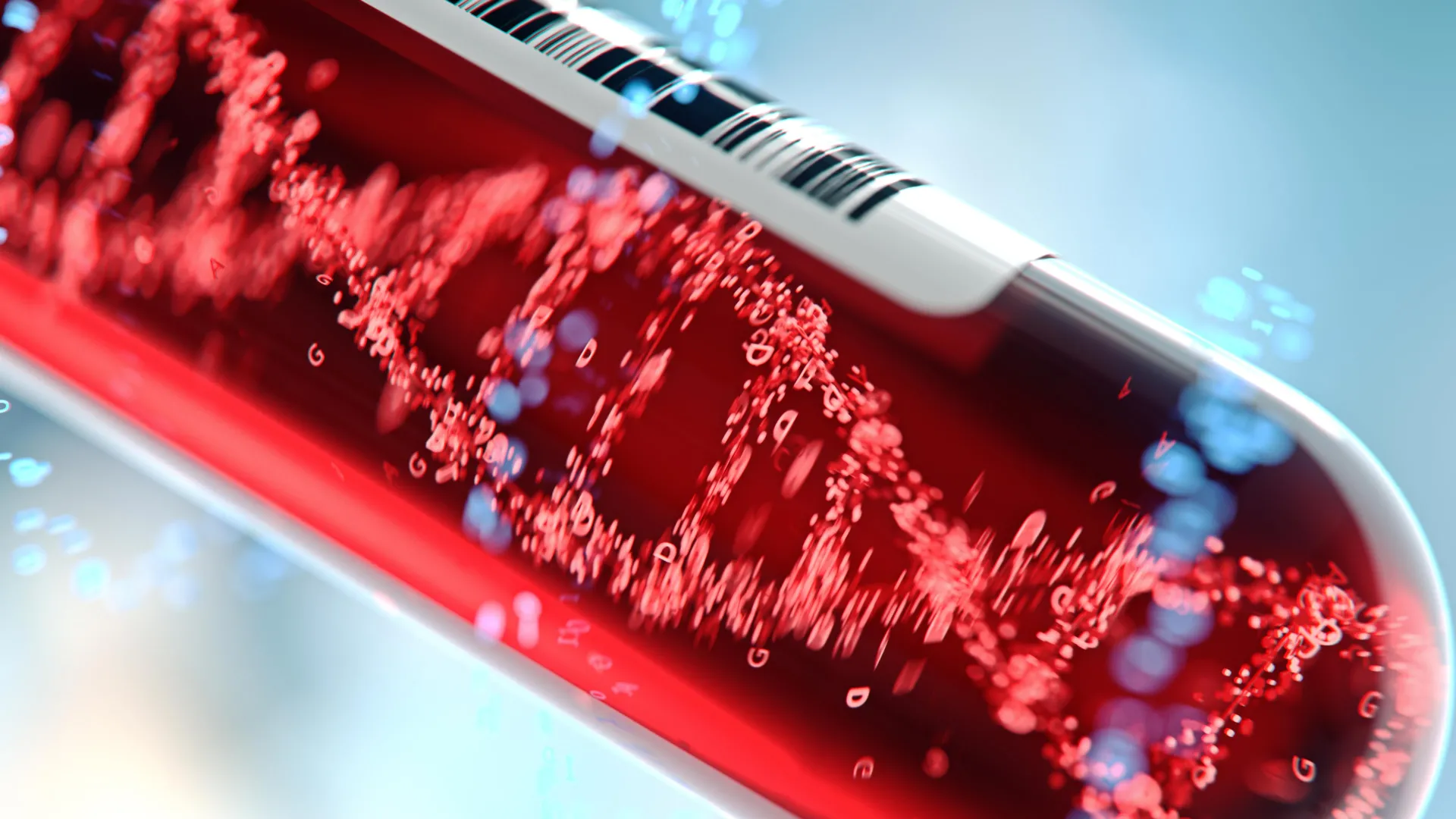
UCLA researchers have created a simple, relatively inexpensive blood test that showed promise in early studies for detecting several types of cancer, multiple liver diseases, and signs of organ problems at the same time. The approach works by examining fragments of DNA that circulate naturally in the bloodstream.
Described in the journal Proceedings of the National Academy of Sciences, the test could eventually provide a more affordable way to detect disease earlier while also giving doctors a broader picture of a person's health.
"Early detection is crucial," said Dr. Jasmine Zhou, the study's senior author, a professor of pathology and laboratory medicine and investigator at the UCLA Health Jonsson Comprehensive Cancer Center. "Survival rates are far higher when cancers are caught before they spread. If you detect cancer at stage one, outcomes are dramatically better than at stage four."
Reading Disease Signals in Blood
The new technique, known as MethylScan, analyzes cell-free DNA (cfDNA), small pieces of genetic material that enter the bloodstream as cells die. Since cells throughout the body release DNA into the blood, these fragments can contain molecular clues about the health of many different organs.
"Every day, 50 to 70 billion cells in our body die. They don't just disappear, their DNA goes into the bloodstream," Zhou said. "That means we already have information from all our organs circulating in the blood."
Using blood to look for cancer is not a new concept. These tests are sometimes known as liquid biopsies, and some existing methods search for mutations in DNA released by tumors. However, many of those tests examine only a limited set of genetic changes. They can also be costly because identifying weak cancer signals often requires extensive sequencing.
The UCLA researchers took a different approach. Rather than looking mainly for mutations, they focused on DNA methylation, chemical tags on DNA that help control gene activity. Different tissues have distinct methylation patterns, and those patterns can shift when cells become diseased or cancerous.
"DNA methylation reflects the health status of a tissue," said Dr. Wenyuan Li, a professor of pathology and laboratory medicine at UCLA and co-corresponding author of the study. "It's a very informative signal."
Filtering Out Background DNA
One of the biggest obstacles is that most cell-free DNA in blood does not come from tumors or damaged organs. Roughly 80% to 90% comes from normal blood cells. That overwhelming amount of ordinary DNA can obscure the much rarer fragments associated with early cancer, making them harder and more expensive to find.
To overcome this problem, the team built on past work and developed a way to remove much of the unwanted background DNA before sequencing begins.
Specialized enzymes are used to selectively cut away unmethylated DNA fragments, which largely originate from blood cells. The researchers also created a genome-wide hybridization panel that enriches the remaining sample for methylated DNA from solid organs, including organs that may be affected by disease.
Reducing this background noise means the test can rely on far less sequencing while still maintaining sensitivity, according to the researchers. Reaching an effective sequencing depth of 300× for each sample requires only 5 Gb of data. If sequencing costs remain below $4 per gigabase, that amount of data would cost less than $20.
Testing MethylScan in More Than 1,000 People
The researchers evaluated MethylScan using blood samples from 1,061 people. The group included patients with liver, lung, ovarian and stomach cancers; people with liver diseases such as hepatitis B, hepatitis C, alcohol-related liver disease and metabolic-associated liver disease; individuals with benign lung nodules; and healthy participants.
Machine learning algorithms were then used to interpret the complex methylation patterns found in the samples.
For detecting multiple cancers, MethylScan showed a high level of overall accuracy. At 98% specificity, meaning the test produced few false positives, it identified about 63% of cancers across all stages. Among early-stage cancers, it detected roughly 55%.
The method also performed strongly when used to monitor people at high risk for liver cancer, including individuals with liver cirrhosis or HBV. In this group, it detected nearly 80% of liver cancer cases at a specificity slightly above 90%, corresponding to a false positive rate of less than 10%.
Finding Where Cancer Signals Come From
MethylScan did more than identify the presence of cancer. The methylation patterns also provided information about the tissue of origin, helping researchers determine which part of the body was producing the abnormal signal.
"Being able to trace signals back to their source is important because a positive blood test needs to be followed by imaging or other diagnostic procedures directed at the right organ," said Li.
In that sense, MethylScan could function as a kind of health radar. By interpreting DNA signals circulating in the blood, the method can detect signs that organs such as the liver or lungs are stressed or damaged, even when researchers are not looking for one particular disease in advance.
The test also showed that it could tell different forms of liver disease apart. Researchers were able to distinguish conditions including viral hepatitis and metabolic-associated liver disease, correctly classifying about 85% of patients.
Those results suggest that blood-based DNA analysis could eventually reduce reliance on invasive liver biopsies for some patients.
Toward a Broader Blood Test for Disease
The researchers caution that larger prospective trials are still needed to determine how well MethylScan performs in real-world screening. Even so, Zhou said the findings represent progress toward a single affordable blood test capable of detecting many different diseases earlier and providing more comprehensive health information than current approaches.
"This study demonstrates that blood-based methylation profiling can deliver clinically meaningful information across multiple diseases," said Zhou. "It's an exciting advancement that brings us closer to realizing the dream of a single assay for universal disease detection."
Weihua Zeng, Shuo Li, and Yonggang Zhou from UCLA served as co-first authors.
The research was supported in part by grants from the National Cancer Institute.
Story Source:
Materials provided by University of California - Los Angeles Health Sciences. Note: Content may be edited for style and length.
Journal Reference:
- Weihua Zeng, Chun-Chi Liu, Shuo Li, Yonggang Zhou, Mary L. Stackpole, Ying Xiao, Ran Hu, Caitlin Tang, Qiao Liu, Wanwen Zeng, Angela Yeh, Andrew Melehy, Benjamin Tran, Zorawar Noor, Megumi Yokomizo, Dominic Amara, Shreya Gumate, Preeti Ahuja, David Yuanze Li, Junting Zhao, Inga Rose, Cattlena Walker, Sadaf Malik, Yazhen Zhu, Hsian-Rong Tseng, Edward B. Garon, Samuel W. French, Clara E. Magyar, Sarah M. Dry, Clara M. Lajonchere, Daniel Geschwind, Gina Choi, Sammy Saab, Akshay Shetty, Carrie R. Wong, Kevin G. King, David S. Lu, Steven S. Raman, Xiyan Xiang, Kirti Shetty, Lopa Mishra, Sanaz Memarzadeh, Yan Liu, Frank Alber, William Hsu, Kostyantyn Krysan, Steven M. Dubinett, Denise R. Aberle, Vatche Agopian, Steven-Huy B. Han, Wing Hung Wong, Xiaohui Ni, Wenyuan Li, Xianghong Jasmine Zhou. Toward the simultaneous detection of multiple diseases with a highly cost-effective cell-free DNA methylome test. Proceedings of the National Academy of Sciences, 2026; 123 (15) DOI: 10.1073/pnas.2518347123
Cite This Page: