
Vitamin C could help block cancer-linked chemicals in your stomach, study finds
- Date:
- November 15, 2026
- Source:
- University of Waterloo
- Summary:
- Scientists have discovered that vitamin C may help prevent potentially cancer-causing chemicals from forming in the stomach after eating foods containing nitrates and nitrites. A new mathematical model suggests that taking vitamin C after meals could reduce these harmful reactions, offering a possible new strategy for lowering cancer risk.
- Share:
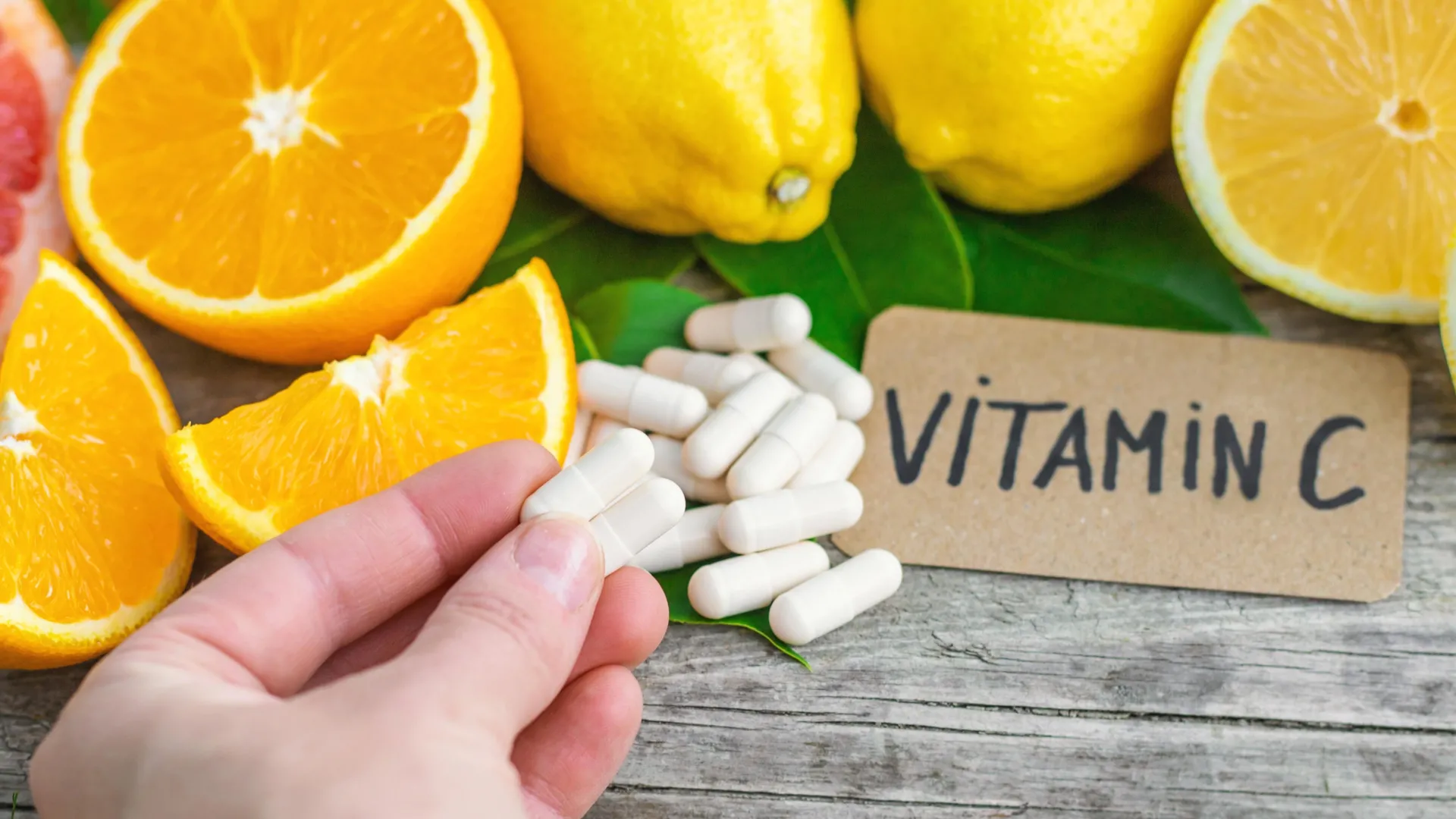
Vitamin C may do more than support everyday health. New research from the University of Waterloo suggests that it could also help prevent potentially cancer-causing chemicals from forming during digestion. Using mathematical modeling, scientists investigated how vitamin C influences chemical reactions in the digestive system that have been linked to cancer risk.
Exposure to nitrates and nitrites has increased in North American diets over the past several decades. These compounds are found in cured meats such as bacon and salami, as well as in fruits and vegetables grown in soil or water affected by pollution. Although nitrates and nitrites contribute to important functions in the brain and cardiovascular system, they can also participate in potentially harmful reactions once they reach the stomach.
One of these reactions, called nitrosation, can produce substances that researchers suspect may contribute to cancer development. Understanding what causes these chemicals to form, and what might prevent their formation, has been a longstanding challenge.
Why Vitamin C Could Change the Cancer Risk Equation
"Since at least the 90s, researchers have been studying the link between cancer and these compounds, with conflicting results," said Dr. Gordon McNicol, a post-doctoral researcher in applied mathematics and the first author of the study. "Our work suggests that the presence of dietary Vitamin C may help explain these inconsistencies."
To investigate this possibility, the researchers developed a mathematical model that simulates how nitrates and nitrites travel through the body and undergo chemical changes. The model incorporated several interconnected systems, including the salivary glands, stomach, small intestine, and plasma, the liquid portion of blood.
Their simulations revealed that vitamin C consumed alongside nitrates and nitrites may interfere with the formation of potentially harmful compounds. This could help explain why foods containing nitrates do not necessarily carry the same risks.
For example, leafy vegetables such as spinach naturally contain both nitrates and vitamin C. According to the model, the presence of vitamin C could limit the chemical reactions associated with cancer risk, potentially helping explain the protective effects suggested by some dietary research.
Could Taking Vitamin C After Meals Help?
The researchers also explored whether vitamin C supplements might offer similar benefits when taken after eating.
Their findings suggest that taking vitamin C after each meal could moderately reduce the formation of nitrosation products associated with cancer risk. This effect could be particularly relevant when consuming foods containing nitrates and nitrites, including processed meats such as bacon and salami.
However, the results come from mathematical simulations rather than clinical trials. Although the model predicts that vitamin C can reduce the production of potentially harmful chemicals, further research is needed to determine whether this translates into a measurable reduction in cancer risk in humans.
New Clues for Future Cancer Prevention Research
The researchers believe their model could help scientists better understand the complicated relationship between diet, digestive chemistry, and cancer risk. It may also provide guidance for future experiments examining how nutritional choices influence the formation of potentially harmful compounds.
"This work provides a mechanistic roadmap for future clinical and laboratory studies by identifying the key interacting drivers of these potentially harmful chemical reactions, including nitrite exposure, antioxidant intake, meal timing, gastric conditions and oral microbiome activity," said Dr. Anita Layton, professor of applied mathematics and Canada 150 researcher chair. "This model can help researchers design more targeted experiments and interventions, focusing on when and in whom nitrosation is most likely to occur."
By identifying how factors such as vitamin C intake, meal timing, stomach conditions, and bacteria in the mouth interact, the model could help researchers develop more precise strategies for studying and potentially reducing cancer-related chemical reactions during digestion.
The study, "Vitamin C as a nitrosation inhibitor: A modelling study across dietary patterns and water quality," was published in the Journal of Theoretical Biology.
Story Source:
Materials provided by University of Waterloo. Note: Content may be edited for style and length.
Journal Reference:
- Gordon R. McNicol, Nandita B. Basu, Anita T. Layton. Vitamin C as a nitrosation inhibitor: A modelling study across dietary patterns and water quality. Journal of Theoretical Biology, 2026; 627: 112444 DOI: 10.1016/j.jtbi.2026.112444
Cite This Page: