
A lost Amazon world just reappeared in Bolivia
Ancient Amazonian ingenuity in Bolivia’s wetlands reveals sustainability lessons urgently needed for the future.
- Date:
- November 30, 2025
- Source:
- Frontiers
- Summary:
- Researchers exploring Bolivia’s Great Tectonic Lakes discovered a landscape transformed over centuries by sophisticated engineering and diverse agricultural traditions. Excavations show how Indigenous societies adapted to dynamic wetlands through raised fields, canals, and mixed livelihoods. Today’s local communities preserve this biocultural continuity, guiding research and conservation.
- Share:
In September 2021, a team of specialists traveled to one of the least-documented areas of the Bolivian Amazon: the Great Tectonic Lakes of Exaltación in the department of Beni. The expedition, organized by the Grupo de Trabajo para los Llanos de Moxos (GTLM), brought together experts from the Wildlife Conservation Society, the National Museum of Natural History, the Institute of Ecology, the Biodiversity and Environment Research Center, the Aquatic Resources Research Center, and the Department of Anthropology of the Americas at the University of Bonn.
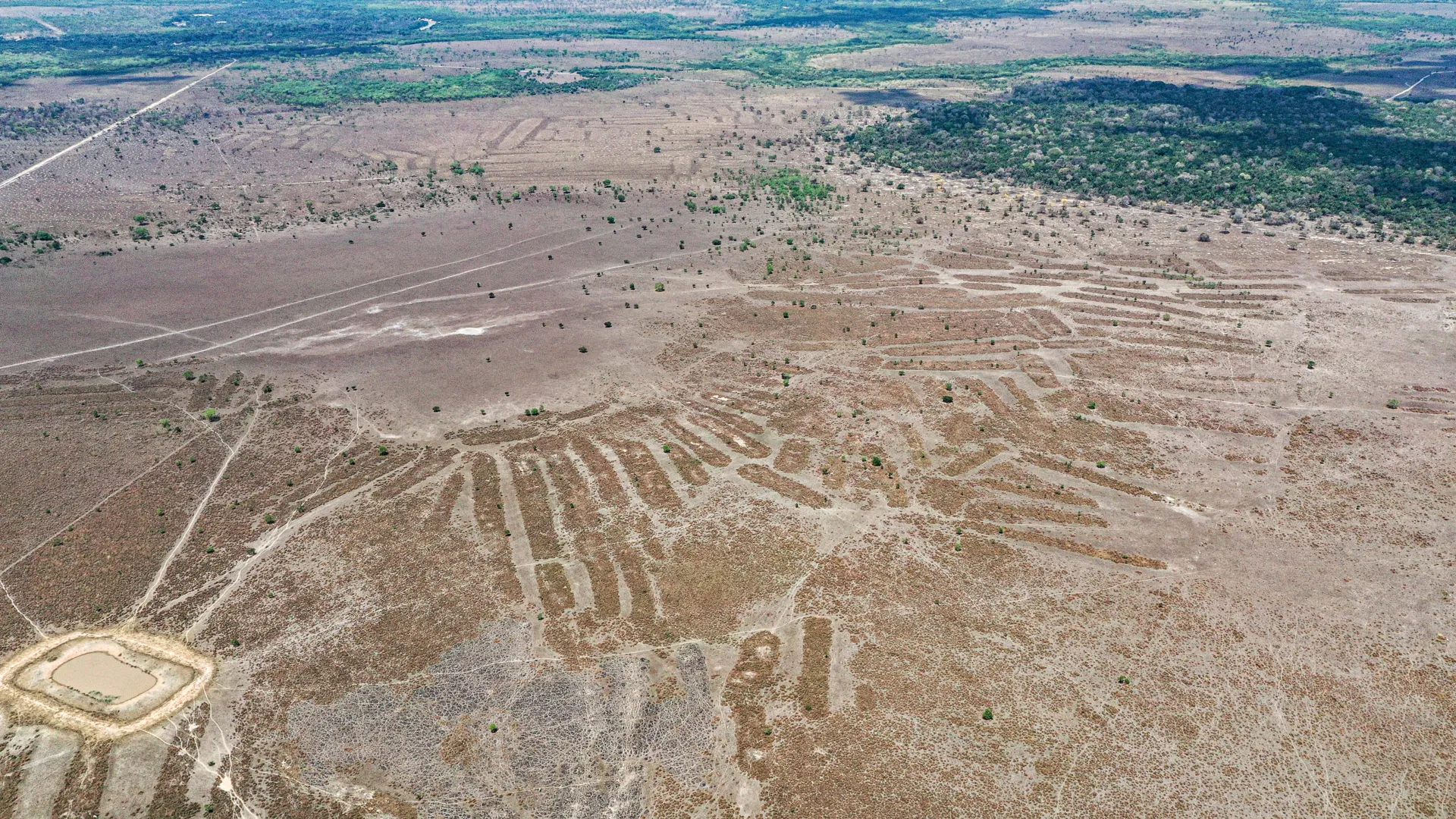
In the southwestern Amazon, the tectonic Lakes Rogaguado and Ginebra reveal a landscape shaped by generations of human innovation. Beneath the open grasslands and shallow waters lie the remains of extensive earthworks, raised agricultural fields, and interconnected canals that reflect a long history of people adapting to a dynamic environment.
These lakes sit within the Municipal Protected Area of Grandes Lagos Tectónicos de Exaltación and form part of the Río Yata Ramsar wetland complex, which is recognized by UNESCO for both its ecological and cultural value. Set in the Llanos de Moxos, a vast network of savannas, gallery forests, and floodplains that make up the largest wetland system in the Amazon basin, this area has inspired curiosity for centuries. Ethnohistorical accounts even linked it to the legendary 'Land of Paititi.' Only recently has its deep human past begun to come into clearer view.
Mapping a Long History of Settlement
Using a combination of surveys, excavations, and LiDAR imaging, the research team documented several archaeological sites: Paquío, Coquinal, Isla del Tesoro, and Jasschaja. Each site represents a different stage in the long sequence of habitation across this region.
Radiocarbon dates reveal repeated occupations from roughly 600 to 1400 CE. Findings at Paquío show an early settlement beginning around 600 CE, followed by a more intensive occupation between 1000 and 1200 CE. This later phase included shell middens, dense ceramic refuse, and a sophisticated system of canals and raised fields connected to maize-based farming. Jasschaja, which dates from 1300 to 1400 CE, reflects broader landscape alterations and greater botanical diversity, suggesting intensified forest and crop management during its occupation.
Innovations in Water Management and Agriculture
The terrain of the Llanos de Moxos is filled with geometric forms that reveal themselves on closer inspection. Circular and rectangular ditches, drainage channels, raised planting platforms, and clusters of mounds create a complex network designed for water control and cultivation. These structures were built to regulate seasonal flooding, guide water flow, and create stable areas for living and farming within a wetland that changes dramatically throughout the year.
Their many shapes, ranging from geometric enclosures to long elevated fields, indicate that there was no single standardized design. Instead, they represent centuries of experimentation as communities responded to shifting ecological and social conditions. Together, these features highlight the cultural diversity and long-term resilience of the people who developed them.
Excavations at Paquío and Jasschaja also revealed details about a varied pre-Hispanic diet that relied on wetland resources. Fish such as wolf fish, peacock bass, and South American lungfish were especially common, accompanied by reptiles including caimans and turtles, and mammals such as capybaras, pacas, and armadillos. Plant remains show the use of maize, legumes, and multiple palm species -- moriche palm, corozo palm, cumare palm, totai palm, palmita, and peach palm. Together, these remains point to a balanced subsistence strategy that combined fishing, hunting, gathering, and farming.
Biocultural Knowledge and Indigenous Leadership
The Cayubaba and Movima communities continue to live in these landscapes, where rich biodiversity is deeply connected to cultural heritage. Their long-standing presence and environmental knowledge help maintain a unique form of biocultural heritage in which ecological and cultural diversity have developed side by side over many generations.
During the post-Covid-19 field seasons, collaboration with local communities was rooted in open communication and mutual respect. Representatives of the Cayubaba Indigenous Council, which includes 21 Cayubaba and Movima communities, assisted researchers in identifying areas for study, providing access to culturally important places, and specifying sites that should not be disturbed. While interactions were limited for health reasons, this partnership ensured that the research reflected community priorities and contributed to a fuller understanding of the living heritage of the region.
Through the GTLM, Indigenous leaders and scientists are working together to link archaeological and ecological research with conservation initiatives. These efforts emphasize that the Llanos de Moxos is not only a center of biodiversity but also a landscape shaped through long human histories, and they support continued management of the Yata River Ramsar site and the protected areas connected to it.
Lessons From the Past for a Changing Amazon
As deforestation, expanding agriculture, and climate change put increasing pressure on the Amazon, the landscapes around Lakes Rogaguado and Ginebra highlight the importance of sustainable land-use traditions. Archaeological evidence shows that past communities developed flexible ways of living that combined farming, fishing, and forest management. Rather than seeking to control or overexploit the environment, they adapted to its seasonal cycles and used periodic flooding as an opportunity.
Although raised-field agriculture eventually ended -- likely because of population decline and social upheaval after European colonization -- this does not diminish the effectiveness of these systems. For centuries, communities maintained productive landscapes by working with the region's natural rhythms. Their practices challenge modern assumptions about what counts as "development" and remind us that resilience often emerges from diversity: of species, of knowledge, and of cultural traditions.
Protecting this biocultural heritage is now a global responsibility. The wetlands of the Llanos de Moxos continue to store carbon, moderate water systems, and support a wide range of species. Conservation efforts must also respect the people who have cared for these landscapes for generations. In this way, archaeology becomes more than a study of the past; it becomes a means of reconnecting ancient knowledge with today's urgent debates about sustainability and environmental justice.
The Llanos de Moxos demonstrate that the Amazon has always been a place where people and nature have shaped one another. Its monumental earthworks, forest islands, and living cultural traditions suggest that part of our shared future may depend on listening more closely to these landscapes that remember.
Story Source:
Materials provided by Frontiers. Original written by Carla Jaimes Betancourt. Note: Content may be edited for style and length.
Journal Reference:
- Carla Jaimes-Betancourt, Geraldine Fernandez, Myrtle P. Shock, Hortensia Nina, Henry Delgadillo, Gabriela Prestes-Carneiro, Andrea Lima, Vinicius M. Nunes, Renan Torrico. Historic landscapes, diversified livelihoods in the southwestern Amazon: the case of Lake Rogaguado and Lake Ginebra (Bolivia). Frontiers in Environmental Archaeology, 2025; 4 DOI: 10.3389/fearc.2025.1662950
Cite This Page: