
Evolution isn’t random. Scientists find the same genes used for 120 million years
- Date:
- May 4, 2026
- Source:
- University of York
- Summary:
- Evolution seems to follow a script more often than expected. Researchers found that distantly related butterflies and moths have reused the same pair of genes for over 120 million years to produce strikingly similar warning colors. Rather than altering the genes themselves, evolution modifies how they’re switched on and off. This discovery hints that life may evolve in more predictable ways than previously believed.
- Share:
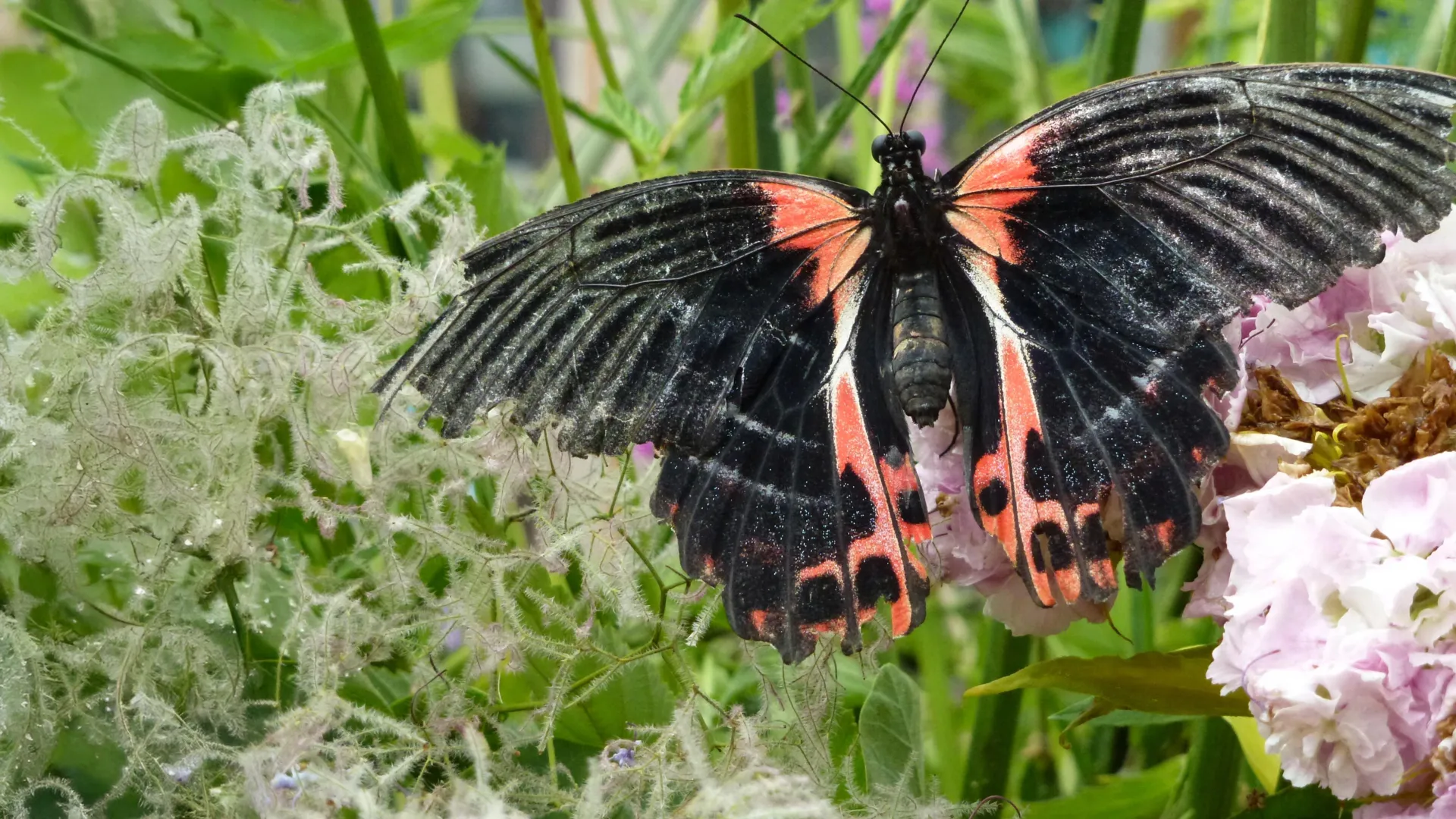
Scientists have uncovered evidence that evolution has relied on the same genetic "cheat sheet" for more than 120 million years, raising the possibility that life on Earth may be more predictable than once believed.
An international group of researchers led by the University of York and the Wellcome Sanger Institute focused on butterflies and moths from South American rainforests. Although these species are only distantly related, many share strikingly similar wing color patterns that serve as warning signals to predators. This phenomenon is known as mimicry.
Shared Genes Behind Butterfly and Moth Mimicry
The researchers set out to identify which genes control these shared color patterns across seven distantly related species. Despite their evolutionary distance, the team discovered that both butterflies and moths repeatedly relied on the same two genes, ivory and optix, to produce nearly identical warning colors.
Instead of altering the genes themselves, evolution acted on regulatory elements, often described as genetic "switches," that control when and where these genes are activated. In butterflies, these switches were modified in similar ways across species. In the moth, scientists found a surprising twist. It used an inversion mechanism (a large chunk of DNA flipped backwards) that closely mirrors a strategy seen in one of the butterfly species.
Evidence That Evolution Can Be Predictable
Professor Kanchon Dasmahapatra from the University of York's Department of Biology explained: "Convergent evolution, where many unrelated species independently evolve the same trait, is common across the tree of life. But we rarely have the opportunity to investigate the genetic basis of this phenomenon.
"Investigating seven butterfly lineages and a day-flying moth, we show that evolution can be surprisingly predictable, and that butterflies and moths have been using the exact same genetic tricks repeatedly to achieve similar color patterns since the age of the dinosaurs."
The findings, published in the journal PLoS Biology, suggest that evolution is not always a random process. Instead, it can follow recurring genetic pathways.
Why Warning Colors Keep Reappearing
Professor Joana Meier from the Wellcome Sanger Institute added: "These distantly related butterflies and the moth are all toxic and distasteful to birds trying to eat them. They look very much alike because if birds have already learned that a specific color pattern means "do not eat, we are toxic," it is beneficial for other species to display the same warning colors.
"Here, we show that these warning colors are particularly ideal as it seems quite easy to evolve these same color patterns due to the highly conserved genetic basis over 120 million years."
What This Means for Predicting Evolution
Understanding that evolution often follows established genetic routes could help scientists anticipate how species may respond to changing environments or climate shifts. If nature tends to reuse the same biological solutions, predicting future adaptations may become more achievable than previously thought.
Story Source:
Materials provided by University of York. Note: Content may be edited for style and length.
Journal Reference:
- Yacine Ben Chehida, Eva S. M. van der Heijden, Edward Page, Patricio A. Salazar C, Neil Rosser, Kimberly Gabriela Gavilanes Córdova, Mónica Sánchez-Prado, María José Sánchez-Carvajal, Franz Chandi, Alex P. Arias-Cruz, Maya Radford, Gerardo Lamas, Chris D. Jiggins, James Mallet, Melanie McClure, Camilo Salazar, Marianne Elias, Caroline N. Bacquet, Nicola J. Nadeau, Kanchon K. Dasmahapatra, Joana I. Meier. Genetic parallelism underpins convergent mimicry coloration in Lepidoptera across 120 million years of evolution. PLOS Biology, 2026; 24 (4): e3003742 DOI: 10.1371/journal.pbio.3003742
Cite This Page: