
King Harold may have lost England by backing the wrong pope
- Date:
- August 11, 2026
- Source:
- University of East Anglia
- Summary:
- A forgotten fragment of a lost papal letter is offering a surprising new explanation for the Norman Conquest. England may have backed the wrong pope during a bitter religious power struggle, giving Pope Alexander II a political reason to support William the Conqueror’s invasion. The discovery suggests Harold’s downfall in 1066 was shaped by intrigue in Rome as well as bloodshed at Hastings.
- Share:
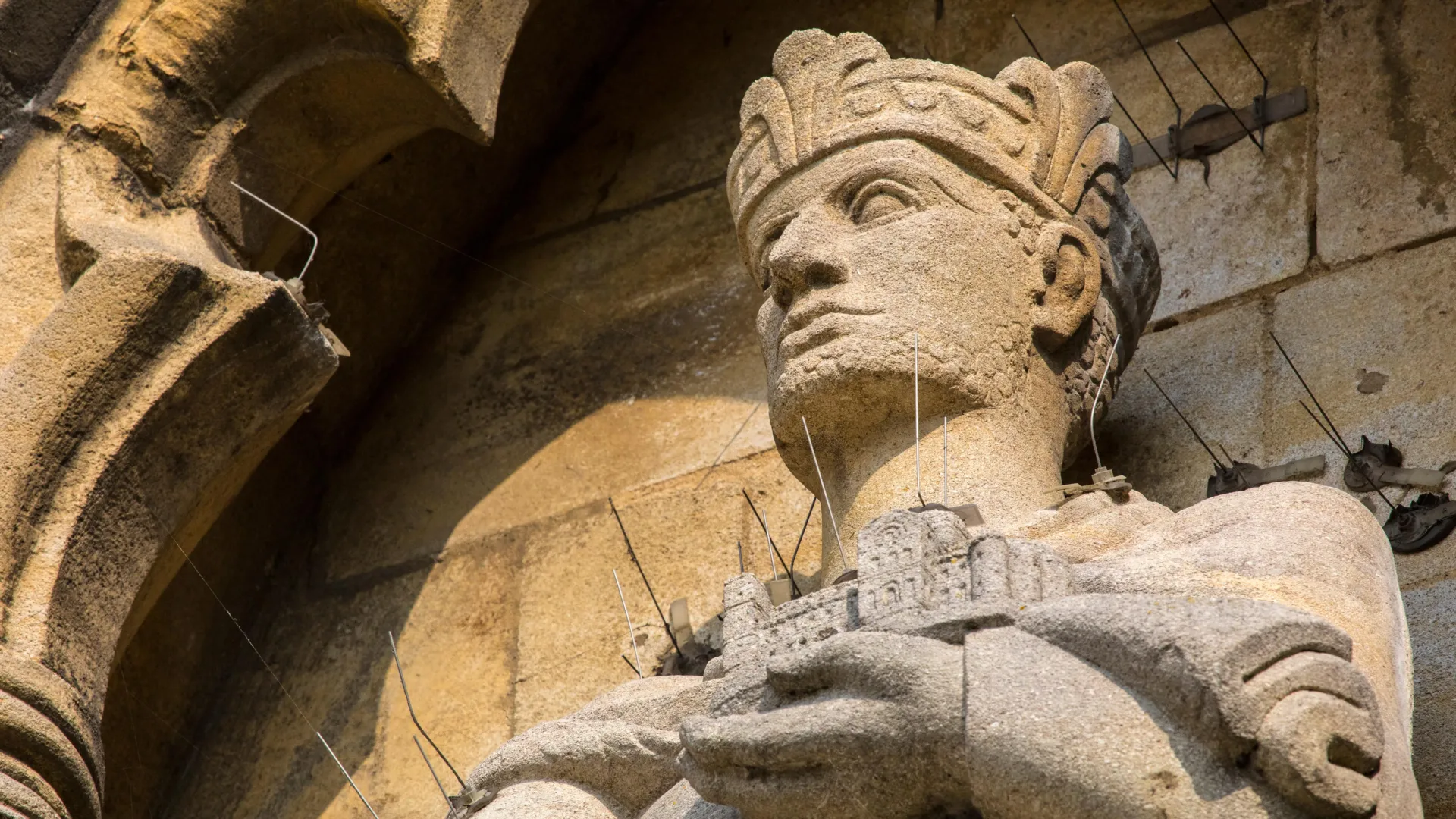
New research from the University of East Anglia suggests that a lost papal letter could change how historians understand the events of 1066 and the Norman Conquest.
Surviving excerpts of the letter, preserved in the Vatican archives, point to a major political struggle in Rome that may have influenced the fate of England. The evidence suggests King Harold may have weakened his position well before the Battle of Hastings by supporting the wrong faction during a bitter conflict between two competing popes.
If that interpretation is correct, the outcome of 1066 may have depended not only on what happened on the battlefield at Hastings, but also on political and religious decisions made in Rome.
The findings are published today by Yale University Press in a new book titled 'Harold: Warrior King', written by UEA historian Prof Tom Licence.
The research arrives as the British Museum prepares to open a major exhibition featuring the Bayeux Tapestry, one of the best-known surviving artifacts connected with the Norman Conquest.
Two Rival Popes Divide Medieval Europe
During the 1060s, Western Christendom was split by a major dispute in which two rival popes claimed authority. The new research suggests that England's support for one side of this conflict may have contributed to Pope Alexander II's decision to support William of Normandy's invasion.
England's choice of allegiance, in other words, may have carried consequences far beyond Rome.
Prof Tom Licence, Professor of Medieval History and Literature at UEA, said: "1066 was not simply decided on the battlefield at Hastings. The outcome may also have been shaped by decisions taken almost a thousand miles away in Rome."
The Norman Conquest has traditionally been viewed largely as a dynastic crisis that followed the death of Edward the Confessor, with competing claimants fighting for control of the English throne.
Licence now argues that a contemporary papal letter points to a much broader political and religious conflict that extended across medieval Europe.
He said: "Harold's policy on the papacy may ultimately have played into the hands of his enemies, giving William's opportunistic invasion the legitimacy of a just war."
Lost Vatican Letter Offers New Evidence
At the center of the research are previously overlooked excerpts from a lost papal letter preserved in a medieval collection of canon law in the Vatican.
"The Pope's whole register of letters is lost," said Prof Licence. "But some survive as copies or excerpts. Two excerpts from this particular letter survive in collections of papal rescripts."
Pope Alexander II wrote the letter after William had taken the English throne. In it, Alexander reflected on England's relationship with the papacy before the Norman Conquest.
One passage says England had once been protected by St Peter, until people "fired with the pride of their father Satan" led the English away from "the path of truth."
"While historians have occasionally noted these remarks, they have generally treated them as unexplained references," said Prof Licence.
"But they can only be fully understood in the context of a fierce dispute that divided Western Christendom during the early 1060s.
"In 1061, rival factions elected two competing popes, Alexander II and Bishop Cadalus of Parma, who became known as Honorius II.
"For several years the two popes and their supporters fought for control of Rome, with Honorius retaining powerful backing from the Holy Roman Empire and attracting support elsewhere in northern Europe."
Licence argues that the wording of Alexander's letter closely reflects the political and religious language used against Honorius and his supporters during the conflict.
That interpretation suggests Alexander may not simply have been criticizing Harold for allegedly breaking an oath. Instead, the pope appears to have viewed England as having abandoned his faction and aligned itself with his rival.
Prof Licence said: "In the eyes of Pope Alexander's supporters, it was no longer simply a battle for a crown, but a struggle against those they regarded as followers of Satan."
Why Did the Pope Support William's Invasion?
Licence believes this change in England's relationship with the papacy probably took place after Harold became king in January 1066.
He said: "Historians have traditionally explained papal support for William through Harold's disputed claim to the throne and allegations of oath-breaking.
"What this evidence suggests is that Pope Alexander II may have had political reasons of his own for backing the Norman invasion.
"If Harold had aligned England with Alexander's rivals, it would help explain why the pope was willing to support the overthrow of a crowned king. Viewed from Rome, the conquest was not simply a succession dispute but part of a wider struggle over the future of the Church in Europe."
According to Licence, this interpretation could help resolve a longstanding historical puzzle: why would a pope support the violent removal of an anointed king?
Did Rome Help Decide the Norman Conquest?
Pope Alexander II may therefore have supported William for reasons that went well beyond Harold's disputed claim to the English throne. The decision may instead have been connected to a much larger political struggle unfolding across Europe.
Licence's research suggests that England's support for a rival papal faction could have helped convince Alexander to support the Norman invasion.
Seen in this wider context, the Norman Conquest was not simply a contest over the English crown. The events of 1066 may also have formed part of a broader struggle involving the papacy, the Holy Roman Empire and rival centers of power throughout medieval Europe.
Prof David Fergusson, Regius Professor of Divinity at the University of Cambridge, said: "Tom Licence's research on the European context of the Norman invasion offers us a fresh perspective on the wider political currents that contributed to the events of 1066.
"His account of the likely role of the papacy in legitimizing William's invasion illustrates the complex dynamics of the relationship between church and monarchy throughout the period. This is a significant contribution to our understanding of the role of the medieval Church in the wider history of Europe."
Prof Rory Naismith, Professor of Early Medieval English History at the University of Cambridge, said: "This is indeed an important point. The Norman Conquest did not just involve the English and the Normans -- it was tied to developments all over Europe.
"Rome in particular had long been central to England's religious identity, and to have brought out the Roman dimension of 1066 in this way is a significant contribution.
"Prof Licence shows what can be achieved when neglected sources are expertly brought out of the shadows," he added.
Story Source:
Materials provided by University of East Anglia. Note: Content may be edited for style and length.
Cite This Page: