
Medieval miracles: Dragon-slaying saints once healed the land
- Date:
- February 2, 2026
- Source:
- University of Cambridge
- Summary:
- New research reveals a forgotten side of medieval Christianity—one rooted not in cathedrals, but in fields, forests, and farms. Historian Dr. Krisztina Ilko uncovers how the Augustinian order built its power through “green” miracles: restoring barren land, healing livestock, reviving fruit trees, and taming deadly landscapes once blamed on dragons. Far from symbolic tales, these acts helped rural communities survive and gave the order legitimacy at a time when its very existence was under threat.
- Share:
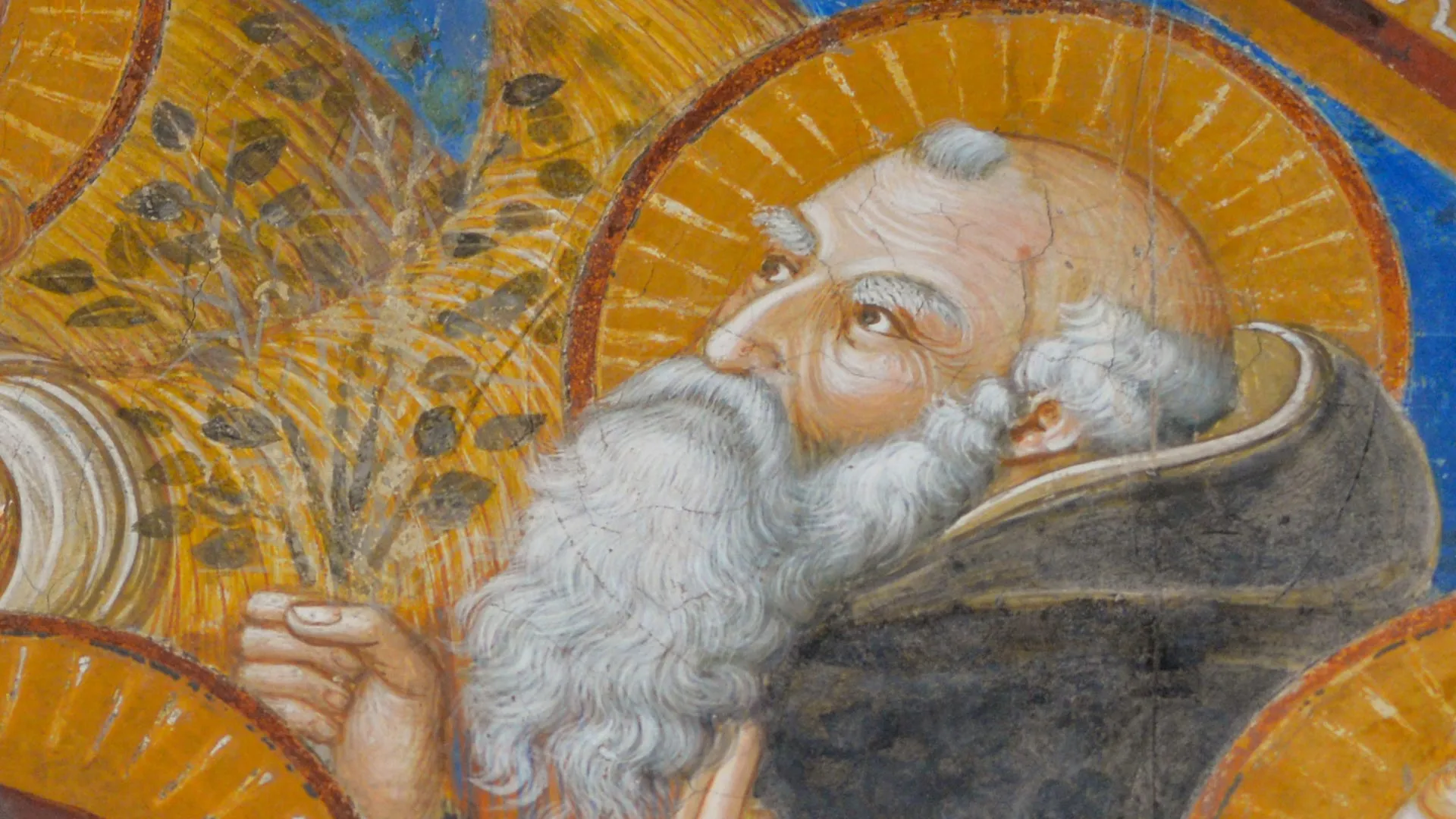
New research suggests that the Vatican's recently opened eco-friendly farm reflects a long forgotten chapter in Catholic history. The farm was inaugurated by the first ever Augustinian pope and, according to historian Dr. Krisztina Ilko, mirrors the early values and practices of his religious order. Her work challenges long held assumptions about the medieval Catholic Church and the early Renaissance, especially the belief that religious power was centered almost entirely in cities.
Dr. Ilko, a medieval historian at Queens' College, Cambridge, argues that the countryside played a much larger role in shaping Christian life than is commonly acknowledged. Her research highlights a tradition of practical, land-focused miracles that helped rural communities survive during difficult times.
Forgotten Medieval Miracles of the Land
Among the miracles Dr. Ilko has uncovered are stories of a burned cherry twig bursting back into life, a diseased swamp restored to "peak fertility," a broken ox leg healed, and cabbages multiplied to feed communities. These accounts come from medieval sources that have largely been overlooked or dismissed.
"Bleeding hosts and stigmatizations are the best-known medieval miracles," says Dr. Ilko, author of The Sons of St Augustine, a major new study published by OUP today.
"The Augustinians get very little credit for miraculously making land fertile, healing livestock and bringing fruit trees back to life," says Ilko.
"With Leo XIV becoming the first Augustinian Pope, it's the perfect time to make the order's astonishing history better known. There has been so much focus on Italian cities, we've lost sight of how important the countryside was to the Church and to the Renaissance."
Dragons, Disease, and Fertility
Saint George is widely known as Christianity's most famous dragon slayer and is commonly depicted as a warrior holding a lance. Much less familiar is Guglielmo of Malavalle, a twelfth century hermit venerated by the Augustinians for defeating a dragon using a simple wooden staff shaped like a pitchfork.
In medieval Europe, illness affecting people, animals, and crops was often blamed on dragons. Their breath was believed to poison the air and suffocate the land, especially in swampy regions where disease was common.
After hearing a voice from the sky, Guglielmo settled in Malavalle, meaning "the bad valley," in the marshy Maremma region of Tuscany. The area was thought to be so polluted by toxic air and violent storms that it had become barren and frightening, described as "dark, and terrible," and avoided even by hunters.
Dr. Ilko argues that Guglielmo's reputation as a dragon slayer came from his role in cleansing the environment and restoring the valley's productivity.
"These achievements weren't symbolic, Guglielmo provided a crucial public service, he helped country people survive in a really harsh natural environment," Dr. Ilko says.
"Guglielmo was a pitchfork-wielding dragon slayer and divine gardener all at once. Commanding the weather, securing a good harvest, and restoring the health of livestock must have seemed the most desirable divine interventions in the late medieval countryside. They were matters of life and death."
Unearthing Lost Augustinian Texts
Dr. Ilko's conclusions are based on ten years of research that took her to more than twenty archives and over sixty Augustinian sites, including remote and difficult to access ruins. She examined frescoes, illuminated manuscripts, hagiographies, and letters, uncovering materials that had been misdated or wrongly attributed. These errors, she argues, contributed to the Augustinians being overlooked in studies of medieval miracles.
One of the earliest collections of Augustinian biographies she studied was written by a Florentine friar in the 1320s. The manuscript has received little scholarly attention, which Dr. Ilko believes is because its miracles were considered too rural in focus. The text is held at Florence's Biblioteca Medicea Laurenziana.
The manuscript opens with the life of Giovanni of Florence, who built the Augustinian hermitage of Santa Lucia in Larniano with help from local farmers. One of Giovanni's most notable miracles involved healing an ox with a broken leg. Another account describes Jacopo of Rosia ordering an unreliable apple tree to bear fruit every year and multiplying cabbages.
"When people think about religious orders and their massive role in the Renaissance, they usually turn their attention to cities like Rome, Florence and Siena," Dr. Ilko says.
"The Franciscans and Dominicans, in particular, are credited for Italy's rapid urban renewal from the 1200s onwards. Not many people realize that the Augustinians drew most of their power from the countryside. Their miracles were very green-fingered, agricultural."
"St Francis of Assisi remains the most famous 'nature saint', best known for preaching to birds. In a more eco-conscious world, the Augustinians deserve much more attention."
How the Augustinians Secured Their Survival
According to Dr. Ilko, the Augustinians' close relationship with forests, mountains, and coastal areas was key to their survival as a religious order.
The Order of the Hermits of St Augustine was established in 1256 when the papacy объединed several hermit groups from central Italy into a single mendicant order. In 1274, the Roman Catholic Church questioned the order's legitimacy because it had been founded after 1215 and lacked a continuous presence dating back to late antiquity. The papacy did not formally confirm the order's existence until 1298. During this twenty five year period of uncertainty, Augustinian friars worked intensely to justify their place within the Church.
Without a single charismatic founder, the friars developed an origin story that claimed direct ties to St Augustine himself. Dr. Ilko argues that they also relied on their strong presence in natural landscapes to reinforce their authority and ancient roots.
"Direct contact with nature gave the friars legitimacy, special spiritual powers and access to valuable natural resources including timber, crops and wild animals," Dr. Ilko says.
As the order expanded into cities, the Augustinians carefully chose locations near the edge of urban life. In Rome, they founded the convent of Santa Maria del Popolo at one of the city's main entrances, with trees and gardens nearby. The Franciscans had previously rejected the site because it was considered too remote and difficult "to sustain the body." The area was once viewed as ominous, dominated by an ancient walnut tree believed to be infested with demons and marking the supposed burial place of Emperor Nero. Pope Paschall II ordered the tree removed in 1099.
Beyond reshaping how the Augustinians are understood, Dr. Ilko argues that the ruins of their hermitages deserve better preservation and improved public access so more people can experience this overlooked chapter of religious and environmental history.
Reference
Krisztina Ilko, The Sons of St Augustine: Art and Memory in the Augustinian Churches of Central Italy, 1256-1370 (OUP, 2025). ISBN: 9780198948827
Story Source:
Materials provided by University of Cambridge. Note: Content may be edited for style and length.
Cite This Page: