
Venus will disappear behind the Moon in a rare June sky event
- Date:
- June 3, 2026
- Source:
- NASA's Jet Propulsion Laboratory
- Summary:
- June's night sky delivers several must-see events, starting with a close encounter between Venus and Jupiter after sunset. Mercury joins the pair to form a rare three-planet lineup, while the Moon puts on a special show by passing in front of Venus for viewers in parts of the Americas. The month also marks the start of astronomical summer and the return of spectacular deep-sky targets like the Ring Nebula and Veil Nebula.
- Share:
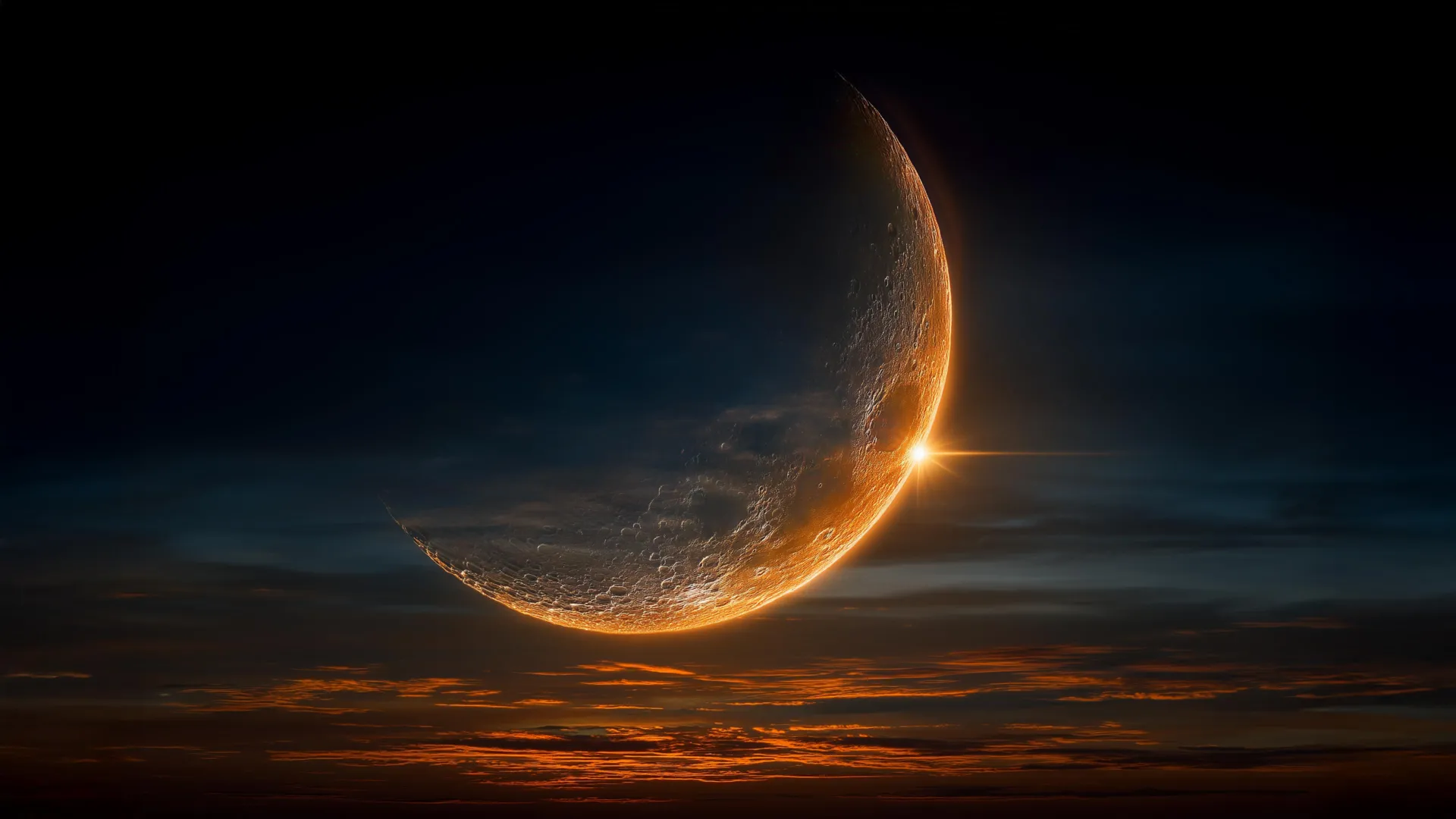
June offers plenty for skywatchers, including a close meeting between Venus and Jupiter, a rare event where the Moon passes in front of Venus, the arrival of astronomical summer, and the return of some favorite deep-sky targets.
Skywatching Highlights
- June 9: Venus and Jupiter conjunction
- June 11-15: Mercury joins Venus and Jupiter after sunset
- June 17: Moon passes in front of Venus & close Moon and Venus pairing
- June 21: June solstice & start of astronomical summer
- June: Summer Triangle and deep-sky observing targets rise into view
[See Video Link After Article.]
Venus and Jupiter Shine Together After Sunset
During the first half of June, look toward the western horizon shortly after sunset to spot Venus and Jupiter. The two brightest planets visible in the evening sky will appear especially close together around June 9.
This event is known as a planetary conjunction. Although the planets remain millions of miles apart in space, they appear near each other from Earth's perspective.
A few days later, from June 11 through June 15, Mercury joins Venus and Jupiter low in the western sky, creating an eye-catching lineup of three planets.
The reason these gatherings occur is that the planets orbit the Sun along a similar path across our sky called the ecliptic. As they move along this shared track, they occasionally appear clustered together when viewed from Earth.
Venus will be the easiest object to spot because of its exceptional brightness. Jupiter will shine nearby, while Mercury will sit much lower toward the horizon. A clear view of the western sky will help observers catch Mercury before it disappears into the twilight glow.
Moon Passes in Front of Venus
Another highlight arrives on June 17, when the Moon passes directly in front of Venus for observers in certain locations.
This phenomenon is called a lunar occultation. For those within the viewing path, Venus will seem to vanish behind the Moon before emerging again later.
The occultation will be visible from parts of the United States, Canada, Brazil, and Venezuela. Even outside the narrow path where Venus is completely covered, many observers will still see the Moon and Venus appearing unusually close together in the sky.
For some locations, this event will occur during daylight hours. Anyone attempting to observe it should use caution.
Do not point binoculars, telescopes, or cameras near the Sun unless proper solar safety equipment is being used. Viewing the Sun through optical equipment without appropriate protection can cause severe eye damage.
Summer Solstice Marks the Start of Astronomical Summer
June also brings the summer solstice.
In the Northern Hemisphere, the June solstice marks the official beginning of astronomical summer. In Pacific time, it occurs on Sunday, June 21 at 1:24 a.m.
The solstice is associated with the longest days and shortest nights of the year across the Northern Hemisphere.
Interestingly, the longest day of the year does not necessarily coincide with the earliest sunrise or latest sunset. In Los Angeles, for example, the earliest sunrise occurs before the solstice, while the latest sunset takes place afterward.
Summer Triangle and Deep Sky Objects Return
As darkness falls later in the month, summer's classic stargazing targets begin taking center stage.
One of the easiest seasonal landmarks to find is the Summer Triangle, a large pattern formed by the bright stars Vega, Altair, and Deneb.
Within and around this region lie several popular deep-sky objects, including the Dumbbell Nebula, the Ring Nebula, the North America Nebula, and the Veil Nebula.
The Dumbbell Nebula, also known as Messier 27, holds a special place in astronomy history as the first planetary nebula ever discovered.
Unlike bright planets, these objects are generally too faint to stand out with the naked eye. Through telescopes or long-exposure photography, however, they reveal spectacular details including glowing clouds of gas, dying stars, and stellar nurseries scattered throughout our galaxy.
June's combination of bright planets, a rare lunar occultation, the summer solstice, and returning deep-sky treasures makes it an excellent month to spend time under the night sky.
Story Source:
Materials provided by NASA's Jet Propulsion Laboratory. Note: Content may be edited for style and length.
Cite This Page: