
A child's tooth and strange green stones uncover a 5,500-year-old mystery
A mysterious cave high in the Pyrenees may hold evidence of early copper mining, repeated prehistoric expeditions, and possibly even hidden ancient burials.
- Date:
- June 3, 2026
- Source:
- Frontiers
- Summary:
- An ancient mountain cave in the Pyrenees may have served as one of the earliest high-altitude mining camps ever discovered, with evidence of repeated visits spanning thousands of years. The find becomes even more intriguing with the discovery of a child’s remains and clues that deeper excavations could uncover prehistoric burials.
- Share:
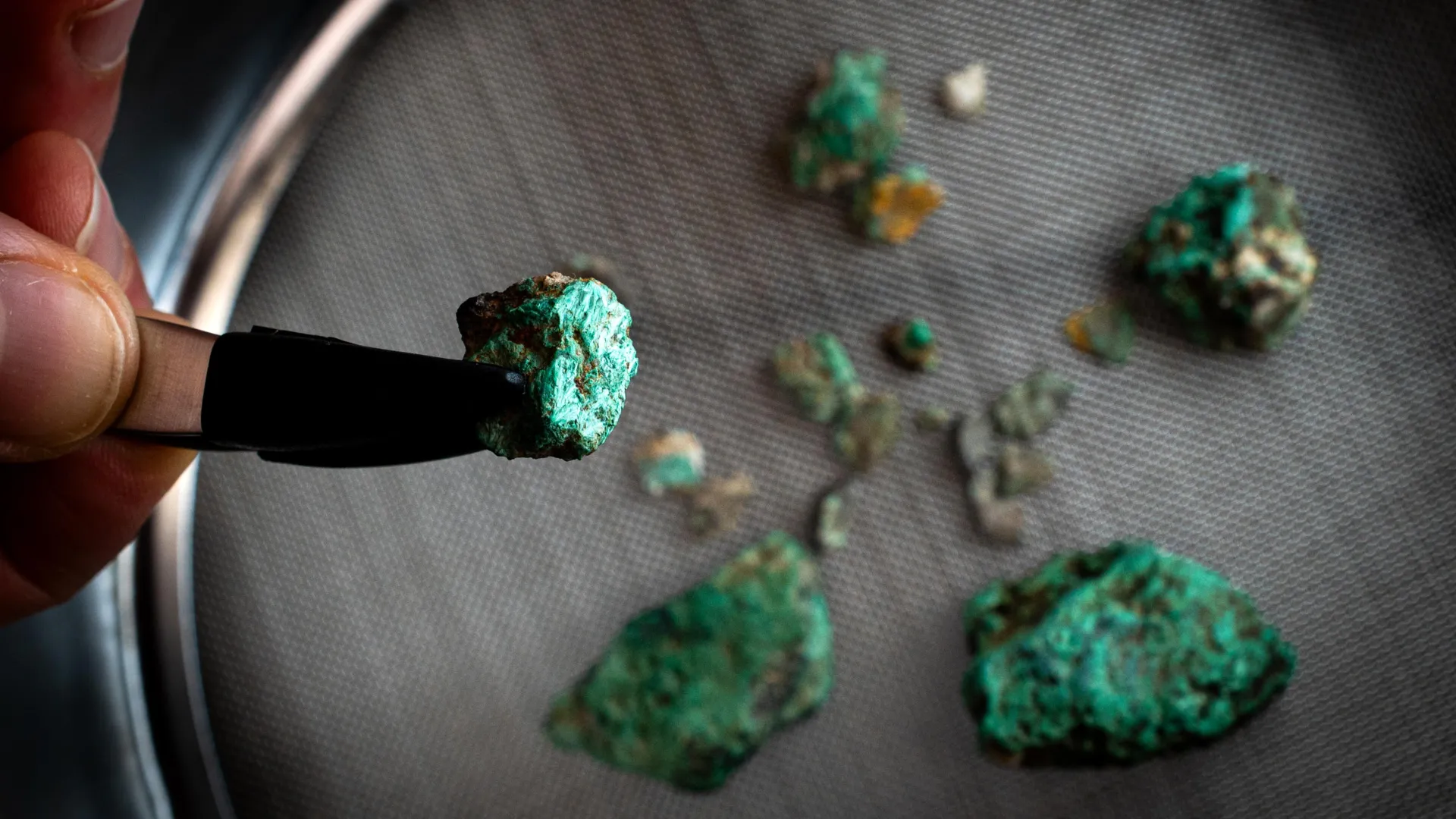
High in the eastern Pyrenees, archaeologists have uncovered evidence that could transform our understanding of how prehistoric people used mountain landscapes. A cave perched more than 7,300 feet (2,235 meters) above sea level contains dozens of ancient hearths filled with fragments of green mineral that may point to early copper mining activities.
The discoveries suggest that people repeatedly traveled to this remote location over a span of roughly 2,000 years. The findings challenge the long-standing belief that prehistoric communities only passed briefly through high-altitude environments. Researchers have also recovered a child's finger bone and baby tooth, raising the possibility that the cave may have served as a burial site.
"For a long time, high-mountain environments were seen as marginal, places prehistoric communities passed through occasionally," said Prof Carlos Tornero of the Catalan Institute of Human Paleoecology and Social Evolution, lead author of the article in Frontiers in Environmental Archaeology. "But we found a really rich archaeological sequence, including multiple combustion structures and a very large number of green mineral fragments. We can't say exactly how long people stayed each time, but the repeated use of the space and the density of remains suggest occupations that were short to medium in duration, but happening again and again over long periods of time."
Ancient Hearths and Possible Copper Mining
Known as Cave 338, the site lies in the Freser Valley. Archaeologists excavated a 6-square-meter area near the cave entrance and identified four distinct layers of human activity.
The most recent layer was relatively thin and contained a small number of artifacts from historical periods, suggesting the cave saw limited use during that time. The deepest and oldest layer contained only charcoal fragments, which were dated to approximately 6,000 years ago.
The most significant discoveries came from the second and third layers. Researchers uncovered 23 hearths containing large numbers of crushed and burned fragments of green mineral. Detailed testing is still underway, but the material resembles malachite, a copper-rich mineral that can be processed to produce copper.
If confirmed, the evidence could indicate that Cave 338 functioned as a surprisingly early high-altitude mining camp.
"Many of these fragments are thermally altered, while other materials in the cave are not, which clearly suggests that fire played an important role in their processing and that there was a deliberate intention behind it," said Dr. Julia Montes-Landa of the University of Granada, co-author. "In other words, they weren't burned by accident."
The hearths often overlap one another, showing that the same area was reused repeatedly. At the same time, the individual hearths remain clearly distinct, indicating that the visits were separated by substantial periods of time rather than representing a single continuous occupation.
Radiocarbon dating places the hearth from the second layer at roughly 3,000 years old. The hearths in the third layer date between about 5,500 and 4,000 years ago.
Child's Remains and Prehistoric Jewelry
Researchers also recovered human remains from the third layer, including a finger bone and a baby tooth from at least one child who was about 11 years old. While there is currently not enough evidence to determine a cause of death or whether the two bones belonged to the same child, the discovery raises the possibility that additional burials could be hidden deeper within the cave.
Other artifacts provided clues about the people who visited the site.
"We recovered two pendants: one made from a shell and another from a brown bear tooth," said Tornero. "They come from prehistoric contexts, most likely around the second millennium BC. The shell pendant is interesting because it has parallels in other sites in Catalonia, which suggests shared traditions or connections between different communities. The bear tooth pendant is much less common. That might point to something more specific or symbolic, possibly linked to the local environment."
A Cave Revisited for Thousands of Years
Although Cave 338 was not used as a permanent settlement, the repeated returns over millennia suggest that the location held significant value for prehistoric groups.
Researchers hope future excavations will reveal more about how the cave was used and when people occupied it. They also aim to determine the precise identity of the green mineral and trace its origin.
"The identification of the green mineral as malachite is still preliminary," explained Tornero. "The research ongoing by the University of Granada and the Autonomous University of Barcelona will provide final answers shortly. Also, the excavation hasn't yet reached the full depth of the site, so the sequence is not completely documented. This summer we will continue the archaeological work."
Story Source:
Materials provided by Frontiers. Note: Content may be edited for style and length.
Journal Reference:
- Carlos Tornero, Celia Díez-Canseco, Rosa Soler, Silvia Calvo, Selina Delgado-Raack, Chiara Messana, Julia Montes-Landa, Juan Ignacio Morales, Llorenç Picornell-Gelabert, Eni Soriano, Eudald Carbonell. Beyond 2,000 meters, first evidence of intense prehistoric occupation in the Pyrenees. Frontiers in Environmental Archaeology, 2026; 5 DOI: 10.3389/fearc.2026.1811493
Cite This Page: