
Mayo Clinic discovers new ways to fight the “zombie” cells that drive aging
- Date:
- October 26, 2026
- Source:
- Mayo Clinic
- Summary:
- Mayo Clinic scientists have uncovered surprising new insights into “zombie cells,” aging cells that linger in the body and contribute to inflammation and disease. Seven studies reveal why these cells are harmful and identify new strategies for targeting them, including a natural compound found in tomatoes. In aging mice, experimental treatments reduced inflammation and improved physical and brain health. The findings could open the door to therapies that combat some of the biological processes behind aging.
- Share:
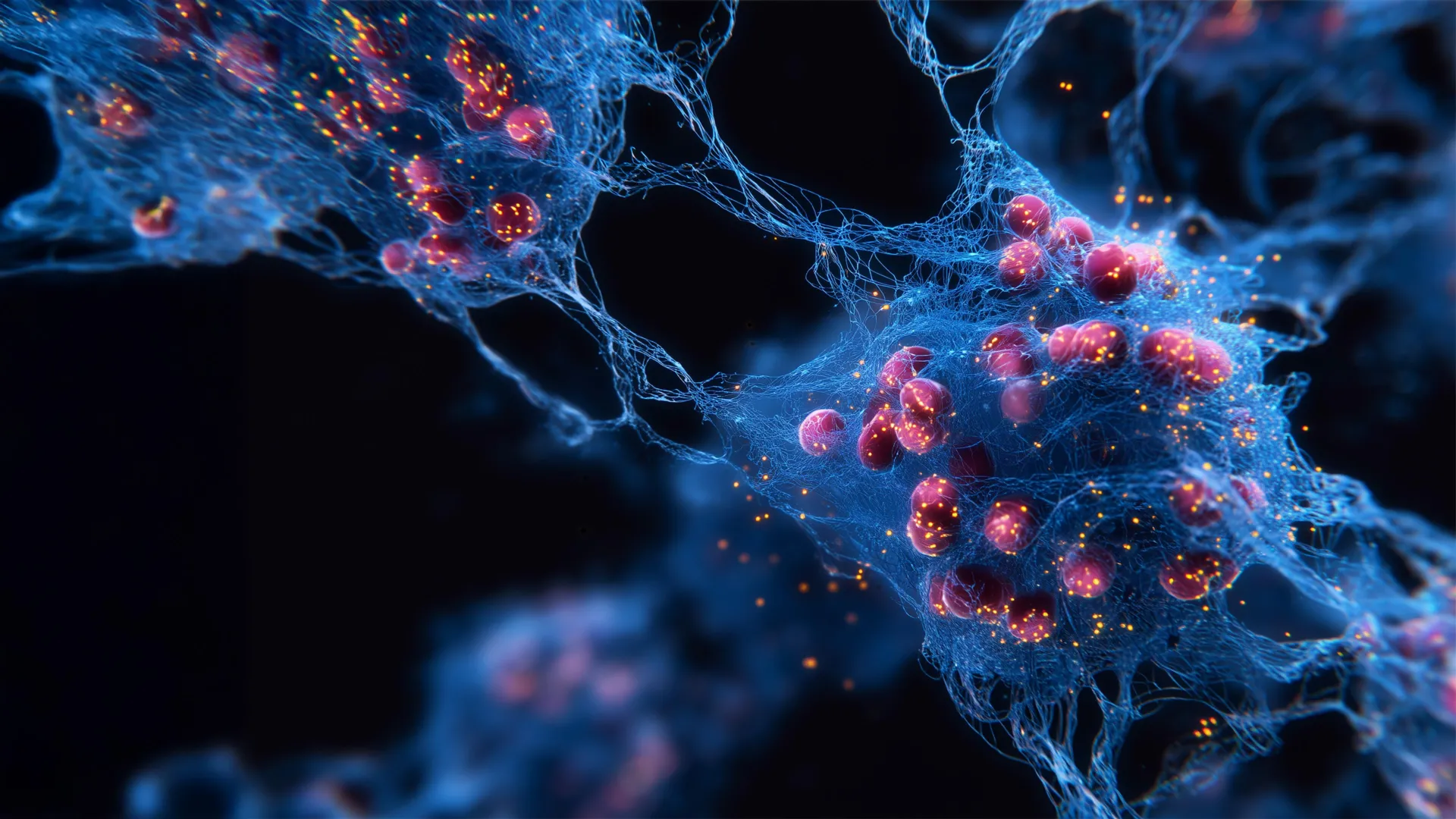
Seven studies from Mayo Clinic are revealing new details about senescent cells, often called "zombie" cells because they stop dividing but remain active in the body. These aging cells release inflammatory substances that can contribute to diseases associated with growing older.
The research, published in Nature journals, was conducted by scientists at Mayo Clinic's Robert and Arlene Kogod Center on Aging. Rather than simply confirming that senescent cells play a role in aging, the studies investigate how to recognize different types of these cells, why they produce harmful inflammation and how their effects might be reduced.
The findings also contribute to a nationwide effort to create detailed maps of senescent cells throughout the human body. Known as the Cellular Senescence Network (SenNet) Consortium, the project brings together researchers across the United States and receives funding from the National Institutes of Health Common Fund. Its goal is to document where senescent cells occur in different tissues and how they change throughout a person's lifetime.
"This body of work is moving the aging field forward to precisely identify, understand and target the specific senescent cells that contribute to age-related dysfunction, which is the necessary groundwork to develop new therapies that support healthy aging," says Marissa Schafer, Ph.D., a Mayo Clinic scientist whose laboratory directed several of the investigations.
Scientists Discover That Zombie Cells Are Not All Alike
Identifying senescent cells reliably has long been a major obstacle for scientists studying aging. The new research shows that these cells are much more varied than previously understood. Their characteristics differ depending on where they are located in the body and which biological processes caused them to become senescent.
To help address this challenge, researchers developed a tool called the SenMayo gene set. It uses patterns of gene activity to identify senescent cells more consistently across tissues and experimental systems.
Scientists tested the approach using bone biopsies from older adults. They also found that the gene signature became less prominent after senescent cells were removed in preclinical experiments. Since its development, SenMayo has become a widely used resource for researchers investigating aging and related diseases.
Mayo Clinic endocrinologist Sundeep Khosla, M.D., served as senior author of the study, "A new gene set identifies senescent cells and predicts senescence-associated pathways across tissues." Other Mayo Clinic researchers who contributed to the paper include Nathan LeBrasseur, Ph.D., Diana Jurk, Ph.D., João Passos, Ph.D., and LaTonya Hickson, M.D..
A Hidden Connection Between Mitochondria and Chronic Inflammation
Other studies explored one of the most damaging features of zombie cells: their tendency to generate ongoing inflammation.
The researchers discovered additional biological processes that explain why senescent cells continue producing inflammatory signals. Several of these processes involve malfunctioning mitochondria, the tiny structures responsible for producing much of a cell's energy.
In one pathway, DNA and RNA originating from mitochondria activate immune responses that contribute to inflammation. Another involves changes in mitochondrial metabolism that influence inflammatory gene activity through epigenetic mechanisms. These mechanisms affect how genes are switched on or off without changing the underlying DNA sequence.
The discoveries suggest that researchers may eventually be able to interfere with the processes responsible for chronic inflammation while leaving the senescent cells themselves intact. This would offer another approach to treatment beyond attempting to destroy every harmful aging cell.
Dr. Passos served as senior author of three papers examining these mechanisms and the diversity of senescent cells:
- "Distinct senotypes in p16- and p21-positive cells across human and mouse aging tissues"
- "Mitochondrial metabolism and epigenetic crosstalk drive SASP"
- "Mitochondrial RNA cytosolic leakage drives the SASP"
Experimental Treatments Show Promise Against Aging Cells
The Mayo Clinic team also investigated possible ways to reduce the number of senescent cells or limit the damage they cause.
The approaches included senolytic medications, which are designed to eliminate senescent cells, a natural compound present in tomatoes, and genetic techniques intended to target particular populations of aging cells.
When tested in older mice, these interventions produced encouraging results. Depending on the approach, researchers observed reductions in inflammatory measures and improvements in several aging-related outcomes, including physical frailty, inflammation in the brain and performance on cognitive tasks.
Another investigation uncovered a possible way to measure aspects of biological aging through blood testing. Researchers identified IL-23R as a potential biomarker that might eventually help scientists evaluate aging-related changes and determine whether future treatments are working.
These results remain preliminary in terms of medical applications. More research will be necessary to establish whether the approaches are safe and effective in people. Nevertheless, the experiments provide valuable clues for developing treatments that more precisely address the cellular processes involved in age-related diseases.
Dr. Schafer was the lead author of two studies examining biomarkers and possible interventions:
- "IL-23R is a senescence-linked circulating and tissue biomarker of aging"
- "Spatial mapping and senolytic targeting of senescent and disease-associated microglia in aged mouse brain white matter"
A New Direction for Healthy Aging Research
Together, the seven studies represent an important shift in how researchers approach cellular aging. Scientists are moving beyond the broad observation that senescent cells contribute to age-related decline and toward identifying which populations cause the greatest problems, what makes them harmful and how those specific effects could be controlled.
The findings also challenge the idea that eliminating senescent cells must always be the primary treatment strategy. By understanding the molecular pathways that trigger persistent inflammation, researchers may be able to develop therapies that block damaging signals without removing the cells responsible for producing them.
Mayo Clinic researcher Darren Baker, Ph.D., served as senior author of the paper "Senotypes define the diverse landscape of senescent cells," which examines the varied characteristics of these aging cell populations.
The work also supports Mayo Clinic's broader Precure Research initiative. This program aims to equip physicians with better ways to identify and intervene in harmful biological changes before they develop into disease or advance into conditions that are difficult to treat.
By revealing how zombie cells differ, why they promote inflammation and which processes might be targeted, the research offers a more detailed roadmap for future treatments designed to support healthier aging.
Story Source:
Materials provided by Mayo Clinic. Original written by Alison Satake. Note: Content may be edited for style and length.
Journal References:
- Hélène Martini, Jodie Birch, Francisco D. M. Marques, Stella Victorelli, Anthony B. Lagnado, Nicholas Pirius, Ana Catarina Franco, Gung Lee, Yeaeun Han, Jennifer L. Rowsey, Wazim Mohammed Ismail, Amelia Mazzone, Tianna M. Espe, Taro Hitosugi, Ya Li, Alexander M. Washington, Aaron Havas, Rabi Murad, Xue Lei, Rebecca A. Porritt, Oliver D. K. Maddocks, Jair Machado Espindola-Netto, Dominik Saul, Sundeep Khosla, Diana Jurk, Enis Kostallari, Alexandre Gaspar-Maia, Peter D. Adams, João F. Passos. Mitochondrial metabolism and epigenetic crosstalk drive SASP. Nature, 2026; 656 (8129): 980 DOI: 10.1038/s41586-026-10791-2
- Chase M. Carver, Sonia L. Rodriguez, Elizabeth J. Atkinson, Andrew J. Dosch, Niels C. Asmussen, Paul T. Gomez, Ethan A. Leitschuh, Jair M. Espindola-Netto, Karthik B. Jeganathan, Madison G. Whaley, Theodore M. Kamenecka, Darren J. Baker, Andrew J. Haak, Nathan K. LeBrasseur, Marissa J. Schafer. IL-23R is a senescence-linked circulating and tissue biomarker of aging. Nature Aging, 2024; 5 (2): 291 DOI: 10.1038/s43587-024-00752-7
- Chase M. Carver, Paul T. Gomez, Sonia L. Rodriguez, James T. Redden, Amanda S. Latham, Yooree Ha, Jennifer M. Kachergus, Yi Liu, Ji Shi, Tommy Tran, Liguo Wang, Simon Melov, E. A. Thompson, Marissa J. Schafer. Spatial mapping and senolytic targeting of senescent and disease-associated microglia in aged mouse brain white matter. Nature Aging, 2026; 6 (7): 1417 DOI: 10.1038/s43587-026-01154-7
- Dominik Saul, Diana Jurk, Madison L Doolittle, Robyn Laura Kosinsky, Yeaeun Han, Xu Zhang, Ana Catarina Franco, Sung Y Kim, Saranya P Wyles, Y S Prakash, David G Monroe, Luigi Ferrucci, Nathan K LeBrasseur, Paul D Robbins, Laura J Niedernhofer, Sundeep Khosla, João F Passos. Distinct senotypes in p16- and p21-positive cells across human and mouse aging tissues. The EMBO Journal, 2025; 44 (23) DOI: 10.1038/s44318-025-00601-2
- Stella Victorelli, Madeline Eppard, Hélène Martini, Seung-Hwa Woo, Stacia P. A. Everts, Gung Lee, Nicholas Pirius, Nuan Han, Eugene Y. Liang, Ana Catarina Franco, Yeaeun Han, Dominik Saul, Eva Nóvoa, Rubén Nogueiras, Patrick L. Splinter, Steven P. O’Hara, Olivia Morgenthaler, Lucía Valenzuela-Pérez, Hyun Se Kim Lee, Diana Jurk, Nicholas F. LaRusso, Petra Hirsova, João F. Passos. Mitochondrial RNA cytosolic leakage drives the SASP. Nature Communications, 2025; 16 (1) DOI: 10.1038/s41467-025-66159-z
- Marissa J. Schafer, Nathan Basisty, Ann V. Hertzel, Alexandra N. Rindone, Jennifer H. Elisseeff, Vidyani Suryadevara, Constantin Aliferis, Paul D. Robbins, Laura J. Niedernhofer, Karl N. Miller, Peter D. Adams, Vilas Menon, Hemali Phatnani, Joao F. Passos, Birgit Schilling, Simon Melov, Nicola Neretti, Darren J. Baker. Senotypes define the diverse landscape of senescent cells. Nature Aging, 2026; 6 (9): 1771 DOI: 10.1038/s43587-026-01148-5
- Daniela G Costa, Lucy M Gee, Gung Lee, Lilian Sales Gomez, Ana Catarina Franco, Maria Grazia Vizioli, Karla Valdivieso, Lei J Zhang, Nick Pirius, Helene Martini, Rebecca A Porritt, Dominik Saul, Claudia Cavadas, Scott Ebert, Nathan K LeBrasseur, Sundeep Khosla, João F Passos, Christopher M Adams, Paul D Robbins, Diana Jurk. Tomatidine is a senotherapeutic compound that improves cognitive function and reduces cellular senescence in aged mice. EMBO Molecular Medicine, 2026; 18 (5): 1530 DOI: 10.1038/s44321-026-00400-0
Cite This Page: