
Scientists just mapped the mutations that power cancer growth
- Date:
- February 5, 2026
- Source:
- University of Edinburgh
- Summary:
- Researchers have created the first complete map showing how hundreds of mutations in a key cancer gene affect tumor growth. By testing every possible mutation in a critical hotspot, they found that some changes barely boost cancer signals, while others supercharge them. When matched against real patient data, the map accurately predicted cancer behavior across tissues.
- Share:
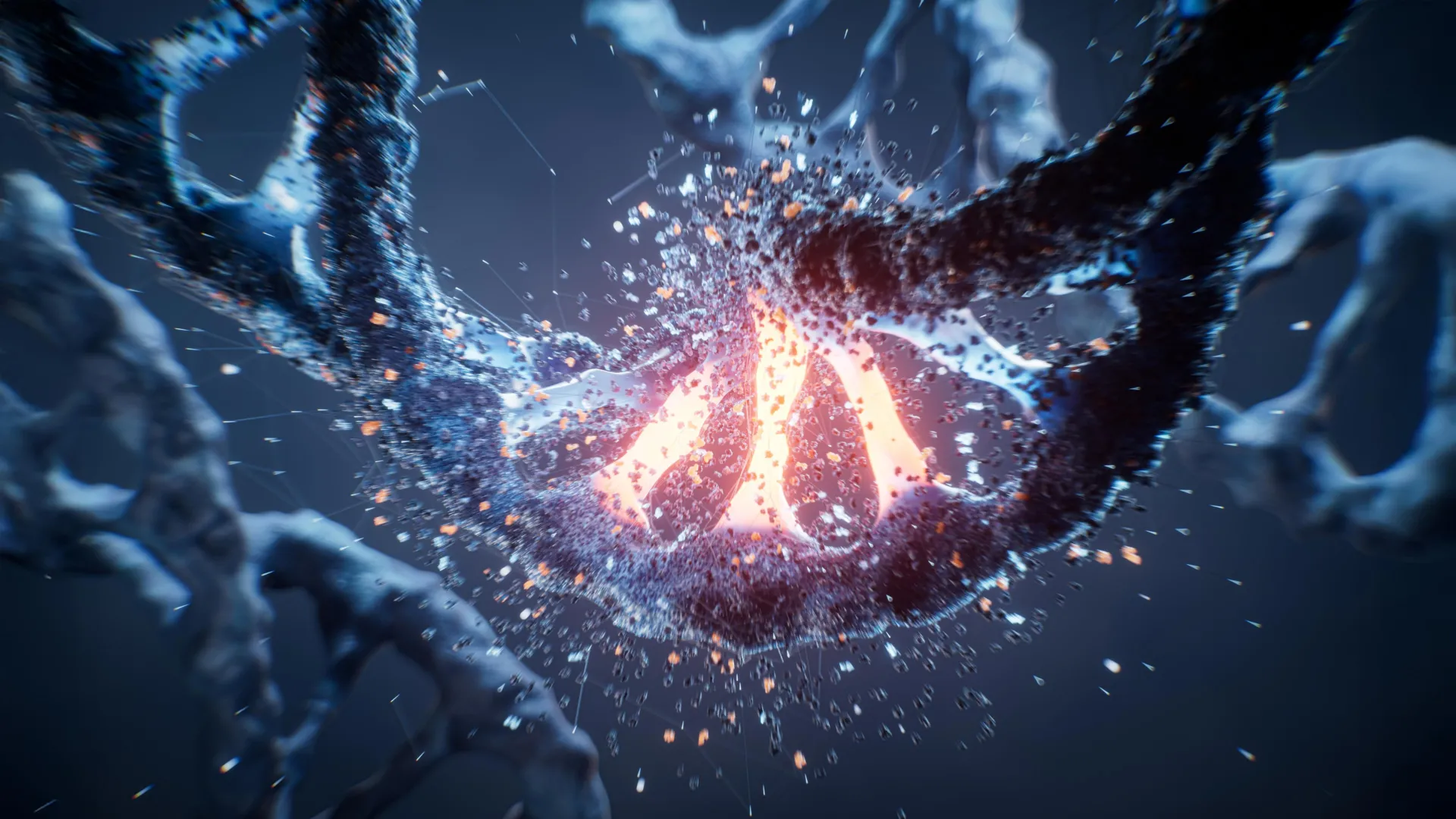
Scientists have built a detailed map showing how hundreds of possible mutations in a major cancer gene affect tumor growth. The research offers a clearer picture of how small genetic changes can lead to very different cancer behaviors.
The work centers on CTNNB1, a gene responsible for producing the protein β-catenin. This protein plays a critical role in controlling normal tissue growth and repair. When β-catenin regulation breaks down, cells can begin growing uncontrollably, a defining feature of cancer.
By carefully testing every possible mutation in a key region of this gene, researchers were able to explain why certain mutations appear repeatedly in specific cancers. The findings may also help guide future cancer treatments.
Why a Small Genetic Hotspot Matters
Many cancers share mutations in a tiny section of CTNNB1 known as a hotspot. Under normal conditions, this region acts as a signal that tells the cell when to break down β-catenin after it has done its job.
When mutations disrupt this signal, β-catenin is no longer destroyed as it should be. Instead, it builds up inside cells and switches on genes that promote tumor growth. Scientists have identified more than 70 different mutations in this hotspot across various cancers, but until now it was unclear whether these mutations had different effects.
Testing Every Possible Mutation
Researchers at the University of Edinburgh examined all 342 possible single-letter changes in the CTNNB1 hotspot. They used mouse stem cells, which are ideal for precise genetic editing and closely mirror how β-catenin signaling works in humans.
Using advanced genome-editing tools and a fluorescent readout, the team measured how strongly each mutation activated the β-catenin pathway. This pathway controls genes linked to cell growth. The results varied widely, with some mutations causing only small increases in activity and others triggering much stronger signals.
Connecting Lab Results to Human Cancer
The team then compared their experimental data with genetic information from thousands of cancer patients. The mutation scores closely matched how CTNNB1 mutations behave in people, confirming the accuracy of the map.
The analysis also showed that cancers in different tissues tend to favor mutations that produce specific levels of β-catenin activity. This suggests that tumor location influences which mutations are most likely to thrive.
Links to Immunity and Treatment Response
In liver cancer, the researchers identified two main tumor groups. Tumors with weaker CTNNB1 mutations contained more immune cells, while those with stronger mutations had fewer immune cells. This pattern suggests that the strength of a mutation may affect how a tumor interacts with the immune system and how well it might respond to immunotherapy.
Andrew Wood, Principal Investigator at the University of Edinburgh's Institute of Genetics and Cancer, said: "The new map provides a powerful tool for predicting how specific CTNNB1 mutations affect cancer behaviour and could support the development of more personalised treatments. As the first study to experimentally test every possible mutation in this critical hotspot, it gives scientists a clearer picture of how β-catenin drives tumour growth across different cancer types."
Study Details and Funding
The research is published in Nature Genetics. Funding was provided by the Medical Research Council (MRC) and the Biotechnology and Biological Sciences Research Council (BBSRC). The study was co-led by teams from the University of Edinburgh, Leiden University Medical Center and Koç University.
Story Source:
Materials provided by University of Edinburgh. Note: Content may be edited for style and length.
Journal Reference:
- Anagha Krishna, Alison Meynert, Karamjit Singh Dolt, Martijn Kelder, Agavni Mesropian, Ailith Ewing, Conny Brouwers, Jill WC Claassens, Margot M. Linssen, Shahida Sheraz, Gillian CA Taylor, Philippe Gautier, Anna Ferrer-Vaquer, Graeme Grimes, Hannes Becher, Ryan Silk, Albert Gris-Oliver, Roser Pinyol, Colin A. Semple, Timothy J. Kendall, Thomas Graham Bird, Anna-Katerina Hadjantonakis, Joseph A. Marsh, Josep M. Llovet, Peter Hohenstein, Andrew J. Wood, Derya D. Ozdemir. Mutational scanning reveals oncogenic CTNNB1 mutations have diverse effects on signaling. Nature Genetics, 2026; DOI: 10.1038/s41588-025-02496-5
Cite This Page: