
Scientists discover spider that disguises itself as a parasitic fungus
- Date:
- June 17, 2026
- Source:
- Leibniz Institute for the Analysis of Biodiversity Change
- Summary:
- Scientists have discovered a new Amazonian spider with an astonishing disguise: it looks like a parasitic fungus. The species, Taczanowskia waska, mimics both the appearance and behavior of the fungus, helping it stay hidden from predators and potentially catch prey more easily.
- Share:
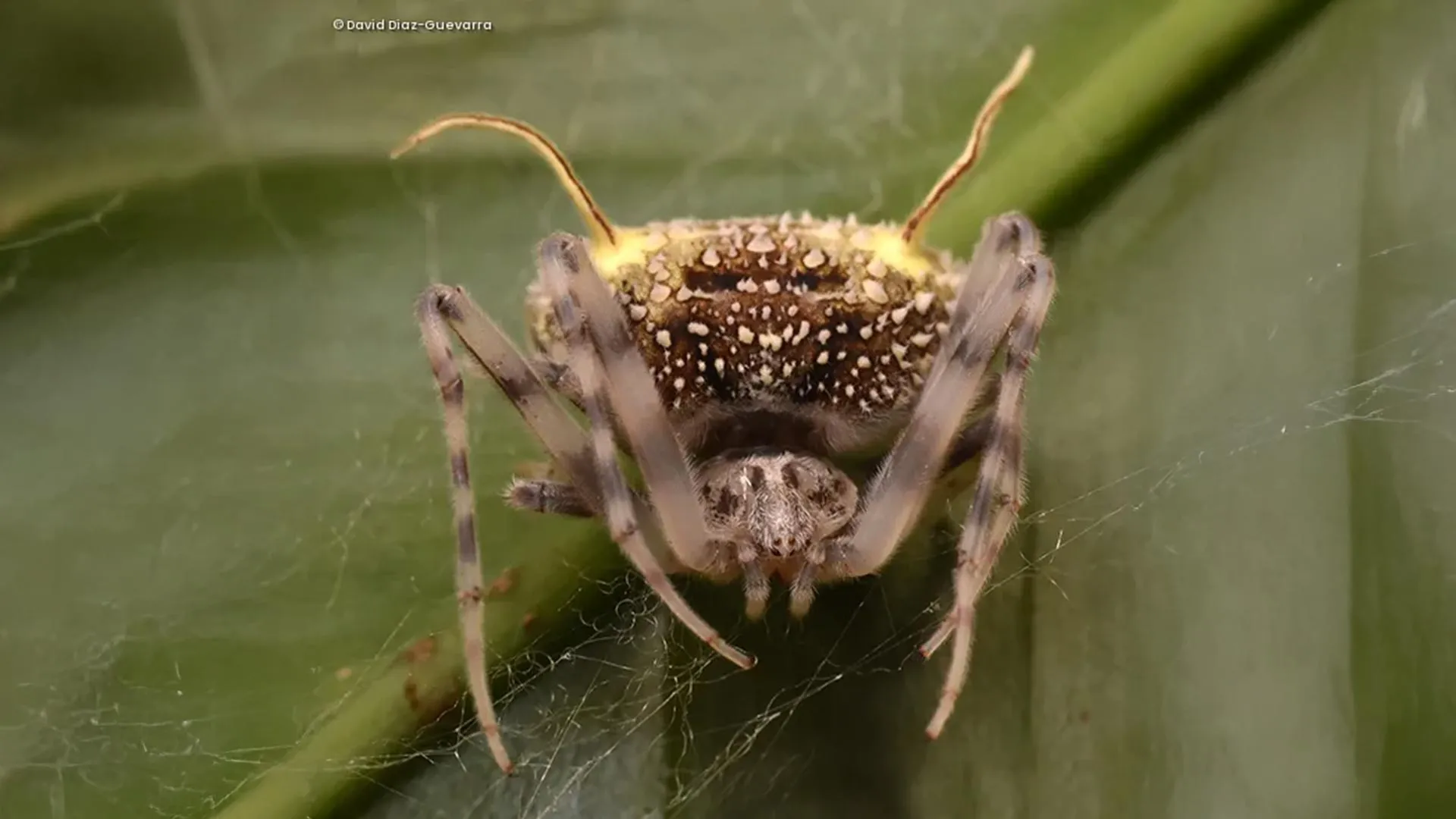
Researchers have identified a remarkable new spider species in Ecuador's Amazon rainforest that disguises itself as a parasitic fungus. The species, named Taczanowskia waska, represents the first known example of a spider mimicking the appearance of a fungus that infects spiders. The discovery was made by an international team of scientists that included researchers from the Leibniz Institute for the Analysis of Biodiversity Change (LIB), and the findings were published in the journal Zootaxa.
The spider was found in the Llanganates-Sangay Corridor, a region of the Ecuadorian Amazon known for its extraordinary biodiversity. During a nighttime field survey, researchers initially mistook the animal for a mushroom, highlighting just how convincing its disguise is.
A Spider With a Fungus-Like Appearance
Taczanowskia waska closely resembles the fruiting body of fungi in the genus Gibellula, which grow on spiders. The spider has elongated structures extending from its abdomen and a pale coloration that gives it the appearance of fungal growth.
Its behavior strengthens the illusion. The spider remains motionless on the undersides of leaves, the same location where Gibellula fungi are commonly found.
Researchers say this combination of appearance and behavior points to a highly specialized adaptation. By blending into its surroundings as something predators are likely to ignore, the spider may reduce its chances of being eaten. The disguise may also help it catch prey by allowing it to remain unnoticed until the right moment.
First Known Example of Its Kind
According to the study, this is the first documented case of a spider imitating a parasitic fungus that infects other spiders. Scientists say the finding offers valuable insight into how mimicry evolves and the ecological functions these adaptations can serve.
The genus Taczanowskia remains poorly understood and is considered rare. Much of its ecology is still a mystery because spiders in this group are seldom encountered in the wild.
Nadine Dupérré of the Museum of Nature Hamburg at LIB contributed to the research by examining reference specimens from scientific collections and helping classify the new species.
Citizen Science Helped Spark the Discovery
The story began with a post on the citizen science platform iNaturalist. What observers initially believed to be a mushroom was later recognized by users as a spider, prompting further scientific investigation.
The case highlights the growing role of citizen science in biodiversity research and species discovery.
"Finds like these demonstrate the value of scientific collections. They enable us to classify new species and compare them with historical specimens. Combined with international collaboration and citizen science, this opens up new opportunities for researching biodiversity," explains Nadine Dupérré.
The discovery also serves as a reminder of how much remains unknown about life in tropical ecosystems. Scientists say it underscores both the immense biodiversity of rainforest regions and the importance of international cooperation and new sources of data in advancing our understanding of the natural world.
Story Source:
Materials provided by Leibniz Institute for the Analysis of Biodiversity Change. Note: Content may be edited for style and length.
Journal Reference:
- DAVID R. DÍAZ-GUEVARA, ALEXANDER GRIFFIN BENTLEY, NADINE DUPÉRRÉ. “The Cordyceps spider”: Taczanowskia waska sp. nov. (Araneae: Araneidae), a new spider species and a novel case of mimicry of an araneopathogenic fungus (Cordycipitaceae: Gibellula). Zootaxa, 2026; 5760 (5): 563 DOI: 10.11646/zootaxa.5760.5.4
Cite This Page: