
Scientists just found a hidden weakness in forever chemicals
Scientists found a hidden weakness in “forever chemicals,” opening the door to technologies that could finally destroy them instead of just moving them around.
- Date:
- June 16, 2026
- Source:
- Aarhus University
- Summary:
- Researchers discovered that hydrogen radicals generated by intense UV light can break down stubborn PFAS “forever chemicals” without added chemicals. The breakthrough reveals a key mechanism that could lead to greener and more effective technologies for permanently destroying these pollutants.
- Share:
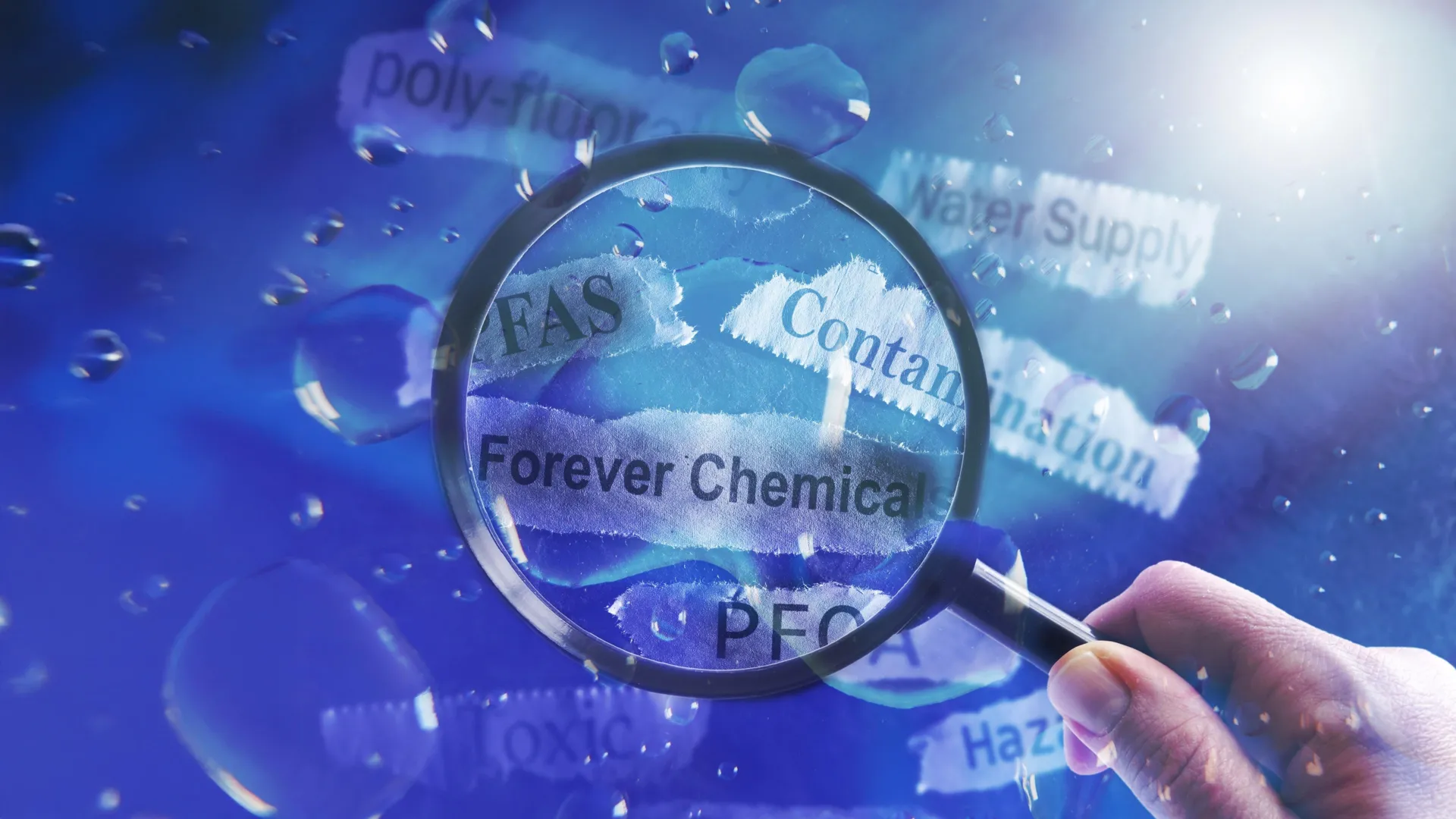
PFAS, widely known as "forever chemicals," are among the most stubborn pollutants scientists face today. Because these compounds are extraordinarily stable, they can remain in water supplies, ecosystems, and even the human body for decades. Their persistence has made PFAS contamination a growing environmental and public health concern around the world.
Now, researchers have uncovered an important clue that could help improve efforts to eliminate these chemicals.
New Clue in the Fight Against PFAS Pollution
A new study shows that PFAS can be broken down using intense light without the need for added chemicals. More importantly, the researchers identified the key process responsible for the breakdown.
The team found that hydrogen radicals, highly reactive particles generated from water when exposed to ultraviolet (UV) light, play a central role in destroying PFAS molecules.
The finding challenges earlier ideas about how PFAS degradation occurs. Previous studies largely focused on other reactive species as the primary drivers of the process. By pinpointing hydrogen radicals as a dominant force, scientists now have a clearer picture of the chemistry involved.
That understanding is important because knowing exactly what drives PFAS destruction can help researchers develop more effective treatment technologies.
How Hydrogen Radicals Break Down Forever Chemicals
Hydrogen radicals are highly reactive and capable of attacking PFAS molecules. During the process, they gradually remove fluorine atoms, breaking the compounds into smaller substances that are less persistent in the environment.
The researchers also found that the reaction works best under high-energy UV light, especially at wavelengths below 300 nanometers.
According to Associate Professor Zongsu Wei of Aarhus University, who led the study, the discovery offers valuable guidance for future technology development:
"We know that PFAS are extremely stable because of the strong carbon-fluorine bonds, and breaking those bonds is the main challenge. By identifying hydrogen radicals as a dominant driver, we now have a clearer direction for how to design more efficient and sustainable technologies to actually destroy these chemicals, rather than just removing them," he says.
Moving Beyond PFAS Removal to PFAS Destruction
Wei notes that many current approaches do not truly solve the PFAS problem. Instead, they often transfer the chemicals from one location to another.
"Today, many technologies can filter PFAS out of water, but they don't eliminate them. The real goal is degradation: to break the molecules down completely. Understanding the mechanism is essential if we want to achieve that in a green and scalable way."
The researchers caution that the new findings are not an immediate solution. The degradation process remains relatively slow, and intermediate compounds can form as the chemicals break apart.
Still, identifying the primary driver behind the reaction represents an important advance. The discovery provides scientists with a critical piece of information that could help accelerate the development of more effective PFAS treatment technologies.
Ultimately, the study suggests that even some of the world's most persistent pollutants may be vulnerable when researchers understand the chemistry well enough to target them directly.
What Are PFAS?
- PFAS (per- and polyfluoroalkyl substances) are a large family of synthetic chemicals that have been used since the 1940s
- They are found in products such as waterproof clothing, food packaging, firefighting foam, and non-stick cookware
- They are often called "forever chemicals" because they break down very slowly in the environment
- PFAS can accumulate in water, soil, wildlife, and people
- Exposure has been linked to health concerns including cancer, liver damage, and hormone disruption
- Most existing water treatment technologies can remove PFAS but do not destroy them
Story Source:
Materials provided by Aarhus University. Note: Content may be edited for style and length.
Journal Reference:
- Lu Bai, Shuang Luo, Jan Thøgersen, Xingaoyuan Xiong, Zheng Guo, Zongsu Wei. Mechanistic Insights into Per- and Polyfluoroalkyl Substance (PFAS) Photolysis under Intensified Simulated Solar Light. Environmental Science, 2026; 60 (16): 12562 DOI: 10.1021/acs.est.5c16178
Cite This Page: