
Scientists discover first gene proven to directly cause mental illness
- Date:
- December 2, 2025
- Source:
- Universität Leipzig
- Summary:
- Scientists have discovered that a single gene, GRIN2A, can directly cause mental illness—something previously thought to stem only from many genes acting together. People with certain variants of this gene often develop psychiatric symptoms much earlier than expected, sometimes in childhood instead of adulthood. Even more surprising, some individuals show only mental health symptoms, without the seizures or learning problems usually linked to GRIN2A.
- Share:
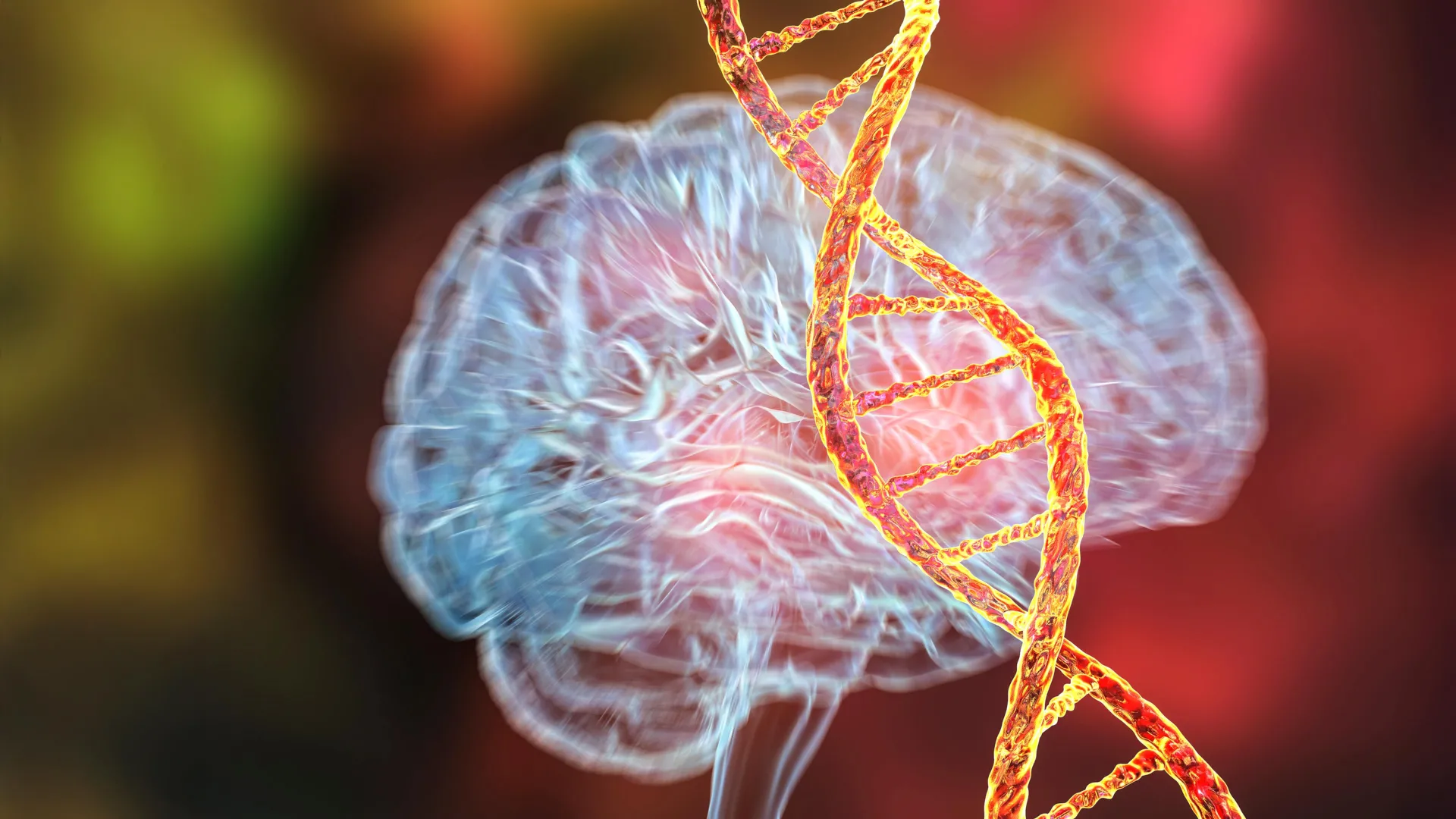
According to the World Health Organization (WHO), nearly one in seven people across the globe lived with a mental illness in 2021, with anxiety disorders and depression occurring most frequently. These conditions often stem from a mix of influences, and genetics play a major part in shaping a person's risk. Having a close family member with a mental illness remains one of the strongest known predictors. Until recently, research suggested that psychiatric disorders typically develop from the combined effects of many different genes.
"Our current findings indicate that GRIN2A is the first known gene that, on its own, can cause a mental illness. This distinguishes it from the polygenic causes of such disorders that have been assumed to date," says Professor Johannes Lemke, lead author of the study and Director of the Institute of Human Genetics at the University of Leipzig Medical Center.
Study Links GRIN2A Variants to Early-Onset Psychiatric Symptoms
In this investigation, researchers conducted a statistical analysis of data from 121 individuals who carried a genetic change in the GRIN2A gene. "We were able to show that certain variants of this gene are associated not only with schizophrenia but also with other mental illnesses. What is striking is that, in the context of a GRIN2A alteration, these disorders already appear in childhood or adolescence -- in contrast to the more typical manifestation in adulthood," says Professor Lemke. The research team also highlighted an unexpected finding: some participants showed only psychiatric symptoms, even though GRIN2A changes are usually linked to epilepsy or intellectual disability.
How GRIN2A Affects Brain Signaling and a Possible Treatment Approach
The GRIN2A gene helps regulate how active nerve cells are by influencing their electrical signaling. In this study, certain gene variants reduced the function of the NMDA receptor, a key component involved in communication between brain cells. Working with Dr. Steffen Syrbe, Professor at the Heidelberg Medical Faculty and pediatric neurologist at Heidelberg University Hospital, the team demonstrated that this reduced activity may be medically important. In an early treatment effort, patients experienced noticeable improvements in psychiatric symptoms after receiving L-serine -- a dietary supplement that activates the NMDA receptor.
Professors Johannes Lemke and Steffen Syrbe have collaborated for nearly 15 years in both clinical and research settings to better understand disorders involving the brain's glutamate receptor in children with neurological conditions. Over this period, Professor Lemke established an international registry containing the largest known group of GRIN2A patients worldwide, providing the foundation for the findings published in this study.
Story Source:
Materials provided by Universität Leipzig. Note: Content may be edited for style and length.
Journal Reference:
- Johannes R. Lemke, Andrea Eoli, Ilona Krey, Bernt Popp, Vincent Strehlow, Dirk A. Wittekind, Anna-Leena Vuorinen, Hesham M. Aldhalaan, Sarah Baer, Anne de Saint Martin, Trine B. Hammer, Isabella Herman, Frauke Hornemann, Trine Ingebrigtsen, Damien Lederer, Gaetan Lesca, Dana Marafie, Mikael Mathot, Jill A. Rosenfeld, Rikke S. Møller, Helenius J. Schelhaas, Chelsey Stillman, Alessandro Orsini, Anup D. Patel, Juliette Piard, Pierangelo Veggiotti, Danique R. M. Vlaskamp, Sarah Weckhuysen, Stephen F. Traynelis, Tim A. Benke, Henrike O. Heyne, Steffen Syrbe. GRIN2A null variants confer a high risk for early-onset schizophrenia and other mental disorders and potentially enable precision therapy. Molecular Psychiatry, 2025; DOI: 10.1038/s41380-025-03279-4
Cite This Page: