
New ghost marsupial related to the kangaroo found in Australia
Scientists exploring Western Australian fossil caves have identified a new bettong species and two new woylie subspecies.
- Date:
- December 13, 2025
- Source:
- Curtin University
- Summary:
- Researchers analyzing ancient fossils from caves across Western Australia have uncovered a completely new species of bettong along with two new woylie subspecies—remarkable finds made bittersweet by signs that some may already be extinct.
- Share:
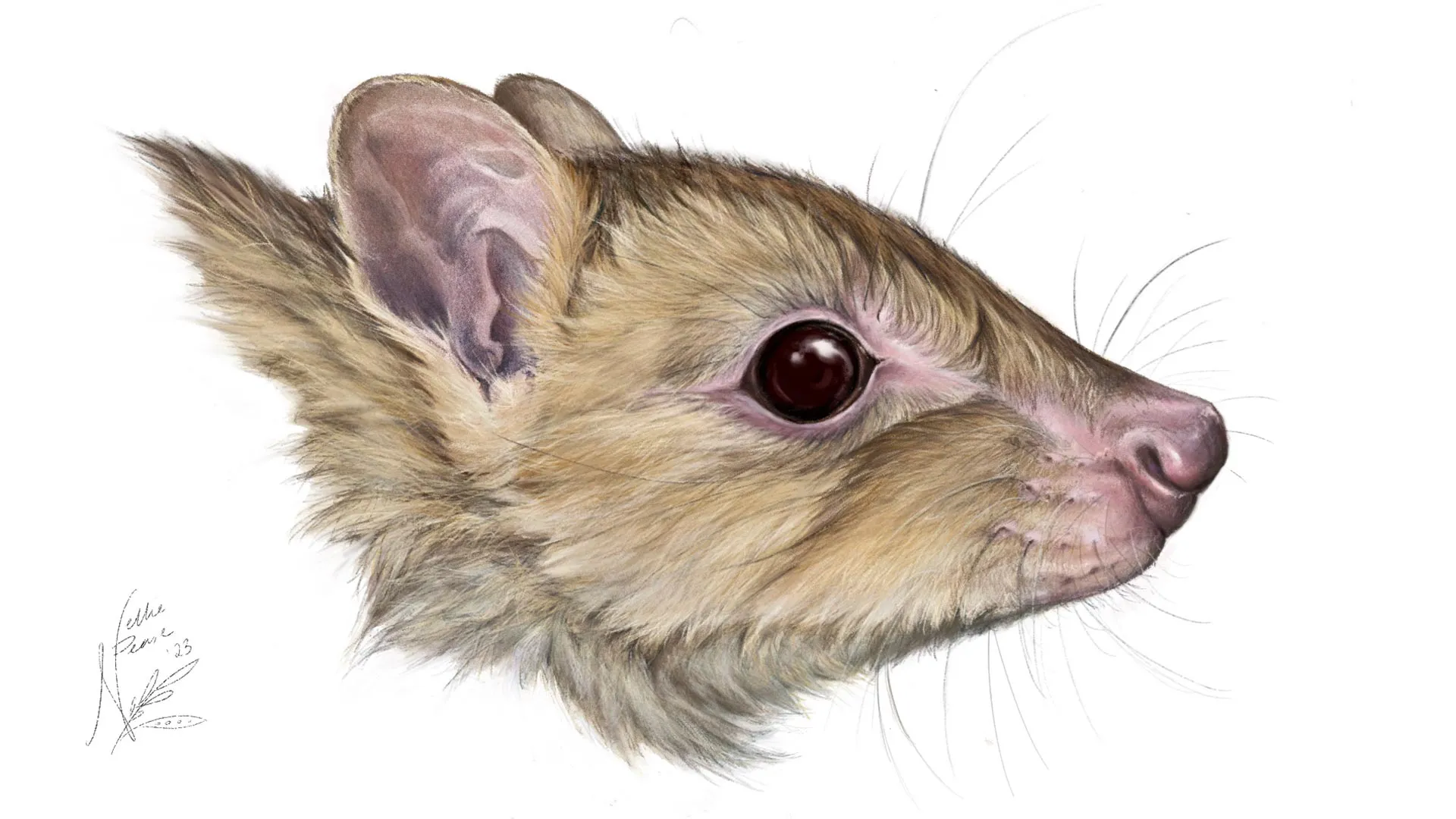
A previously unknown species of native bushland marsupial, closely related to the kangaroo, has been identified through new research. Scientists report that this animal was already likely extinct by the time its remains were studied.
By analyzing fossils recovered from caves across the Nullarbor and southwest Australia, researchers from Curtin University, the Western Australian Museum and Murdoch University identified a completely new species of bettong, along with two newly recognized subspecies of woylie.
Woylies as Key Ecosystem Engineers
Woylies play an important ecological role because they can move several tonnes of soil each year while searching for their preferred mushroom foods. These small kangaroo relatives are native to Western Australia and have become the country's most frequently translocated mammal due to ongoing conservation programs aimed at protecting the critically endangered species.
Lead author Mr. Jake Newman-Martin, a PhD student in Curtin's School of Molecular and Life Sciences, explained that the findings provide essential insight into the diversity of woylies, also known as brush-tailed bettong.
"Woylies are critically endangered marsupials that have been the focus of conservation efforts for decades," Mr. Newman-Martin said.
New Species and Subspecies Identified Through Fossil Material
"In this new research, we've named a completely new species based on fossil material, and two new subspecies of woylies for the first time. Sadly, many of them have become extinct before we've even been aware of them.
"Our results split the critically endangered woylie into two living subspecies, which is very important for conservation when we're considering breeding and translocation initiatives to increase the size and fitness of populations."
Co-author Dr. Kenny Travouillon, Curator of Terrestrial Zoology at the Western Australian Museum, said the team used detailed bone measurements to better understand the number and variety of woylie species.
Fossils Offer New Clues for Conservation
"This research confirmed several distinct species and expanded the known diversity of woylies by measuring skull and body fossil material that had previously not been looked at in detail," Dr. Travouillon said.
"What we've found through this research tells us that examining fossils alongside genetic tools could offer significant insights that may help conservation efforts of this critically endangered native species."
The scientific name proposed for the new Nullarbor species is Bettongia haoucharae. The team will work with Indigenous groups to develop an appropriate collaborative name because woylie is a Noongar word.
Extensive Museum Collections Support the Findings
The study examined specimens held by the Western Australian Museum, South Australia Museum, Australian Museum, Queensland Museum, Museums Victoria, Flinders University research collection, Natural History Museum London and Oxford University Museum of Natural History.
Story Source:
Materials provided by Curtin University. Note: Content may be edited for style and length.
Journal Reference:
- JAKE NEWMAN-MARTIN, KENNY J. TRAVOUILLON, NATALIE WARBURTON, MILO BARHAM, ALISON J. BLYTH. A taxonomic revision of the Bettongia penicillata (Diprotodontia: Potoroidae) species complex and description of the subfossil species Bettongia haoucharae sp. nov.. Zootaxa, 2025; 5690 (1): 1 DOI: 10.11646/zootaxa.5690.1.1
Cite This Page: