
Coral reefs could feed millions if we let them rebuild
- Date:
- January 4, 2026
- Source:
- Smithsonian Tropical Research Institute
- Summary:
- Overfished coral reefs are producing far less food than they could. Researchers found that letting reef fish populations recover could boost sustainable fish yields by nearly 50%, creating millions of extra meals each year. Countries with high hunger and nutrient deficiencies would benefit the most. Rebuilding reefs could turn ocean conservation into a powerful tool against global hunger.
- Share:
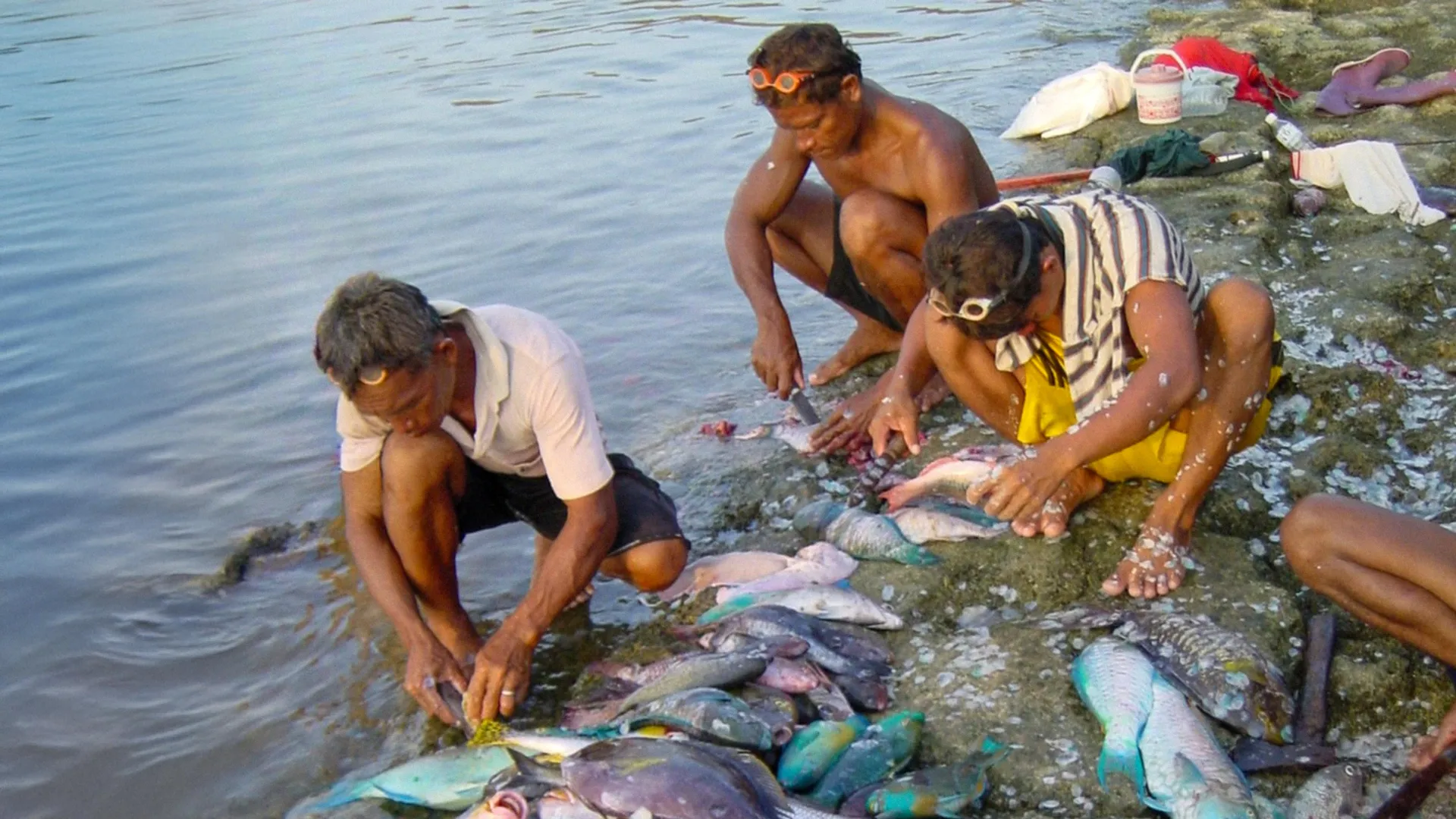
The world is now home to about 8.3 billion people, and millions still do not have enough nutritious food. As concerns about food security grow, scientists are looking beyond land for solutions. New research suggests the ocean could play a much larger role than previously thought. A team led by scientists at the Smithsonian Tropical Research Institute (STRI) in Panama found that restoring coral reef fish populations could greatly increase the amount of seafood produced sustainably each year, providing food for millions of people.
The study shows that many reef fish populations have been heavily overfished and are producing far below what they could support over the long term. By allowing these fish stocks to rebuild, researchers say coral reefs could help address hunger on a global scale.
Measuring the Cost of Overfishing
"Our study quantifies how much is being lost by having overfished reef fish communities in terms of food provisioning and, in turn, how much could be gained from rebuilding reef fish stocks and managing them at sustainable levels," explains Jessica Zamborain-Mason, a professor at King Abdullah University of Science and Technology (KAUST) and first author of the recently published paper in the journal PNAS.
According to the findings, healthier reef fish populations could significantly expand the amount of seafood available to people while remaining within sustainable limits.
A 50 Percent Boost in Sustainable Fish Supply
The researchers found that coral reefs around the world could raise sustainable fish production by nearly 50 percent if fish populations were allowed to recover. This increase could translate into anywhere from 20,000 to as many as 162 million additional sustainable fish servings per country each year. That amount is enough to meet recommended seafood consumption levels for millions of people, defined as eight ounces per week per person.
The largest gains would occur in countries already facing serious hunger and micronutrient deficiencies. Regions in Africa and Southeast Asia stand to benefit the most. Indonesia, in particular, was identified as having the greatest potential increase in food supply from restored reef fisheries.
Hunger and Reef Recovery Are Closely Linked
"There is a positive correlation between countries' potential increase in the number of fish servings with stock recovery and their global hunger index. Therefore, countries with higher malnutrition indexes could benefit more from recovered reef fish stocks," expressed STRI staff scientist and co-author of the study Sean Connolly.
This connection suggests that restoring reef fisheries could deliver the greatest nutritional benefits where they are most urgently needed.
How Scientists Estimated Reef Fish Recovery
To reach these conclusions, researchers analyzed data from coral reef regions around the world. The study included territories in countries such as the Dominican Republic, Panama, Jamaica, Kenya, Mauritius, Oman, Jamaica, Madagascar, the Philippines, and Indonesia, among others.
Using statistical models, the team estimated current fish populations and projected how much they could increase if overfished reefs were managed more effectively. They calculated how large fish stocks would need to grow to reach "maximum sustainable yields" and "pretty good yields," as well as how long recovery might take under different fishing regulations. Depending on how depleted the reefs are and how strictly fishing is limited, recovery times were estimated to range from an average of six to 50 years.
Beyond Conservation to Food Security
The researchers emphasize that restoring coral reef fisheries is not only about protecting ecosystems. The study shows that rebuilding fish populations could directly improve nutrition and help reduce hunger. Reaching these benefits would require strong fisheries management that allows fish stocks to grow rather than be continuously depleted.
In some areas, successful recovery would also depend on providing alternative livelihoods for fishing communities during rebuilding periods, along with international cooperation and support. The next step, scientists say, is developing strategies that protect marine ecosystems while also supporting the people who depend on them.
"Our findings also reinforce that effective reef fisheries monitoring and management has substantial and measurable benefits beyond environmental conservation; it has food security and public health implications," explains Zamborain-Mason.
Story Source:
Materials provided by Smithsonian Tropical Research Institute. Note: Content may be edited for style and length.
Journal Reference:
- Jessica Zamborain-Mason, Joshua E. Cinner, M. Aaron MacNeil, Maria Beger, David Booth, Sebastian C. A. Ferse, Christopher D. Golden, Nicholas A. J. Graham, Andrew S. Hoey, David Mouillot, Sean R. Connolly. Potential yield and food provisioning gains from rebuilding the world’s coral reef fish stocks. Proceedings of the National Academy of Sciences, 2025; 122 (51) DOI: 10.1073/pnas.2508805122
Cite This Page: