
This simple design change could finally fix solid-state batteries
- Date:
- January 9, 2026
- Source:
- The Korea Advanced Institute of Science and Technology (KAIST)
- Summary:
- Scientists in South Korea have discovered a way to make all-solid-state batteries safer and more powerful using inexpensive materials. Instead of adding costly metals, they redesigned the battery’s internal structure to help lithium ions move faster. This simple structural tweak boosted performance by up to four times. The work points to cheaper, safer batteries for phones, electric vehicles, and beyond.
- Share:
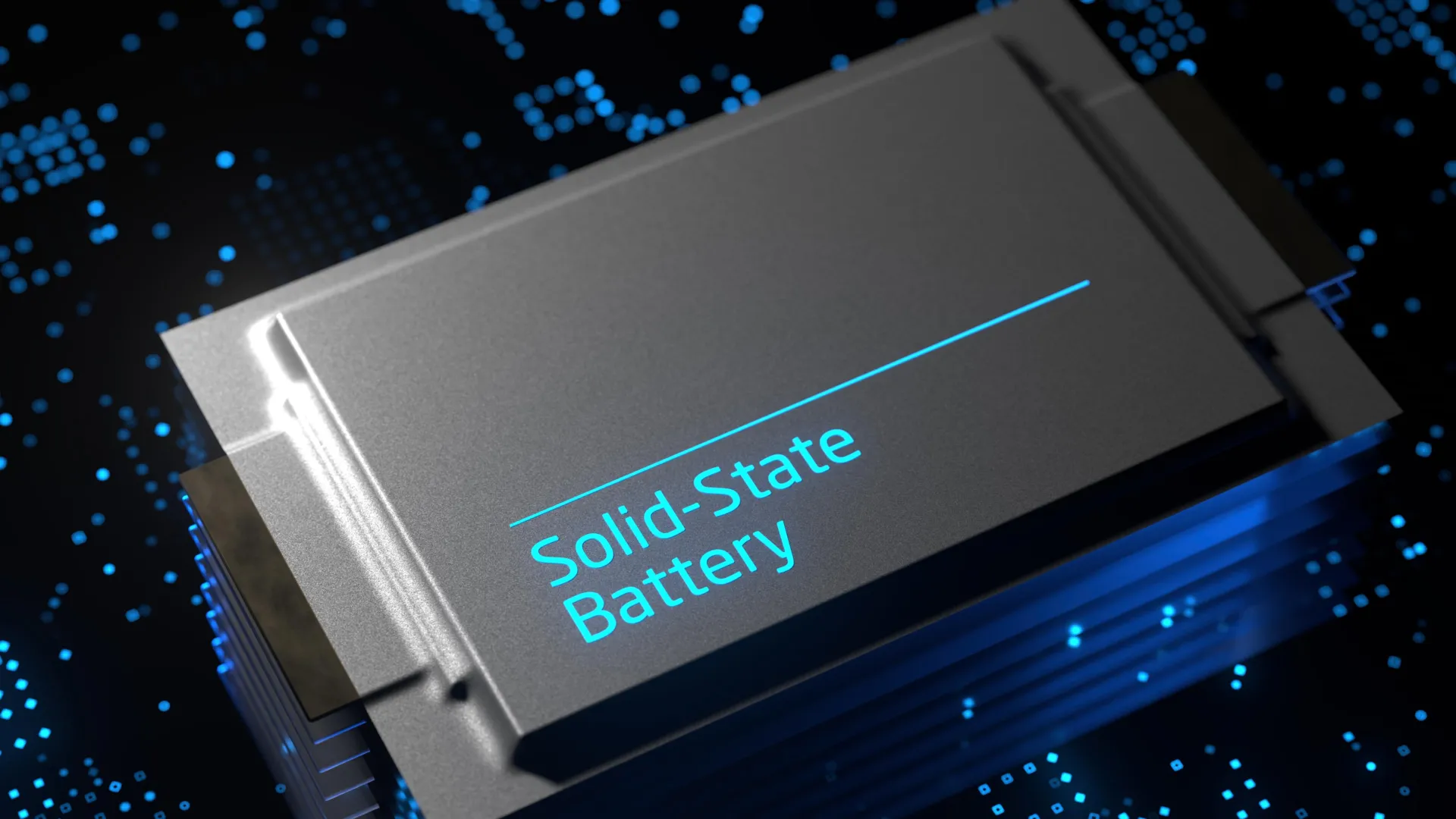
Batteries play a critical role in everyday life, from powering smartphones to enabling electric vehicles. Despite their importance, today's batteries still come with major drawbacks, including high costs and the risk of fires or explosions. All-solid-state batteries have long been viewed as a safer alternative, but progress has been slowed by the challenge of balancing safety, performance, and affordability. Now, a research team in South Korea has shown that battery performance can be significantly improved through smart structural design alone, without relying on expensive metals.
On January 7th, KAIST announced a breakthrough by a research team led by Professor Dong-Hwa Seo from the Department of Materials Science and Engineering. The project brought together researchers led by Professor Sung-Kyun Jung (Seoul National University), Professor Youn-Suk Jung (Yonsei University), and Professor Kyung-Wan Nam (Dongguk University). Together, they developed a new design approach for key all-solid-state battery materials that uses inexpensive raw ingredients while maintaining strong performance and a lower risk of fire or explosion.
Why Solid Electrolytes Are Safer but Harder to Optimize
Traditional lithium-ion batteries depend on a liquid electrolyte that allows lithium ions to move between electrodes. All-solid-state batteries replace this liquid with a solid electrolyte, which greatly improves safety. However, lithium ions move more slowly through solids, and past efforts to speed them up often depended on costly metals or complicated manufacturing techniques.
Using Crystal Chemistry to Speed Up Lithium Movement
To solve this problem, the researchers focused on improving how lithium ions travel through solid electrolytes. Their strategy centered on the use of "divalent anions" such as oxygen and sulfur . These elements influence the crystal structure of the electrolyte by becoming part of its fundamental framework, which can change how ions move inside the material.
The team applied this idea to low-cost zirconium (Zr)-based halide solid electrolytes. By carefully introducing divalent anions, they were able to precisely adjust the internal structure of the material. This approach, known as the "Framework Regulation Mechanism," expands the pathways available to lithium ions and reduces the energy needed for them to move. As a result, lithium ions can travel more quickly and efficiently through the solid material.
Advanced Tools Confirm Structural Improvements
To confirm that these structural changes worked as intended, the researchers relied on a range of advanced analytical methods, including:
- High-energy Synchrontron X-ray diffraction(Synchrotron XRD)
- Pair Distribution Function (PDF) analysis
- X-ray Absorption Spectroscopy (XAS)
- Density Functional Theory (DFT) modeling for electronic structure and diffusion
These techniques allowed the team to closely examine how the crystal structure changed and how those changes affected lithium-ion movement.
Performance Gains Using Inexpensive Materials
Tests showed that adding oxygen or sulfur to the electrolyte increased lithium-ion mobility by two to four times compared with conventional zirconium-based electrolytes. This improvement indicates that solid-state batteries can reach performance levels suitable for real-world use without relying on expensive materials.
At room temperature, the oxygen-doped electrolyte achieved an ionic conductivity of about 1.78 mS/cm, while the sulfur-doped version reached approximately 1.01 mS/cm. Ionic conductivity measures how easily lithium ions move through a material, and values above 1 mS/cm are generally considered adequate for practical battery applications at room temperature.
Shifting Battery Innovation Toward Smarter Design
Professor Dong-Hwa Seo explained the broader significance of the work, saying, "Through this research, we have presented a design principle that can simultaneously improve the cost and performance of all-solid-state batteries using cheap raw materials. Its potential for industrial application is very high." Lead author Jae-Seung Kim emphasized that the study highlights a shift in battery research, moving attention away from simply choosing new materials and toward designing better structures.
Publication and Research Support
The study, led by co-first authors Jae-Seung Kim (KAIST) and Da-Seul Han (Dongguk University), was published in the international journal Nature Communications on November 27, 2025.
Funding for the research was provided by the Samsung Electronics Future Technology Promotion Center, the National Research Foundation of Korea, and the National Supercomputing Center.
Journal Reference:
- Jae-Seung Kim, Daseul Han, Jinyeong Choe, Youngkyung Kim, Hae-Yong Kim, Soeul Lee, Jiwon Seo, Seung-Hui Ham, You-Yeob Song, Chang-Dae Lee, Juho Lee, Hiram Kwak, Jinsoo Kim, Yoon-Seok Jung, Sung-Kyun Jung, Kyung-Wan Nam, Dong-Hwa Seo. Divalent anion-driven framework regulation in Zr-based halide solid electrolytes for all-solid-state batteries. Nature Communications, 2025; 16 (1) DOI: 10.1038/s41467-025-65702-2
Cite This Page: