
Scared of spiders? Scientists say the real nightmare is losing them
Scientists discovered that nearly 90% of North America’s insects and arachnids have no conservation status—revealing a huge blind spot in protecting the tiny creatures that keep ecosystems running.
- Date:
- March 14, 2026
- Source:
- University of Massachusetts Amherst
- Summary:
- Spiders and insects may not be fan favorites, but they are vital to the health of ecosystems—and scientists barely know how they’re doing. Researchers found that nearly 90% of North America’s insect and arachnid species have no conservation status, leaving their fate largely unknown. Even more striking, most states don’t protect a single arachnid species. The study warns that these overlooked creatures are essential to planetary health and urgently need better monitoring and protection.
- Share:
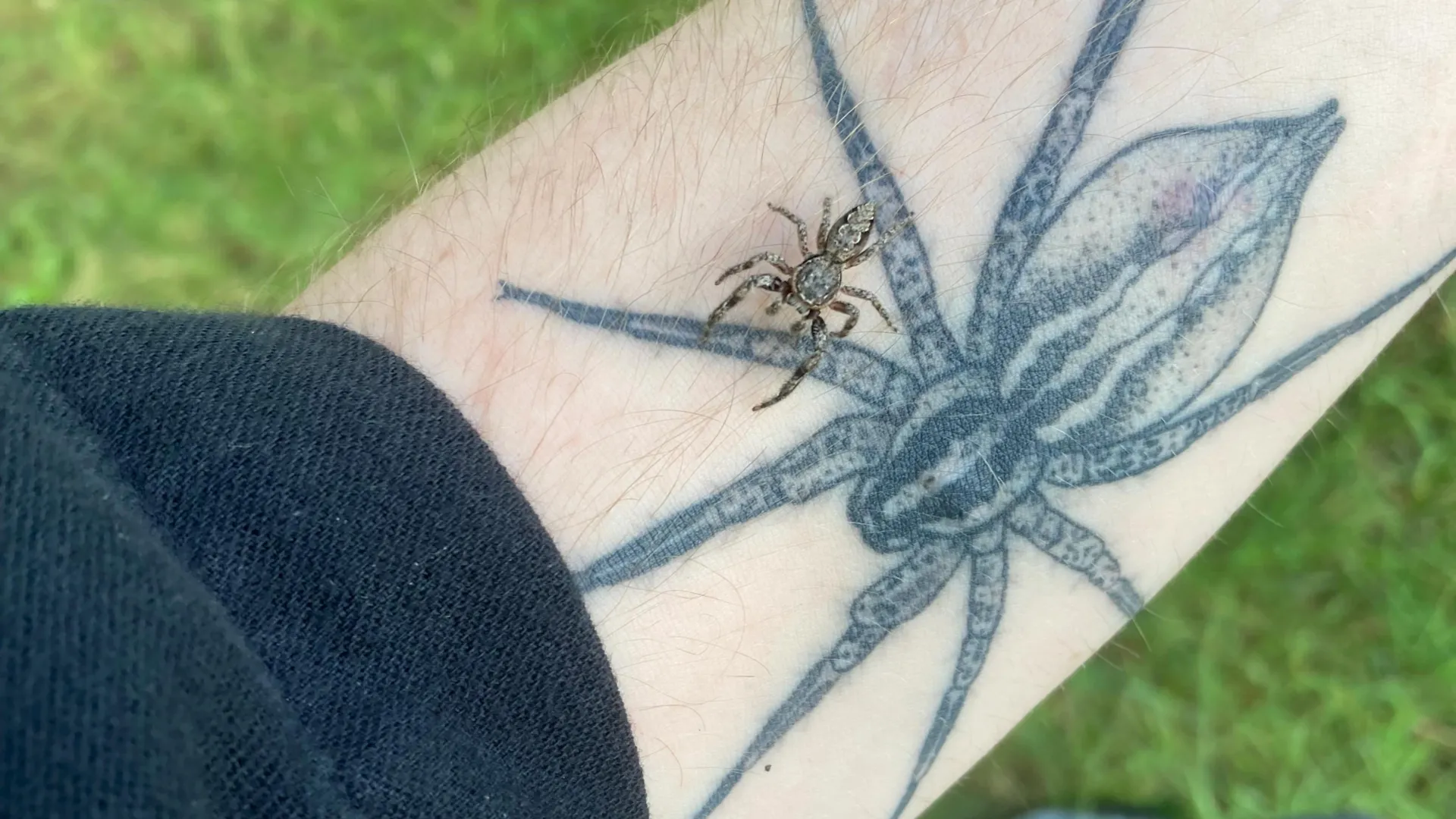
Members of the arachnid class -- think spiders, scorpions and harvestmen (daddy long legs) -- often trigger feelings of fear or disgust. Despite this reaction, these animals play an essential role in maintaining healthy ecosystems. As global biodiversity declines, including what some researchers describe as an "insect apocalypse," two ecologists at the University of Massachusetts Amherst set out to examine how insects and arachnids are doing in the United States. What they uncovered was striking: there are enormous gaps in the available data. Their findings, recently published in PNAS, highlight an urgent need to better study, protect and appreciate insects and arachnids, which form a critical foundation for planetary health.
"Insects and arachnids are fundamental for human society," says Laura Figueroa, assistant professor of environmental conservation at UMass Amherst and the study's senior author. "They help with pollination and biological control of pests; they can serve as monitors of air and water quality, and they have worked their way deeply into many cultures throughout the world" -- think of Aragog in the Harry Potter book series, for example. "Many people care about popular charismatic animals on the planet, like lions and pandas, which, justly, have received international conservation attention. Given that insects and arachnids don't usually get the same attention, we wanted to know how they were doing."
Nearly 90% of Species Lack Conservation Status
To understand the condition of these often overlooked creatures, Figueroa and her graduate student Wes Walsh, the paper's lead author, compiled conservation assessments for the 99,312 known insect and arachnid species living in North America north of Mexico. The results were startling.
"Almost 90% -- 88.5% to be precise -- of insect and arachnid species have no conservation status," says Figueroa. "We simply have no idea how they are doing. Almost nothing is known about the conservation needs of most insects and arachnids in North America."
The limited information that does exist is uneven. Much of the available research focuses on aquatic insects that help scientists monitor water quality (mayflies, stoneflies and caddisflies). Meanwhile, more visually appealing insect groups such as butterflies and dragonflies receive a disproportionate share of conservation protections.
"Arachnids, in particular, are really missing from conservation; most states don't even protect a single species. We need more data and protection for insects, but also arachnids," says Walsh.
Conservation Protection Varies by State
The researchers also found patterns in which states are more likely to protect these species. States that depend heavily on extractive industries such as mining, quarrying and oil and gas extraction tended to offer fewer protections for insects and arachnids. In contrast, states where public attitudes are more environmentally focused were more likely to safeguard a larger number of species.
Lessons From Successful Bird Conservation
Figueroa points to bird conservation as an example of how coordinated efforts can make a difference. Programs focused on birds have achieved far greater success in protecting and recovering species.
"The research shows that you get the best conservation efforts when broad, diverse coalitions come together," she says. "In the case of birds, it was hunters, bird watchers, nonprofit organizations and many other constituencies who banded together to reach a common goal."
Why Insects and Arachnids Deserve Protection
"Insects and arachnids are more than objects of fear," says Walsh, who sports a beautiful spider tattoo on his arm. "We need to appreciate them for their ecological importance, and that begins with collecting more data and considering them worthy of conservation."
Story Source:
Materials provided by University of Massachusetts Amherst. Note: Content may be edited for style and length.
Journal Reference:
- Wes Walsh, Laura L. Figueroa. Data deficiency, taxonomic bias, and economic interests curtail insect and arachnid conservation in the United States. Proceedings of the National Academy of Sciences, 2026; 123 (10) DOI: 10.1073/pnas.2522779123
Cite This Page: