
“Baffling” new snake species in Myanmar looks like multiple species at once
- Date:
- April 21, 2026
- Source:
- Pensoft Publishers
- Summary:
- Scientists have uncovered a fascinating new species of pit viper in Myanmar that seems to blur the very definition of what a species is. This snake, now named the Ayeyarwady pit viper, puzzled researchers because it looks like a mix between two known species—sometimes resembling one, sometimes the other, and occasionally something in between. Initially suspected to be a hybrid, genetic analysis revealed it is actually its own distinct species.
- Share:
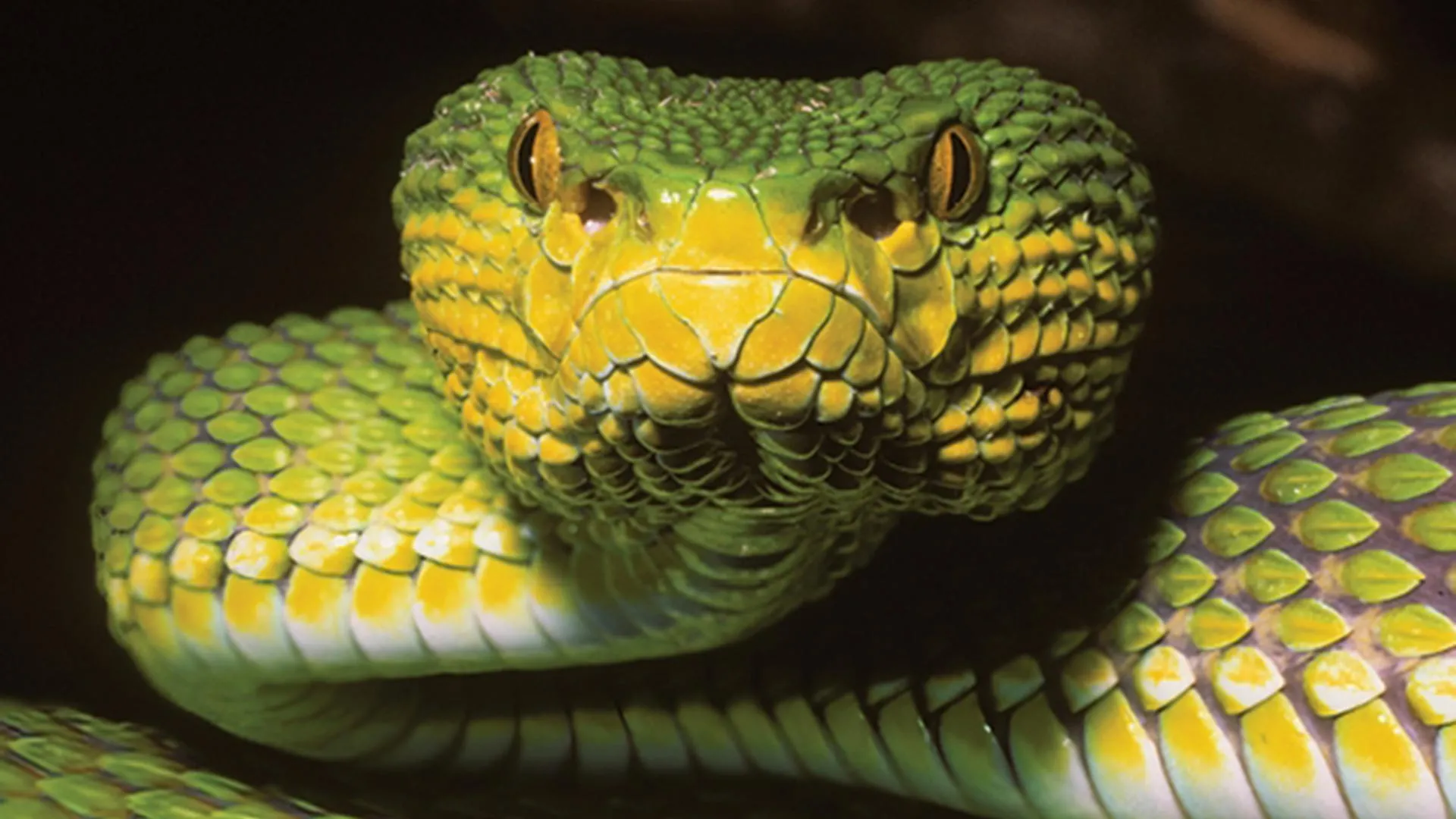
Identifying a new species is not always straightforward. Scientists usually rely on physical traits that separate one species from another, but in nature those differences do not always fall into neat categories. Sometimes two different species look almost identical. These are called cryptic species. In other cases, a single species can vary so much in appearance that it seems like several different species instead. The challenge becomes even greater when both patterns show up at the same time.
Herpetologist Dr. Chan Kin Onn (previously at the Lee Kong Chian Natural History Museum, Singapore, now with the University of Kansas Biodiversity Institute and Natural History Museum, USA) led research on a pit viper from Myanmar that seemed to be both similar to and distinct from its closest relatives. The work was published in the open access journal ZooKeys, building on an earlier genomic study in Systematic Biology that had already indicated the snakes represented a separate evolutionary lineage.
"Asian pit vipers of the genus Trimeresurus are notoriously difficult to tell apart, because they run the gamut of morphological variation. Some groups contain multiple species that look alike, while others may look very different but are actually the same species," they say.
How the Myanmar pit vipers differ
One close relative, the redtail pit viper (Trimeresurus erythrurus), lives along the northern coast of Myanmar and is consistently bright green with no body markings. Another, the mangrove pit viper (Trimeresurus purpureomaculatus), is found in southern Myanmar and usually has dark blotches along its back. It can appear gray, yellow, brown, or black, but not green. Between those two ranges, in central Myanmar, researchers found an unusual population of green snakes with different amounts of blotching. At first glance, they looked like a blend of the two known species.
"This mysterious population in central Myanmar baffled us and we initially thought that it could be a hybrid population," the researchers said. But the earlier genomic analysis showed something more surprising. The snakes were not hybrids. They represented a distinct species of their own.
A distinct species with highly variable looks
The story became even more interesting when the team examined the snakes' physical features in more detail. They found that this newly recognized species is also highly variable in appearance. Some populations are dark green with obvious blotches, making them fairly easy to distinguish from the redtail pit viper, which is bright green and unmarked. But other populations are bright green and lack blotches, making them look almost identical to the redtail pit viper.
"This is an interesting phenomenon, where one species is simultaneously similar and different from its closest relative (the redtail pit viper). We think that at some point in the past, the new species may have exchanged genes with the redtail pit viper from the north and the mangrove pit viper from the south," says Dr. Chan. That interpretation is consistent with the 2023 genomic study, which focused on species delimitation in this pit viper group while accounting for gene flow.
The new snake was named the Ayeyarwady pit viper (Trimeresurus ayeyarwadyensis), after the Ayeyarwady River, the largest and one of the most important rivers in Myanmar. Its broad delta lies between the Pathein River to the west and the Yangon River to the east. Those river systems and their surrounding basins also mark the westernmost and easternmost known distribution limits of the species described in the study.
Story Source:
Materials provided by Pensoft Publishers. Note: Content may be edited for style and length.
Journal References:
- Kin Onn Chan, Shahrul Anuar, Ananthanarayanan Sankar, Ingg Thong Law, Ing Sind Law, Rasu Shivaram, Ching Christian, Daniel G. Mulcahy, Anita Malhotra. A new species of pit-viper from the Ayeyarwady and Yangon regions in Myanmar (Viperidae, Trimeresurus). ZooKeys, 2023; 1186: 221 DOI: 10.3897/zookeys.1186.110422
- Kin Onn Chan, Daniel G Mulcahy, Shahrul Anuar. The Artefactual Branch Effect and Phylogenetic Conflict: Species Delimitation with Gene Flow in Mangrove Pit Vipers (Trimeresurus purpureomaculatus-erythrurus Complex). Systematic Biology, 2023; 72 (6): 1209 DOI: 10.1093/sysbio/syad043
Cite This Page: