
The ocean's health may depend on a tiny microbe inside fish
A hidden alliance between fish and gut bacteria may be quietly helping regulate the oceans—and even the global carbon cycle.
- Date:
- May 31, 2026
- Source:
- University of Miami Rosenstiel School of Marine, Atmospheric, and Earth Science
- Summary:
- A surprising new discovery suggests that tiny microbes living inside fish may be helping shape the chemistry of the world’s oceans. Scientists found evidence that bacteria in the guts of marine fish work alongside their hosts to produce calcium carbonate, a mineral that plays an important role in ocean health and carbon storage. For years, researchers believed fish handled this process on their own, but the new findings point to a hidden partnership between fish and microbes.
- Share:
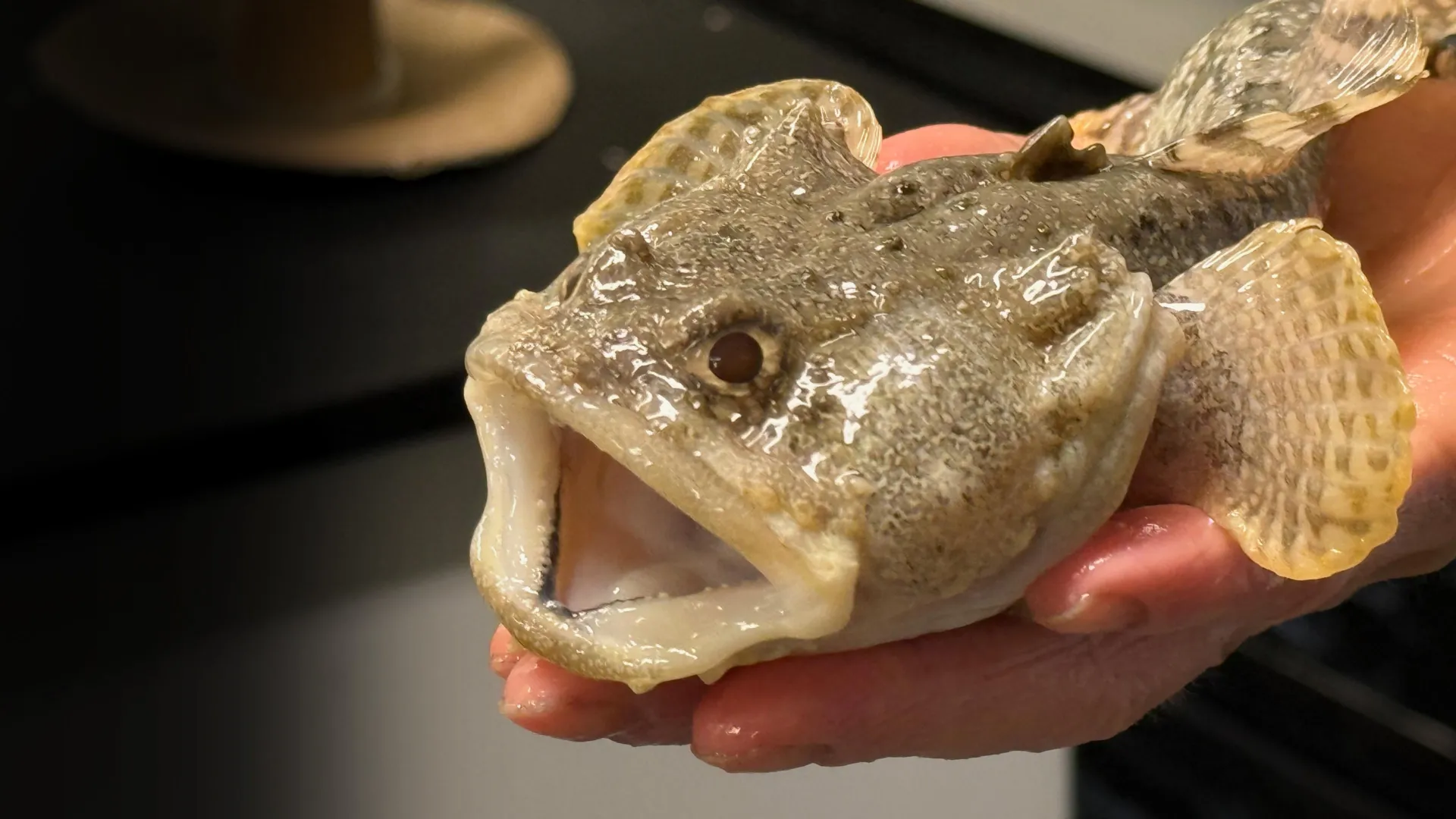
Scientists have uncovered evidence that tiny microbes living inside fish may be helping drive important processes that affect the world's oceans.
The research, led by former University of Miami graduate student Anthony Bonacolta, suggests that gut bacteria and marine fish work together to produce calcium carbonate, a mineral that plays a significant role in ocean chemistry and the marine carbon cycle. The findings point to a previously overlooked partnership that could influence how oceans store carbon and maintain overall health.
Researchers have long believed that this mineral production was controlled mainly by the fish themselves. The new study indicates that microbes living in the fish intestine may also be essential participants in the process.
Fish and Microbes Working Together
Bony fish, known as teleosts, constantly drink seawater to maintain proper hydration. As they process that seawater, excess calcium and carbonate ions are removed from the body and released as solid calcium carbonate pellets called ichthyocarbonates.
"This work suggests that the gut microbiome may play a broader role in both fish biology and global marine nutrient cycles," said one of the study's senior authors, Martin Grosell, Maytag Professor of Ichthyology and chair of the Department of Marine Biology and Ecology. "What was previously thought to be a process driven solely by the fish may actually reflect a close symbiosis between the fish and its gut microbial community."
Testing Fish in Different Salinity Conditions
To investigate the process, researchers conducted laboratory experiments using Gulf toadfish exposed to water with different salt concentrations. The fish were kept in brackish water (9 ppt), normal seawater (35 ppt), and hypersaline water (60 ppt).
Scientists wanted to determine how salinity affects ichthyocarbonate production, which is known to increase as fish adjust to saltier conditions through normal osmoregulation.
The results showed clear differences. Fish living in low-salinity water did not produce ichthyocarbonates. Fish kept in seawater did produce them, and production increased even further in the hypersaline environment.
Evidence From the Fish Gut Microbiome
The research team collected samples from multiple areas of the fish intestine, from the ichthyocarbonates themselves, and from the surrounding water.
DNA and RNA analyses allowed scientists to examine both the microbial communities living in the fish and patterns of gene activity in the fish and associated microbes. Genetic sequencing was used to identify the microorganisms present, while gene expression studies helped reveal potential biological functions connected to calcium carbonate formation.
The researchers found that vibrios, especially Photobacterium damselae subsp. damselae, were highly abundant in both the intestinal tract and the ichthyocarbonates. Genetic evidence suggested these bacteria possess capabilities associated with ichthyocarbonate production, indicating they may contribute directly to mineral formation alongside their fish hosts.
Implications for Ocean Health and the Carbon Cycle
The discovery highlights how microscopic organisms can influence large-scale environmental processes.
"Most life on Earth is microbial, driving nutrient cycles and ecosystem function while revealing new dimensions of biological diversity through symbiosis," said Grosell. "The ocean is especially rich in these partnerships, and the toadfish-vibrio symbiosis potentially linked to calcium carbonate production is a striking new example."
The findings provide new insight into the connections between marine animals, their microbiomes, and the global processes that help regulate ocean chemistry and carbon storage.
The research was supported by start-up funds from the University of Miami and by Project PID2023-152522NB-I00 financed by the Ministry of Science, Innovation, and Universities in Spain.
Story Source:
Materials provided by University of Miami Rosenstiel School of Marine, Atmospheric, and Earth Science. Note: Content may be edited for style and length.
Journal Reference:
- Anthony M. Bonacolta, Tristan Kravitz, Rocío Mozo, Lydia J. Baker, Rachael M. Heuer, Martin Grosell, Javier del Campo. Symbiotic bacteria may support calcium carbonate precipitation in the Gulf toadfish. PLOS Biology, 2026; 24 (5): e3003764 DOI: 10.1371/journal.pbio.3003764
Cite This Page: