
The secret reason some cancer treatments stop working
- Date:
- June 9, 2026
- Source:
- University of Montreal
- Summary:
- Scientists have uncovered a hidden immune system "brake" that may help cancers avoid being destroyed. The molecule, called SLAMF6, weakens the body's cancer-fighting T cells and can leave them exhausted over time. Researchers developed antibodies that block this brake, allowing immune cells to stay stronger and attack tumors more effectively in mice.
- Share:
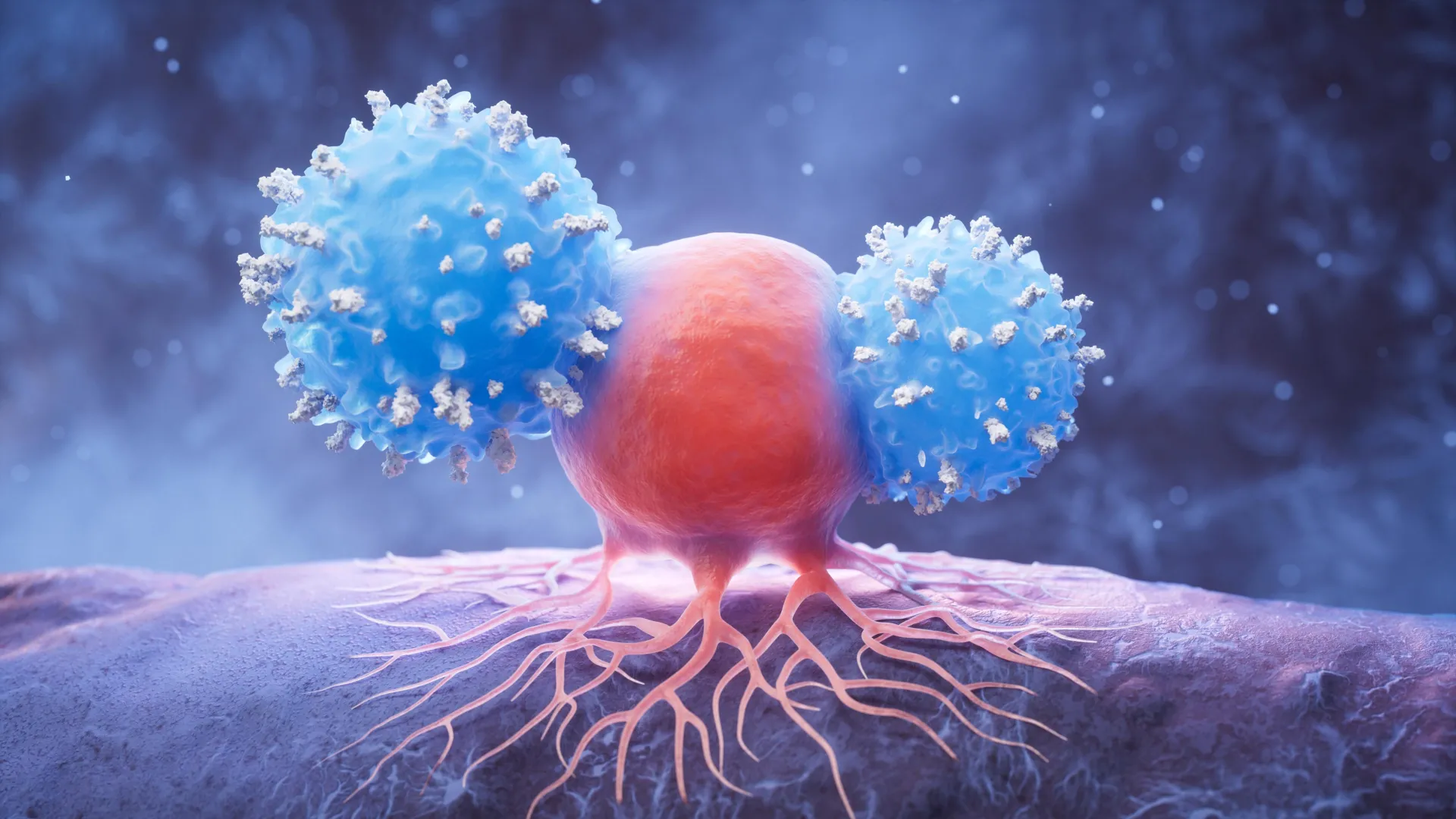
Scientists have identified a previously unknown mechanism that may be helping cancers evade the immune system. The discovery centers on SLAMF6, a molecule found on the surface of immune cells that can prevent T cells from mounting a strong attack against tumors. In experiments involving mice, researchers also developed a way to block its activity.
The findings come from a team led by Dr. André Veillette, a medical professor at the Université de Montréal and director of the Molecular Oncology Research Unit at the Montreal Clinical Research Institute (IRCM), which is affiliated with UdeM. Their study was published in the journal Nature.
A Hidden Immune System Brake
Researchers found that SLAMF6 works differently from many other molecules that suppress immune responses. Most known immune checkpoints require interaction with tumor cells to weaken the body's defenses. SLAMF6, however, can activate itself directly on the surface of T cells.
When this happens, it sends signals that:
- reduce the ability of T cells to attack cancer cells;
- decrease the production of strong, long-lasting T cells;
- accelerate immune exhaustion, a condition in which T cells lose their effectiveness against cancer.
Many current cancer immunotherapies, including PD1 and PDL1 inhibitors, work by removing inhibitory signals created by tumors. While these treatments have helped many patients, a significant number either fail to respond or eventually develop resistance.
New Antibodies Boost Cancer Fighting T Cells
To overcome the effects of SLAMF6, Veillette and his colleagues created monoclonal antibodies designed to stop the molecule from binding to itself and triggering its suppressive signals.
Laboratory testing showed several promising results, including:
- increased activation of human T cells;
- larger numbers of durable immune cells;
- fewer exhausted T cells;
- strong anti-tumor responses in mice.
According to the researchers, these newly developed antibodies perform significantly better than any existing approach aimed at targeting SLAMF6.
Potential New Option for Cancer Patients
The team believes the antibodies could become the foundation of a new class of cancer immunotherapies. They may be particularly useful for patients who no longer benefit from PD1 or PDL1 treatments.
The antibodies could potentially be used on their own or combined with other therapies designed to stimulate the immune system.
The next step will be early stage clinical trials to evaluate the safety and effectiveness of the treatment in people with solid tumors and blood cancers.
"The discovery made by Dr. Veillette's team opens the door to a new chapter in immunotherapy," said IRCM president and scientific director Dr. Jean-François Côté.
"By identifying an internal brake that had until now gone unrecognized and by developing antibodies capable of neutralizing it, our researchers are offering an innovative solution to the limitations of current treatments," he said.
"Rooted in a strategic vision to develop precision therapeutics, this breakthrough brings real hope to many patients and stands as a strong example of the impact of the translational research conducted at the IRCM."
About the Study
The study, "SLAMF6 as a drug-targetable suppressor of T cell immunity against cancer," by André Veillette and colleagues, was published in Nature.
Funding for the research was provided by the Canadian Institutes of Health Research (CIHR), the Terry Fox Research Institute, BioCanRx, Québec's Ministry of Economy, Innovation and Energy, and the Canadian Foundation for Innovation.
Story Source:
Materials provided by University of Montreal. Note: Content may be edited for style and length.
Journal Reference:
- Bin Li, Ming-Chao Zhong, Cristian Camilo Galindo, Jiayu Dou, Jin Qian, Zhenghai Tang, Dominique Davidson, André Veillette. SLAMF6 as a drug-targetable suppressor of T cell immunity against cancer. Nature, 2026; 652 (8110): 722 DOI: 10.1038/s41586-026-10106-5
Cite This Page: