
Europe just unveiled a new rival to SpaceX’s Starship
- Date:
- July 10, 2026
- Source:
- Universe Today
- Summary:
- A detailed independent study found that SpaceX's Starship is every bit as revolutionary as expected, while revealing both its impressive capabilities and its biggest remaining hurdles. It also introduces an ambitious European rocket concept that could offer a very different route to affordable super heavy launches.
- Share:
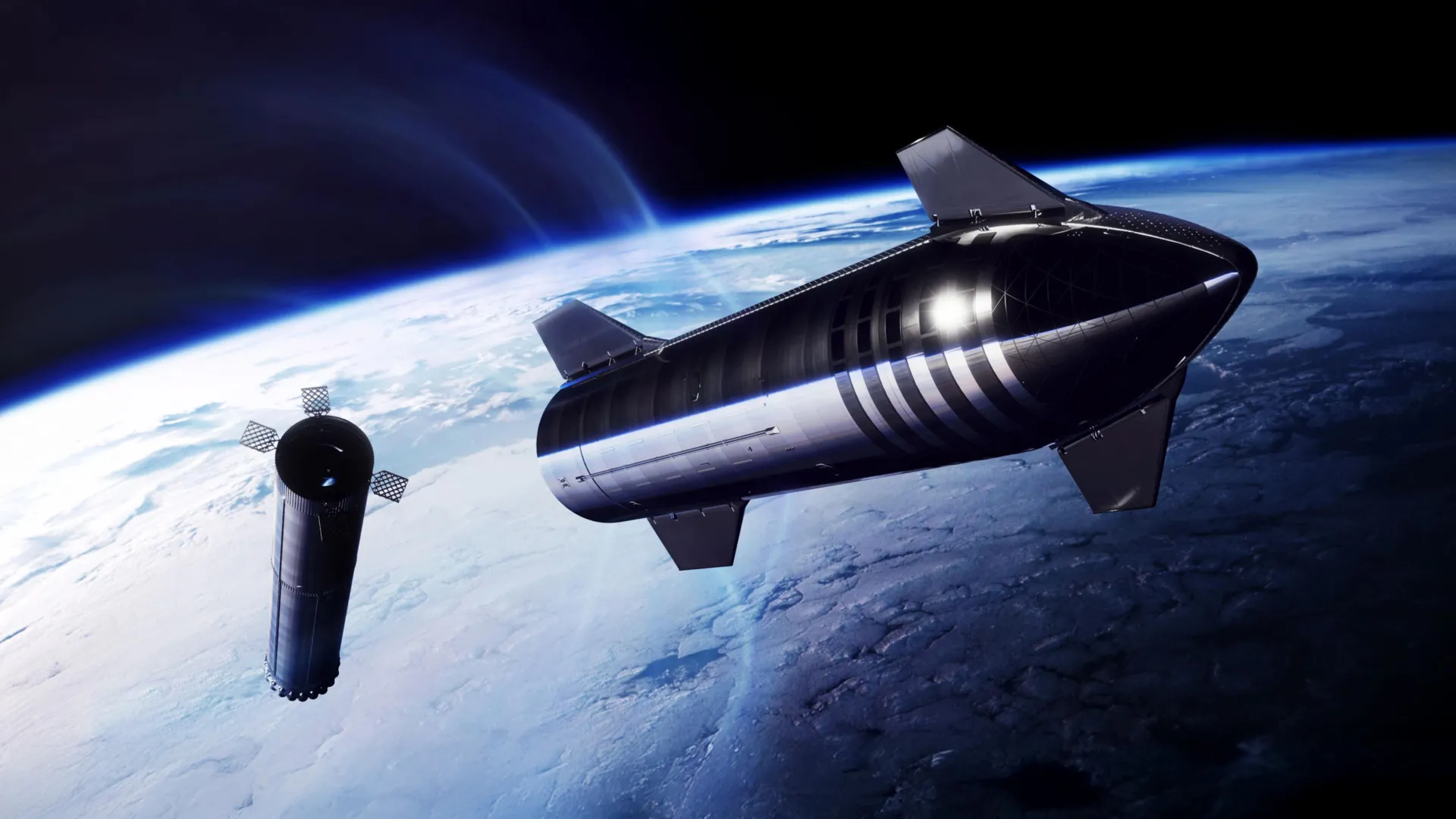
When SpaceX's Starship lifted off from the Texas coast in the summer of 2023, it marked a milestone that aerospace engineers had discussed for decades but few expected to witness so soon. The towering stainless steel rocket, standing taller than a 30 story building, ignited all 33 of its engines and climbed into the sky. The mission did not unfold perfectly, but it proved the concept could fly.
The significance became even clearer during Starship's fifth integrated flight test, when the returning Super Heavy booster was successfully caught in mid air by the giant mechanical arms of the launch tower. That demonstration suggested a new era of reusable spaceflight had begun.
Starship is ultimately intended to carry more than 100 tonnes into low Earth orbit while remaining fully reusable. If SpaceX achieves that goal, it could become the most powerful and cost effective launch vehicle ever built. As a result, space agencies and aerospace companies are now focused less on whether Starship will reshape the industry and more on how they should respond.
Independent Analysis Confirms Starship's Capabilities
Researchers at the German Aerospace Center (DLR) recently completed one of the most comprehensive independent evaluations of Starship to date. Rather than relying on SpaceX's published specifications, the team reconstructed the rocket's performance by extracting telemetry from publicly available video of its first four integrated flight tests. They analyzed the data second by second to build and validate their own performance models.
Their findings suggest Starship's capabilities are both realistic and impressive.
According to the analysis, the current fully reusable version of Starship could deliver about 59 tonnes to low Earth orbit. That is roughly comparable to what Falcon Heavy can launch when none of its boosters are recovered.
The researchers also evaluated SpaceX's planned next generation Starship, which is expected to feature larger propellant tanks and more powerful Raptor 3 engines. Their models project a reusable payload of about 115 tonnes to low Earth orbit, with as much as 188 tonnes possible in an expendable configuration. That would exceed the lift capability of NASA's legendary Saturn V rocket.
Europe's RLV C5 Takes a Different Approach
The study also introduces a European concept for a super heavy launch vehicle called the RLV C5. Instead of attempting full reusability from the beginning, the design focuses on partial reuse while maximizing efficiency.
The concept combines the reusable winged booster from DLR's long running SpaceLiner program with an expendable upper stage. It uses liquid hydrogen and liquid oxygen, a more efficient propellant combination than the methane and oxygen used by Starship's Raptor engines.
Unlike Starship, the RLV C5 booster would not perform a powered vertical landing. After reentering the atmosphere, it would glide on wings before being captured in mid air by a large subsonic aircraft. Although the recovery method sounds futuristic, the researchers argue it offers important advantages. Because the booster does not need to reserve propellant for landing, more of its fuel can be devoted to reaching orbit.
Efficiency Versus Maximum Payload
The study highlights the different engineering priorities behind the two vehicles.
Starship weighs more than three times as much as the proposed RLV C5 at liftoff. Much of that additional mass comes from the hardware required for complete reusability, including heat shield tiles, landing propellant, structural reinforcements, and other recovery systems.
As a result, only about 40% of the mass Starship places into orbit is useful payload. By comparison, the partially reusable RLV C5 would dedicate about 74% of its mass to payload. Although it cannot match Starship's enormous lifting capacity, it achieves much greater efficiency.
Different Missions, Different Solutions
The DLR researchers stress that the two rockets are not direct competitors so much as different solutions to different problems.
Starship's enormous payload capacity and planned rapid reuse make it well suited for ambitious projects such as lunar bases, Mars missions, and massive satellite constellations.
The RLV C5, on the other hand, is intended to provide Europe with an independent super heavy launch capability without the enormous cost of developing a fully reusable system immediately. Because it builds on technologies already being studied through the SpaceLiner program, the researchers believe it could serve as an intermediate step before Europe eventually develops a fully reusable launcher.
A Concept Versus a Flying Rocket
The study also acknowledges an important reality.
Starship is already conducting flight tests, despite continuing technical challenges. The RLV C5 remains a paper concept, and transforming it into an operational launch vehicle would require years of additional development.
Starship itself still faces major engineering hurdles. During its fourth integrated flight test, damage to its thermal protection system was severe enough that the design had to be substantially revised. Achieving rapid, reliable, and fully reusable operations remains one of the biggest unsolved challenges behind the rocket's long term economic model.
Even so, lead author Moritz Herberhold and his colleagues conclude that the "RLV C5 offers an effective path for Europe to independently develop partially reusable super-heavy launch capabilities."
Whether the future belongs to fully reusable giants like Starship or more efficient partially reusable systems, the study suggests there may be more than one successful path to the next generation of spaceflight.
Story Source:
Materials provided by Universe Today. Original written by Mark Thompson. Note: Content may be edited for style and length.
Journal Reference:
- Moritz Herberhold, Leonid Bussler, Martin Sippel, Jascha Wilken. Comparison of SpaceX’s Starship with winged heavy-lift launcher options for Europe. CEAS Space Journal, 2025; 18 (1): 121 DOI: 10.1007/s12567-025-00625-8
Cite This Page: