
Billions in rare earth elements may be hiding in America’s coal ash
Scientists are borrowing tricks from nature to turn mountains of industrial waste into a hidden source of rare earth elements and valuable materials.
- Date:
- September 18, 2026
- Source:
- Worcester Polytechnic Institute
- Summary:
- Scientists are looking to diatoms, sea sponges, and plants for a cleaner way to recover rare earth elements and other valuable minerals hidden inside coal ash, red mud, and mine tailings. The bio-inspired approach could turn massive industrial waste piles into useful materials while reducing energy use, harsh chemicals, and reliance on new mining.
- Share:
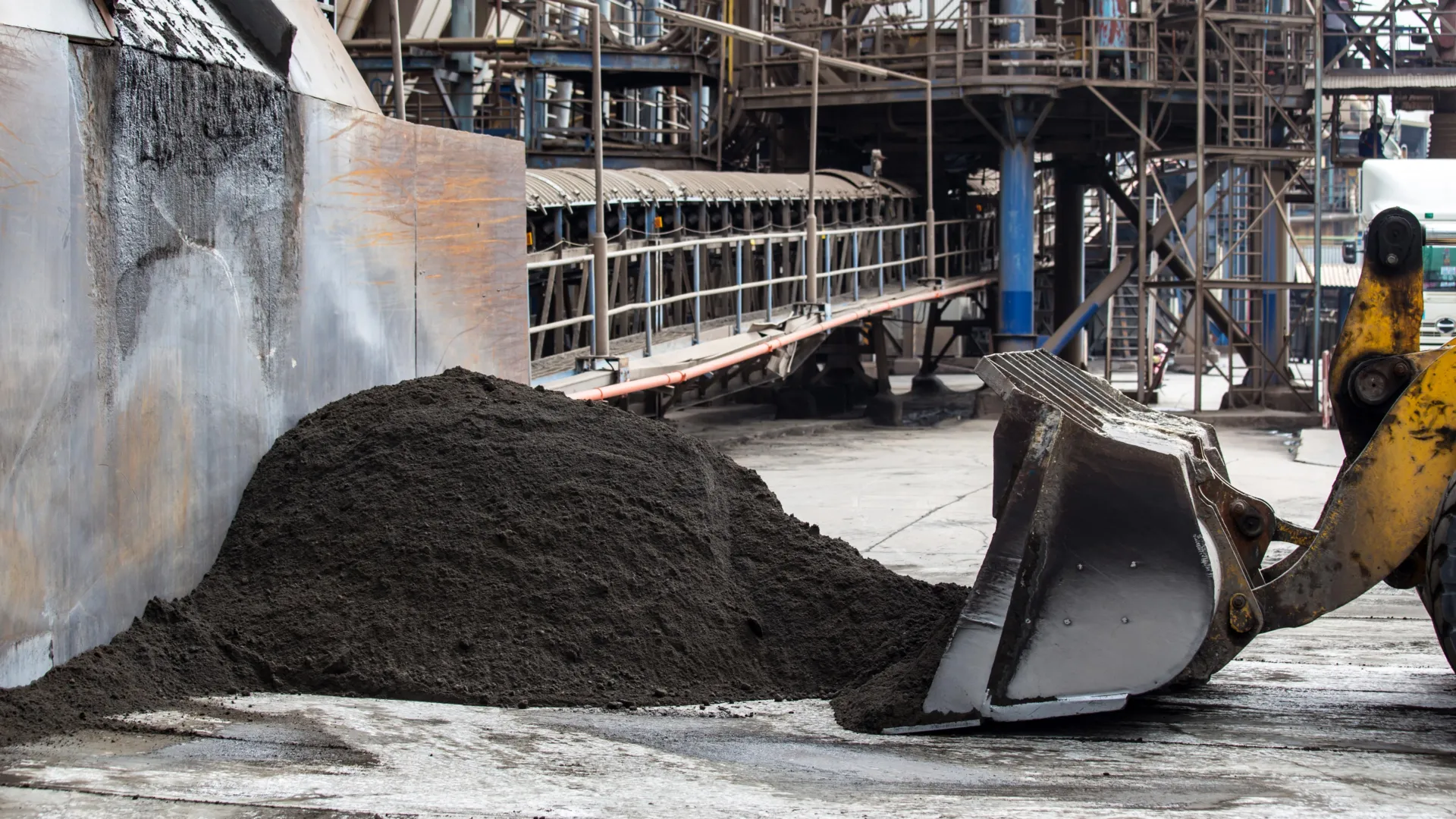
Coal ash, red mud, and mine tailings are usually treated as major waste problems. Yet these enormous waste streams also contain valuable materials, including silica, rare earth elements, and other critical minerals.
A research team led by Worcester Polytechnic Institute (WPI) has received a $3.3 million award from the National Science Foundation's Growing Convergence Research program to investigate whether biological strategies used by diatoms, sea sponges, and plants could help recover those resources with less energy and fewer harsh chemicals.
The five-year, two-phase effort is being led by Mingjiang Tao, associate professor in the WPI Department of Civil, Environmental, and Architectural Engineering. Professors Carrick Eggleston and Yan Wang are serving as co-principal investigators. Researchers from George Mason University, the University of California San Diego, the University of Massachusetts Amherst, and the University at Buffalo will also contribute.
"Recovering critical minerals is only part of the opportunity," Tao said. "We want to develop a process that uses as much of each waste stream as possible, separating strategically important elements while converting the remaining material into useful products. That whole-material approach could fundamentally change how industries manage waste and obtain essential resources."
Valuable Minerals Hidden in Waste
The project is designed to tackle two related problems.
Many silicon-derived materials used in concrete, glass, ceramics, semiconductors, and silicones require high temperatures, large amounts of energy, and intensive chemical processing to produce. At the same time, industry generates vast quantities of silicon-rich waste, including coal ash residue, red mud, mine tailings, concrete debris, waste glass, and metallurgical slag.
Much of this material ends up in landfills, ponds, impoundments, and large waste piles, even though it can contain useful silicon, critical minerals, and rare earth elements (REE).
One estimate suggests that 11 million tons of REEs trapped in U.S. coal ash landfills is worth $8.4 billion -- nearly eight times the nation's current raw domestic reserves. Rare earth elements and other critical minerals are important for electronics, clean-energy technologies, transportation, and national security.
Looking to Nature for a Cleaner Approach
To find a better way to recover these materials, the researchers are turning to biology.
Diatoms, sea sponges, and certain plants use biological molecules and organic scaffolds to collect dissolved silicon and build complex silica structures under relatively mild conditions. The team hopes to adapt those natural processes to create lower-energy methods for breaking down silica-rich industrial waste.
The goal is not only to release rare earth elements and other critical minerals trapped inside the material, but also to convert the silica itself into useful products.
AI and Biomolecules Could Speed Discovery
The project combines expertise from biology, geochemistry, materials science, metallurgy, engineering, computational chemistry, and artificial intelligence.
Researchers plan to use advanced computational modeling and artificial intelligence to design specialized biomolecules and predict how they will interact with silicon-rich waste. These tools could help the team identify promising approaches for mineral recovery and materials manufacturing more quickly.
As lead principal investigator, Tao will manage and coordinate the overall project while also directing research on biosilicification, the process through which organisms form silica materials, and bio-enabled metallurgy for recovering rare earth elements from silicon-rich wastes.
Eggleston, a professor in the Department of Civil, Environmental, and Architectural Engineering with expertise in geochemistry, will lead work focused on understanding and optimizing the chemical reactions involved in breaking down and rebuilding silicate materials.
His research will examine reaction pathways and rates associated with silicate dissolution, repolymerization, carbonation, glass formation, and silicone synthesis.
Wang, the William B. Smith Professor of Mechanical and Materials Engineering and a widely recognized pioneer in battery recycling and sustainable manufacturing, will lead the development of bioengineered methods for recovering rare earth elements and other critical minerals.
Turning Industrial Waste Into Marketable Products
The researchers will also study whether the technologies can be scaled economically and practically for industrial use.
If the approach proves successful, it could open new ways to convert large volumes of industrial waste into marketable products. That could reduce dependence on newly mined resources, lower the environmental footprint of materials production, and strengthen domestic supplies of critical minerals and rare earth elements.
WPI graduate and undergraduate students will take part in the multiyear project through the university's immersive STEM experience.
The effort brings together sustainability, biotechnology, materials science, data science, and artificial intelligence. It also aims to help build a broader bioengineered, silicon-based materials ecosystem by connecting researchers, industry partners, policymakers, educators, and future innovators across multiple disciplines and sectors.
Story Source:
Materials provided by Worcester Polytechnic Institute. Note: Content may be edited for style and length.
Cite This Page: