
Scientists found mystery bacteria inside one of the ocean’s most elusive whales
- Date:
- July 21, 2026
- Source:
- Florida Atlantic University
- Summary:
- Scientists studying decades of pygmy sperm whale strandings have uncovered three previously unknown types of Helicobacter bacteria hiding in the animals’ stomachs. All four infected whales showed serious digestive damage, including inflammation, ulcers, scarring, and parasite infestations, although the bacteria were not confirmed as the cause of death.
- Share:
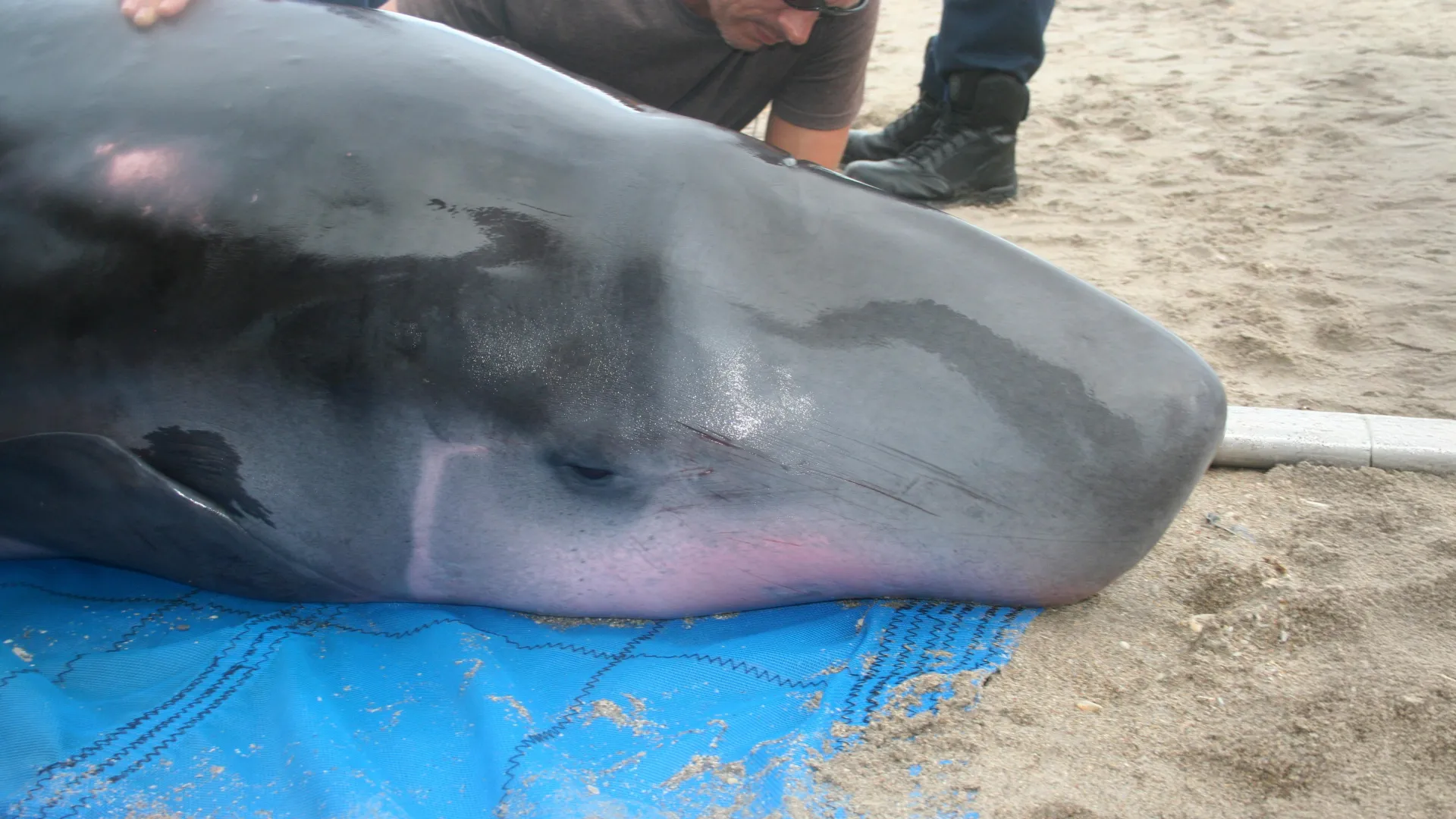
Pygmy sperm whales (Kogia breviceps) are some of the least understood mammals in the ocean. They spend most of their lives far from shore, usually traveling in small groups and diving deep to hunt squid and fish. Because they are quiet, secretive, and rarely seen at the surface, scientists have had few opportunities to observe them in the wild.
Much of what researchers know about pygmy sperm whales has come from animals that wash ashore. Strandings are especially common along the southeastern United States, where this species appears more frequently than almost any other large marine mammal.
Whale Strandings Reveal Hidden Health Problems
Examinations of stranded whales have uncovered several recurring medical problems, including stomach ulcers. These ulcers are sometimes associated with Helicobacter, a group of bacteria that can live in the stomach and intestines of many animals, including humans and whales.
After reviewing more than 20 years of stranding records and preserved tissue samples, researchers at Florida Atlantic University's Harbor Branch Oceanographic Institute and collaborating institutions identified three Helicobacter genotypes that had never been documented before.
The study, published in the Journal of Wildlife Diseases, marks the first confirmed discovery of these bacterial genotypes in pygmy sperm whales. The researchers named them Kogia Helicobacter 1, 2 and 3. Beyond offering new insight into an elusive whale species, the findings raise broader questions about how bacterial infections may affect marine wildlife and ocean health.
"Helicobacter bacteria have long been associated with gastrointestinal disorders in humans and other animals, including chronic gastritis, ulcers, and even gastric cancer," said Annie Page, D.V.M., Ph.D., senior author, an associate research professor and clinical veterinarian at FAU Harbor Branch. "To find novel strains of these bacteria in a deep-diving whale species is intriguing."
Three Bacterial Genotypes New to Science
From 1999 through 2020, FAU Harbor Branch responded to 59 pygmy sperm whale strandings. Post-mortem examinations were completed on 80% of those animals.
In four cases, scientists found spiral-shaped, "spirilliform" bacteria within stomach tissue. The team later reexamined the preserved samples using histopathology, molecular testing and DNA sequencing. That analysis revealed several previously unknown Helicobacter genotypes.
"Two of the genotypes, Kogia Helicobacter 1 and 2, are genetically similar to known Helicobacter species previously found in other cetaceans -- such as dolphins and porpoises -- and in humans," said Wendy Marks, corresponding author and a research coordinator of the marine wildlife veterinary medicine and research lab at FAU Harbor Branch. "But Kogia Helicobacter 3 belongs to a more divergent lineage, which emphasizes the possibility that there are far more undiscovered bacteria in the ocean than we realize."
Researchers found both Kogia Helicobacter 1 and 3 in the forestomach tissue of one whale.
Infected Whales Showed Stomach Damage
Each of the four whales that tested positive also showed clear signs of gastrointestinal disease.
"All four whales that tested positive for Helicobacter had visible gastric pathology," said Page. "We saw signs of gastritis, gastric ulcers, fibrosis and nematode infestations. In one case, there was also colitis, which suggests that the infection may not be limited to the stomach. While Helicobacter wasn't listed as the cause of death in any of the whales, these lesions raise questions about its role in gastrointestinal disease."
The researchers did not conclude that Helicobacter directly caused the whales' deaths. However, the repeated presence of inflammation, ulcers, tissue scarring and other digestive problems suggests the bacteria could contribute to chronic illness.
Helicobacter was first reported in marine mammals in 2000. Since then, related bacteria have been detected in several cetacean species around the world. In some animals, infection has been connected with low energy, loss of appetite, regurgitation, stomach ulcers and inflammation. Many of these symptoms are similar to those seen in infected humans.
Possible Risks for Vulnerable Whale Populations
"Whales, like humans, appear to be susceptible to certain microbial infections that we're only beginning to understand," said Marks. "If chronic Helicobacter infections are causing health issues in these animals, it could have implications not only for individual whale health, but for entire populations -- especially for species that are already vulnerable."
Because pygmy sperm whales are so difficult to study at sea, researchers still do not know how widespread the newly identified bacteria may be or how much they affect the animals over time. Additional testing will be needed to determine whether these infections contribute to illness, strandings or population-level health problems.
The project brought together researchers from FAU Harbor Branch, the University of Florida's College of Veterinary Medicine, Colorado State University and Marine Mammal Pathology Services.
Decades of Stranding Research Pay Off
"This research underscores the value of long-term marine mammal stranding response programs," said Page. "Without the ability to study these stranded animals over decades, we never would have discovered these bacteria. Every whale tells a story, and sometimes that story leads us into entirely new scientific territory."
Study co-authors are Jessy Castellanos-Gell, Ph.D.; Steven Tillis, Ph.D.; James F.X. Wellehan, D.V.M., Ph.D., DACZM; and April Childress, all with the College of Veterinary Medicine, University of Florida; Nicole Pegg, FAU Harbor Branch; David Rotstein, D.V.M., Marine Mammal Pathology Services; Sushan Han, D.V.M., Ph.D., Diagnostic Medicine Center, Colorado State University; and Steve Burton, director, stranding and population assessment, FAU Harbor Branch.
The research was supported by the Florida State Specialty License Plate Program through the "Protect Florida Whales" grant, which is administered by the Harbor Branch Oceanographic Institute Foundation.
Story Source:
Materials provided by Florida Atlantic University. Note: Content may be edited for style and length.
Journal Reference:
- Wendy Marks, Jessy Castellanos-Gell, Steven B. Tillis, Nicole Pegg, David Rotstein, Sushan Han, James F. X. Wellehan, April Childress, Steve Burton, Annie Page. NOVEL GASTRIC HELICOBACTER SPECIES IN STRANDED PYGMY SPERM WHALES (KOGIA BREVICEPS) ON THE EAST COAST OF FLORIDA, USA. Journal of Wildlife Diseases, 2026; 62 (1) DOI: 10.7589/JWD-D-24-00204
Cite This Page: