
Satellites spot rapid “Doomsday Glacier” collapse
- Date:
- December 1, 2025
- Source:
- University of Manitoba
- Summary:
- Two decades of satellite and GPS data show the Thwaites Eastern Ice Shelf slowly losing its grip on a crucial stabilizing point as fractures multiply and ice speeds up. Scientists warn this pattern could spread to other vulnerable Antarctic shelves.
- Share:
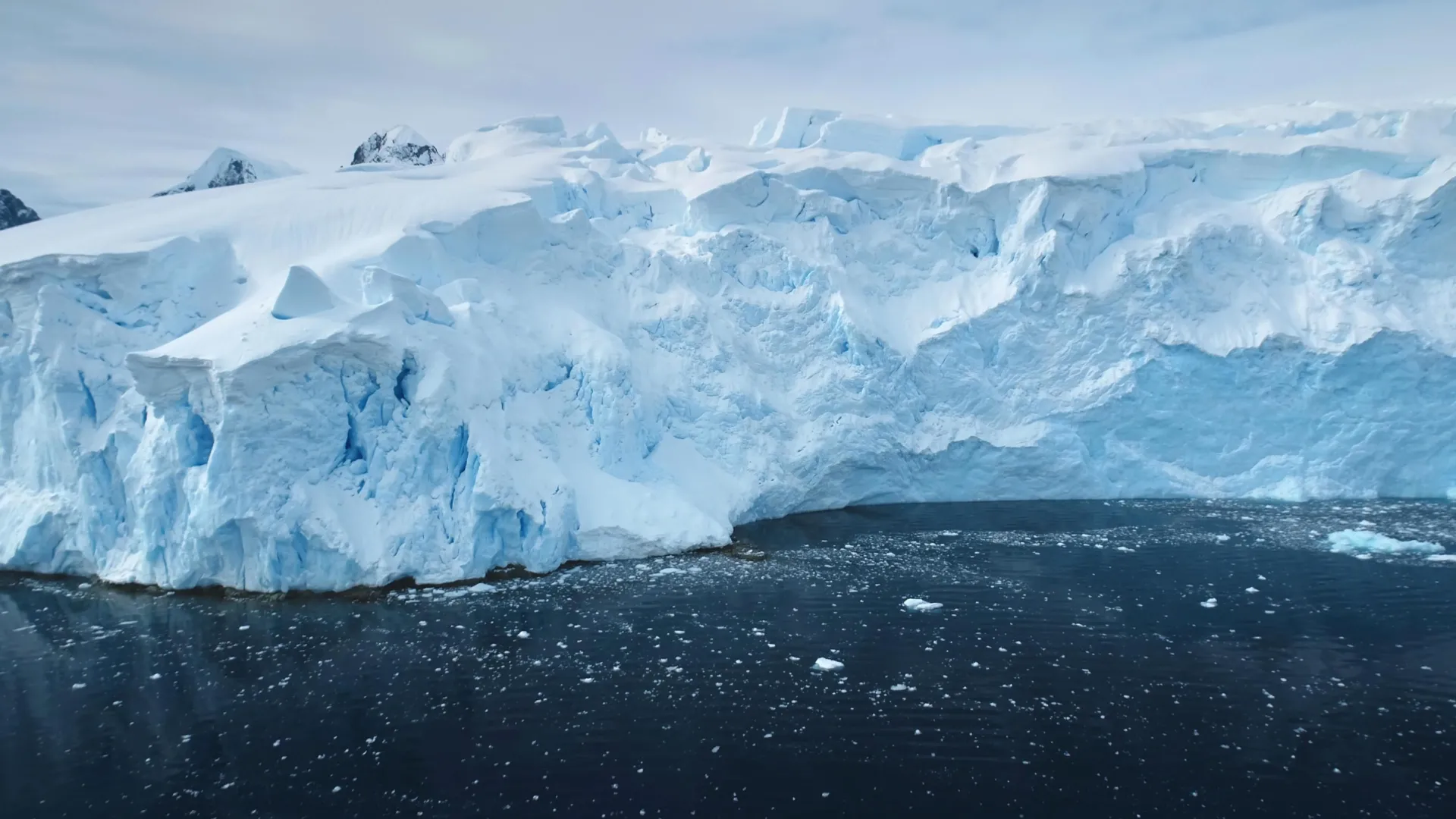
Thwaites Glacier in West Antarctica -- widely known as the "Doomsday Glacier" -- is changing more quickly than almost any other ice-ocean system on the planet. Its future behavior remains one of the biggest unknowns in forecasts of global sea-level rise. One part of this system, the Thwaites Eastern Ice Shelf (TEIS), floats on the ocean and is partly held in place by a pinning point at its northern edge. Over the past twenty years, this shelf has developed increasing fractures around a major shear zone located upstream of that pinning point.
A new study published in the Journal of Geophysical Research: Earth Surface (AGU, 2025) offers the most detailed account yet of how this slow breakdown has unfolded. The research was produced at the Centre for Earth Observation Sciences and led by Debangshu Banerjee, a recent graduate student from the Centre for Earth Observation Science (CEOS), along with Dr. Karen Alley (Assistant Professor, CEOS) and Dr. David Lilien (Assistant Professor, Indiana University Bloomington and former Research Associate at CEOS). Their work contributes to the TARSAN (Thwaites-Amundsen Regional Survey and Network) project, one of the programs within the International Thwaites Glacier Collaboration (ITGC) -- a major U.S.-U.K. effort to understand the forces driving change in Thwaites Glacier. Several well-known glaciologists, including Dr. Ted Scambos, Dr. Martin Truffer, Dr. Adrian Luckman, and Dr. Erin Pettitt, also contributed to this research.
Fracture Growth, Ice Dynamics, and a Strengthening Feedback Loop
Using twenty years (2002-2022) of satellite observations, ice-flow speed measurements, and in-situ GPS data, the team documented how fractures within the TEIS shear zone formed and evolved. Their analysis shows that the gradual growth of these fractures weakened the shelf's connection to the pinning point. As this attachment deteriorated, the ice upstream began to flow more quickly, reducing the shelf's mechanical stability.
The researchers identified four clear stages in this weakening and highlighted two major findings. The first is that the fractures expanded in two distinct phases: long fractures aligned with the direction of ice flow appeared first, followed later by shorter fractures that cut across the flow. The second is evidence of a positive feedback cycle in which these fractures increased ice acceleration, which in turn caused further damage. This accelerating loop played a significant role in the shelf's recent decline.
A Shift From Stabilizing Force to Source of Weakness
The study notes that the pinning point, once a key factor holding the TEIS in place, has slowly shifted into a feature that now contributes to its instability. This four-stage pattern of structural decline may be a signal for other Antarctic ice shelves that appear to be entering similar phases of weakness. If these floating shelves continue to deteriorate, the Antarctic Ice Sheet could contribute even more to future sea-level rise.
Story Source:
Materials provided by University of Manitoba. Note: Content may be edited for style and length.
Journal Reference:
- Debangshu Banerjee, David A. Lilien, Martin Truffer, Adrian Luckman, Christian T. Wild, Erin C. Pettit, Ted A. Scambos, Atsuhiro Muto, Karen E. Alley. Evolution of Shear‐Zone Fractures Presages the Disintegration of Thwaites Eastern Ice Shelf. Journal of Geophysical Research: Earth Surface, 2025; 130 (9) DOI: 10.1029/2025JF008352
Cite This Page: