
A century-old Stonehenge mystery may finally be solved
- Date:
- January 27, 2026
- Source:
- Summary:
- Scientists have found compelling new evidence that humans, not glaciers, brought Stonehenge’s bluestones to the site. Using advanced mineral analysis, researchers searched nearby river sediments for signs glaciers once passed through the area—and found none. That missing signature strongly suggests the stones were intentionally moved by people. How they did it remains a mystery, but ice is now largely ruled out.
- Share:
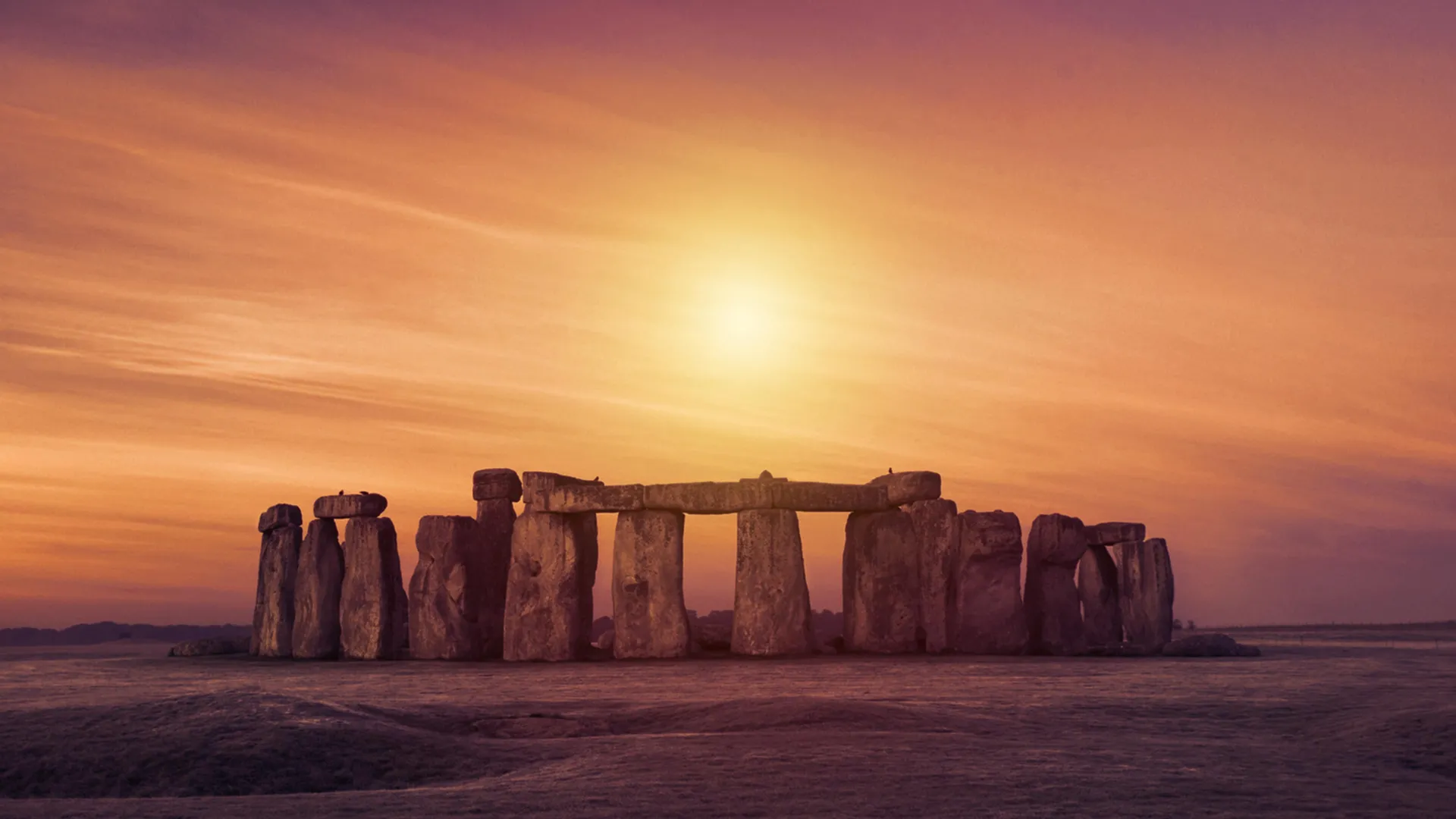
New research from Curtin University offers the clearest scientific support so far that people, rather than glaciers, carried Stonehenge's well known bluestones to the ancient monument. The findings take aim at one of archaeology's longest running debates and add weight to the idea that the stones were deliberately moved by human hands.
The study focuses on how the Altar Stone and other massive rocks ended up at Stonehenge, a question that has puzzled researchers for generations. By ruling out natural ice driven transport, the research strengthens the case for purposeful human planning and effort.
Tracing Stonehenge Through Tiny Minerals
To investigate the stones' journey, Curtin scientists used advanced mineral "fingerprinting" methods to study microscopic grains found in rivers near Salisbury Plain in southern England. These tiny mineral fragments act like geological time capsules, preserving evidence of how sediments moved across Britain over millions of years.
Using world leading instruments at Curtin's John de Laeter Centre, the team examined more than 500 zircon crystals. Zircon is one of the toughest minerals on Earth, making it ideal for tracking ancient geological processes.
No Signs of Ancient Glaciers
Lead author Dr. Anthony Clarke from the Timescales of Minerals Systems Group in Curtin's School of Earth and Planetary Sciences said the analysis revealed no indication that glaciers ever reached the Stonehenge area.
"If glaciers had carried rocks all the way from Scotland or Wales to Stonehenge, they would have left a clear mineral signature on the Salisbury Plain," Dr. Clarke said.
"Those rocks would have eroded over time, releasing tiny grains that we could date to understand their ages and where they came from.
"We looked at the river sands near Stonehenge for some of those grains the glaciers might have carried and we did not find any. That makes the alternative explanation - that humans moved the stones - far more plausible."
How the Stones Were Moved Remains Unclear
While the study points strongly toward human transport, exactly how people moved the stones is still unknown. Dr. Clarke said several possibilities have been suggested, but none can be confirmed.
"Some people say the stones might have been sailed down from Scotland or Wales, or they might have been transported over land using rolling logs, but really we might never know," Dr. Clarke said.
"But what we do know is ice almost certainly didn't move the stones."
Modern Tools Solve Ancient Questions
Study co author Professor Chris Kirkland, also from Curtin's Timescales of Mineral Systems Group, said the research highlights how modern geochemical techniques can help resolve historical mysteries that have lingered for decades.
"Stonehenge continues to surprise us," Professor Kirkland said.
"By analyzing minerals smaller than a grain of sand, we have been able to test theories that have persisted for more than a century.
"There are so many questions that can be asked about this iconic monument -- for example, why was Stonehenge built in the first place?
"It was probably used for a wide variety of different purposes, like a calendar, an ancient temple, a feasting site.
"So asking and then answering these sorts of questions requires different sorts of data sets and and this study adds an important piece to that bigger picture."
Building on Earlier Discoveries
The new findings build on another major Curtin led discovery from 2024, which traced the origin of the central six tonne 'Altar Stone' to Scotland. Together, the results reinforce the view that Neolithic builders deliberately sourced and transported Stonehenge's stones across vast distances.
The study, titled 'Detrital zircon-apatite fingerprinting challenges glacial transport of Stonehenge's megaliths', was published in the journal Communications Earth and Environment.
Story Source:
Materials provided by . Original written by Laura Thomas. Note: Content may be edited for style and length.
Journal Reference:
- Anthony J. I. Clarke, Christopher L. Kirkland. Detrital zircon–apatite fingerprinting challenges glacial transport of Stonehenge’s megaliths. Communications Earth, 2026; 7 (1) DOI: 10.1038/s43247-025-03105-3
Cite This Page: