
Light-printed electrodes turn skin and clothing into sensors
- Date:
- December 15, 2025
- Source:
- Linköping University
- Summary:
- Researchers in Sweden have unveiled a way to create high-performance electronic electrodes using nothing more than visible light and specially designed water-soluble monomers. This gentle, chemical-free approach lets conductive plastics form directly on surfaces ranging from glass to textiles to living skin, enabling surprisingly versatile electronic and medical applications.
- Share:
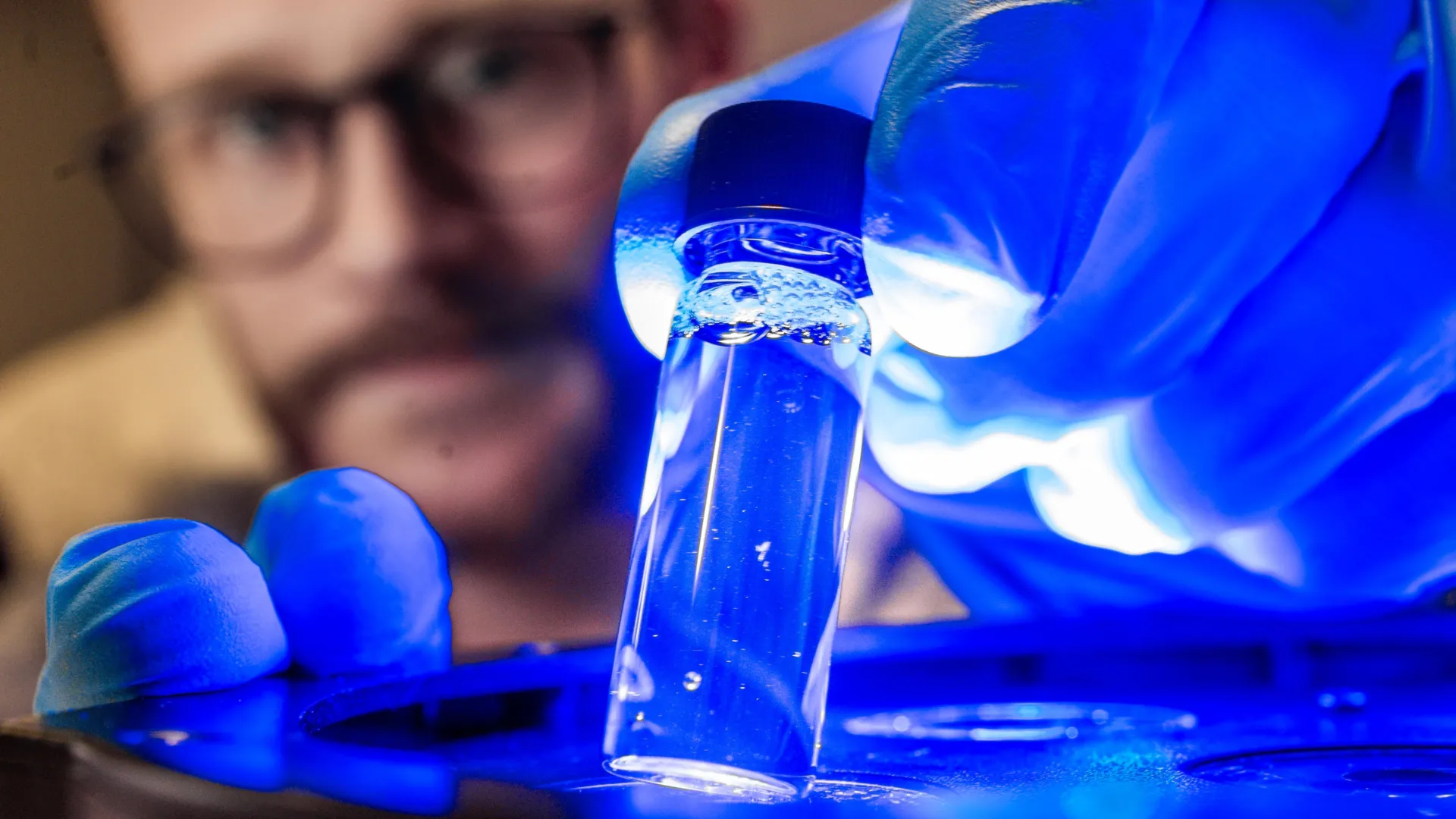
Researchers at Linköping and Lund universities in Sweden have demonstrated that visible light can be used to form electrodes from conductive plastics without the need for dangerous chemicals. Their results show that these electrodes can be produced on a wide variety of surfaces, creating opportunities for new types of electronics and medical sensing technologies.
"I think this is something of a breakthrough. It's another way of creating electronics that is simpler and doesn't require any expensive equipment," says Xenofon Strakosas, assistant professor at the Laboratory of Organic Electronics, LOE, at Linköping University.
Conductive Plastics and Their Role in Electronics
Scientists at LOE focus on conductive plastics, also known as conjugated polymers, to advance fields such as renewable energy and medical technology. These materials combine the functional qualities of metals and semiconductors with the bendability and light weight of plastics.
Polymers are made up of long chains of hydrocarbons. Each unit in the chain is called a monomer, and linking these monomers creates a polymer. The formation process, known as polymerization, is often carried out with strong or toxic chemicals, which restricts both scaling and the safe use of the materials in areas such as medicine.
Visible Light Enables a Chemical-Free Polymerization Process
Researchers at Campus Norrköping, collaborating with colleagues in Lund and New Jersey, have developed a technique that allows polymerization to occur using only visible light. This advance relies on specially engineered water-soluble monomers. Because the monomers activate under visible light, creating electrodes no longer requires toxic chemicals, harmful UV light or additional processing steps.
"It's possible to create electrodes on different surfaces such as glass, textiles and even skin. This opens up a much wider range of applications," says Xenofon Strakosas.
Patterning Electrodes Directly With Light
In practical use, a solution containing the monomers is placed on a surface. By directing a laser or another light source across the material, researchers can form electrodes in detailed patterns right where they are needed. Any portion of the solution that does not undergo polymerization can be washed away, leaving the finished electrodes behind.
"The electrical properties of the material are at the very forefront. As the material can transport both electrons and ions, it can communicate with the body in a natural way, and its gentle chemistry ensures that tissue tolerates it -- a combination that is crucial for medical applications," says Tobias Abrahamsson, researcher at LOE and lead author of the article published in the scientific journal Angewandte Chemie.
Improved Brain Signal Recording and Future Applications
The team evaluated their approach by photo-patterning electrodes directly onto the skin of anaesthetised mice. These tests revealed significantly better recordings of low-frequency brain activity compared to conventional metal EEG electrodes.
"As the method works on many different surfaces, you can also imagine sensors built into garments. In addition, the method could be used for large-scale manufacture of organic electronics circuits, without dangerous solvents," says Tobias Abrahamsson.
Visible light can be used to create electrodes from conductive plastics completely without hazardous chemicals. This is shown in a new study carried out by researchers at Linköping and Lund universities, Sweden. The electrodes can be created on different types of surfaces, which opens up for a new type of electronics and medical sensors.
"I think this is something of a breakthrough. It's another way of creating electronics that is simpler and doesn't require any expensive equipment," says Xenofon Strakosas, assistant professor at the Laboratory of Organic Electronics, LOE, at Linköping University.
LOE's researchers are working with conductive plastics, also known as conjugated polymers, to develop new technologies in areas such as medicine and renewable energy. Conjugated polymers combine the electrical properties of metals and semiconductors with the flexibility of plastics.
Polymers consist of long chains of hydrocarbons. Each link in the chain is called a monomer. When the monomers are connected, polymers are formed. The process, called polymerization, is often carried out using strong and sometimes toxic chemicals, which limits the ability to scale up the process and use the technology in e.g. medicine.
The Campus Norrköping researchers, together with colleagues in Lund and New Jersey, have now succeeded in creating a method where polymerization can happen using visible light only. This is possible due to specially designed water-soluble monomers developed by the researchers. Thus, no toxic chemicals, harmful UV light or subsequent processes are needed to create the electrodes.
"It's possible to create electrodes on different surfaces such as glass, textiles and even skin. This opens up a much wider range of applications," says Xenofon Strakosas.
In practice, the solution containing the monomers could be placed on a substrate. Using, for example, a laser or other light source, it is possible to create electrodes in intricate patterns directly on the surface. The solution that is not polymerized can then be rinsed away and the electrodes remain.
"The electrical properties of the material are at the very forefront. As the material can transport both electrons and ions, it can communicate with the body in a natural way, and its gentle chemistry ensures that tissue tolerates it -- a combination that is crucial for medical applications," says Tobias Abrahamsson, researcher at LOE and lead author of the article published in the scientific journal Angewandte Chemie.
The researchers have tested the technology by photo-patterning electrodes directly onto the skin of anaesthetised mice. The results show a clear improvement in the recording of low-frequency brain activity compared to traditional metal EEG electrodes.
"As the method works on many different surfaces, you can also imagine sensors built into garments. In addition, the method could be used for large-scale manufacture of organic electronics circuits, without dangerous solvents," says Tobias Abrahamsson.
Story Source:
Materials provided by Linköping University. Note: Content may be edited for style and length.
Journal Reference:
- Tobias Abrahamsson, Fredrik Ek, Rémy Cornuéjols, Donghak Byun, Marios Savvakis, Cecilia Bruschi, Ihor Sahalianov, Eva Miglbauer, Chiara Musumeci, Mary J. Donahue, Ioannis Petsagkourakis, Maciej Gryszel, Martin Hjort, Jennifer Y. Gerasimov, Glib Baryshnikov, Renee Kroon, Daniel T. Simon, Magnus Berggren, Ilke Uguz, Roger Olsson, Xenofon Strakosas. Visible‐Light‐Driven Aqueous Polymerization Enables in Situ Formation of Biocompatible, High‐Performance Organic Mixed Conductors for Bioelectronics. Angewandte Chemie, 2025; DOI: 10.1002/ange.202517897
Cite This Page: