
Whales and orcas were carrying viruses no one knew existed
Scientists have uncovered two never-before-seen viruses in Caribbean whales and orcas, revealing a hidden viral world beneath the sea.
- Date:
- January 6, 2026
- Source:
- Arizona State University
- Summary:
- Researchers studying Caribbean whales and orcas have discovered two new viruses not previously observed in these animals. The viruses were found using advanced genetic sequencing of archived samples, revealing a previously invisible layer of marine life. Their genetic makeup suggests these viruses may have ancient roots in whale evolution. What they mean for whale health is still a mystery, but the discovery opens the door to many new questions.
- Share:
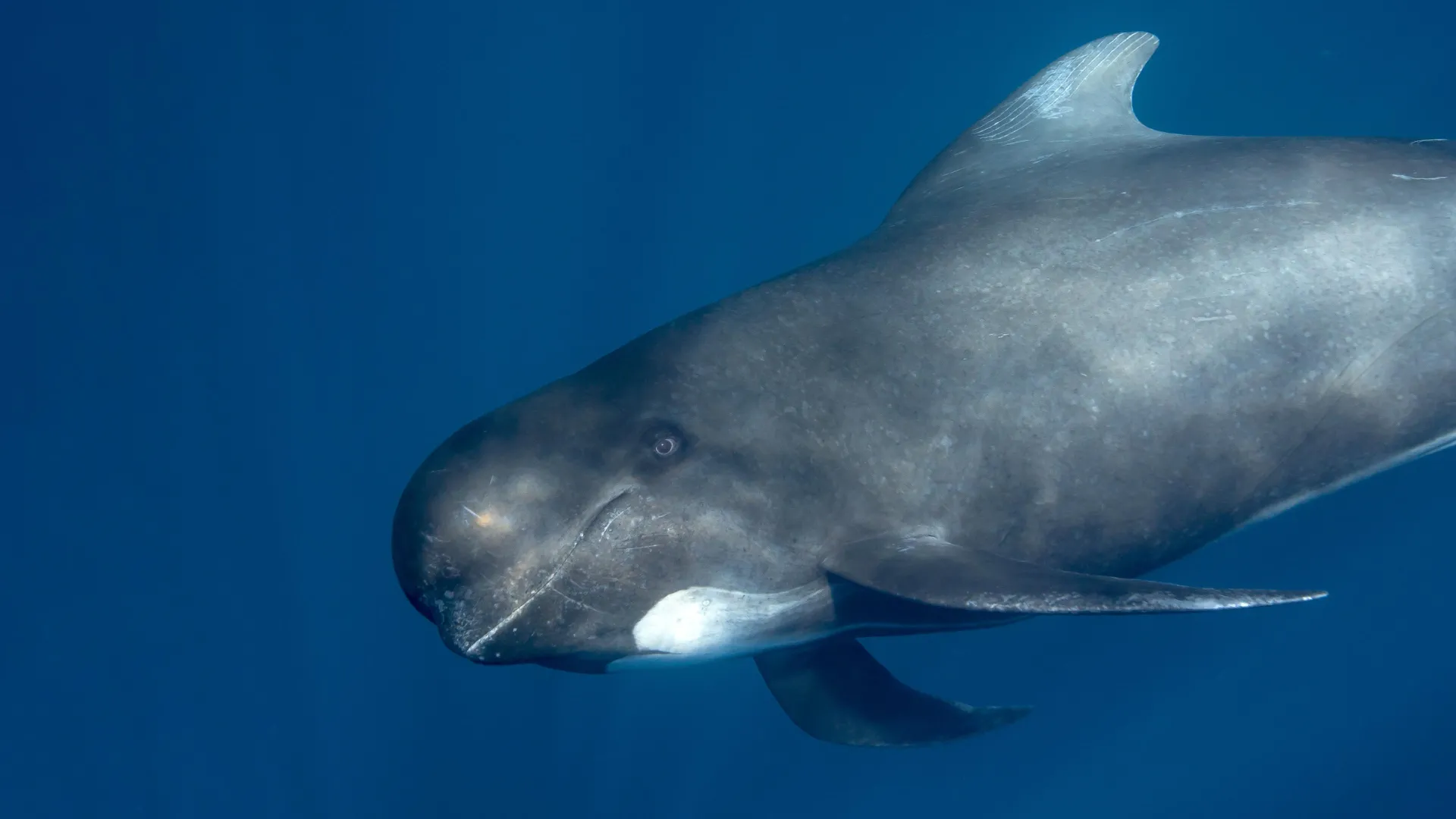
An international research team has discovered two previously unknown viruses in short-finned pilot whales and orcas from the Caribbean region of the North Atlantic Ocean. The group includes students and senior scientists from Arizona State University (ASU), Coastal Carolina University, The University of the South in the US, as well as researchers in Saint Vincent and the Grenadines, The University of the West Indies at Cave Hill (Barbados), University of Cape Town (South Africa), and Institut Pasteur (France). This marks the first time circoviruses have been detected in cetaceans from this region and adds to the growing list of viruses known to infect marine vertebrates.
The findings come from a study titled "Novel circoviruses identified in short-finned pilot whale and orca from the North Atlantic Ocean," led by Arvind Varsani, a virologist at ASU's School of Life Sciences and Biodesign Institute. The study's first author is Matthew De Koch. Researchers used high-throughput genetic sequencing to analyze archived tissue samples taken from deceased whales. These samples were collected through long-standing collaborations between Russell Fielding (Coastal Carolina University) and artisanal subsistence whalers on the island of St. Vincent.
From this analysis, scientists recovered seven complete circovirus genomes. Five of the genomes came from short-finned pilot whales, while two were found in orcas. The viruses represent two entirely new species, which the researchers named shofin circovirus and orcin circovirus. Both are clearly different from the only cetacean circovirus previously known, beaked whale circovirus, which was identified earlier in a stranded whale from the Pacific Ocean.
What Makes These Viruses Distinct
Further examination focused on the viruses' capsid proteins, which form the outer shell of the virus. The researchers found unusually large surface-exposed loops, especially the E-F loop. This region is nearly twice as long as the same structure in porcine circovirus 2, one of the most extensively studied circoviruses. Genetic analysis also showed that circoviruses found in whales and other cetaceans form a distinct and well-supported monophyletic group within the genus Circovirus.
Based on the limited data currently available, the study suggests that circoviruses may have been infecting the ancestors of modern cetaceans early in their evolutionary history. However, the authors caution that more genetic data from a wider range of species are needed to properly test this idea.
Unanswered Questions About Health and Transmission
How these circoviruses spread among whales and whether they cause disease remain open questions. The researchers point to earlier work on beaked whale circovirus that suggested a link to immunosuppression, a pattern that aligns with how circoviruses affect some land mammals and birds. Even so, the authors stress that much more research is required to understand the diversity of circoviruses in cetaceans, how they are transmitted, and what effects they may have on whale and orca health.
Story Source:
Materials provided by Arizona State University. Note: Content may be edited for style and length.
Journal Reference:
- Matthew D. De Koch, Simona Kraberger, Russell Fielding, Kendal Smith, Kelsie Schiavone, Katharine R. Hall, Vincent S. Reid, Diallo Boyea, Emma L. Smith, Kara Schmidlin, Rafaela S. Fontenele, Darren P. Martin, Mart Krupovic, Arvind Varsani. Novel circoviruses identified in short-finned pilot whale and orca from the North Atlantic Ocean. Virology, 2026; 615: 110768 DOI: 10.1016/j.virol.2025.110768
Cite This Page: