
Forest loss is driving mosquitoes’ thirst for human blood
When forests disappear, mosquitoes don’t—they adapt, and increasingly, they bite us.
- Date:
- January 15, 2026
- Source:
- Frontiers
- Summary:
- In the rapidly disappearing Atlantic Forest, mosquitoes are adapting to a human-dominated landscape. Scientists found that many species now prefer feeding on people rather than the forest’s diverse wildlife. This behavior dramatically raises the risk of spreading dangerous viruses such as dengue and Zika. The findings reveal how deforestation can quietly reshape disease dynamics.
- Share:
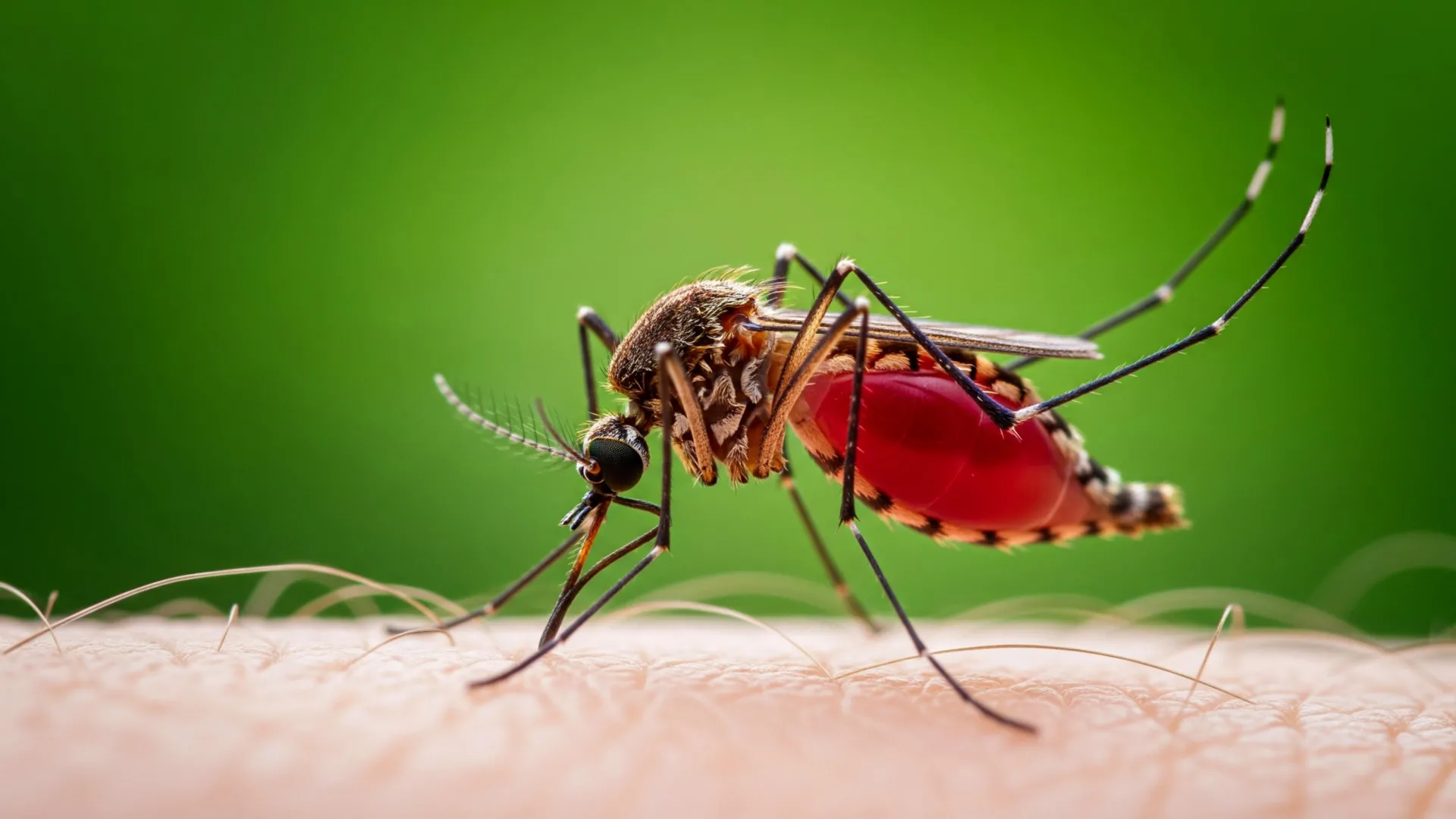
Running along Brazil's coastline, the Atlantic Forest supports an extraordinary range of life, including hundreds of species of birds, amphibians, reptiles, mammals, and fishes. Much of that richness has been lost. Human development has reduced the forest to roughly one third of its original size. As people move deeper into once intact habitats, wildlife is pushed out, and mosquitoes that once fed on many different animals appear to be shifting their attention toward humans, according to a study published in Frontiers in Ecology and Evolution.
"Here we show that the mosquito species we captured in remnants of the Atlantic Forest have a clear preference for feeding on humans," said senior author Dr. Jeronimo Alencar, a biologist at the Oswaldo Cruz Institute in Rio de Janeiro.
"This is crucial because, in a environment like the Atlantic Forest with a great diversity of potential vertebrate hosts, a preference for humans significantly enhances the risk of pathogen transmission," added co-author Dr. Sergio Machado, a microbiology and immunology researcher at the Federal University of Rio de Janeiro.
Tracking what mosquitoes are biting
To understand what mosquitoes were feeding on, the research team set light traps at the Sítio Recanto Preservar and the Guapiacu River Ecological Reserve (two natural reserves in the state of Rio de Janeiro). Female mosquitoes that had recently taken a blood meal were separated and studied in the lab.
Scientists extracted DNA from the blood inside the mosquitoes and sequenced a specific gene that works like a biological barcode. Each vertebrate species has its own version of this genetic marker. By matching the barcodes to reference databases, the team could identify the animals that had been bitten.
Humans emerge as a dominant blood source
The traps collected 1,714 mosquitoes from 52 different species. Among them, 145 females were found to be carrying blood. Researchers were able to identify the blood meals of 24 individuals. Those meals came from 18 humans, one amphibian, six birds, one canid, and one mouse.
Some mosquitoes had fed on more than one host. One mosquito identified as Cq. Venezuelensis had taken blood from both an amphibian and a human. Mosquitoes from the species Cq. Fasciolata showed mixed meals as well, including combinations of rodent and bird, and bird and human.
The researchers believe several factors may explain this pattern. "Mosquito behavior is complex," Alencar said. "Although some mosquito species may have innate preferences, host availability and proximity are extremely influential factors."
How deforestation increases disease risk
As deforestation continues and human settlements expand into forested areas, many plant and animal species disappear. Mosquitoes respond by altering where they live and how they find food, often moving closer to people. "With fewer natural options available, mosquitoes are forced to seek new, alternative blood sources. They end up feeding more on humans out of convenience, as we are the most prevalent host in these areas," Machado explained.
Mosquito bites are not just a nuisance. In the regions studied, mosquitoes spread viruses such as Yellow Fever, dengue, Zika, Mayaro, Sabiá, and Chikungunya. These infections can pose serious health risks and may lead to long term complications. Researchers emphasized that understanding mosquito feeding behavior is essential for grasping how diseases circulate through ecosystems and human populations.
What the findings mean for prevention
The study also highlighted gaps in current data. Fewer than 7 percent of the captured mosquitoes had visible blood meals (just under 7%), and scientists could identify the source in only about 38 percent of those cases (around 38%). This points to the need for larger, more detailed studies, including improved methods for detecting mixed blood meals.
Even so, the findings already offer practical value. They can help guide mosquito control efforts and improve early warning systems for disease outbreaks. "Knowing that mosquitoes in an area have a strong preference for humans serves as an alert for transmission risk," Machado said.
"This allows for targeted surveillance and prevention actions," Alencar concluded. "In the long term, this may lead to control strategies that consider ecosystem balance."
Story Source:
Materials provided by Frontiers. Note: Content may be edited for style and length.
Journal Reference:
- Dálete Cássia Vieira Alves, Sérgio Lisboa Machado, Júlia dos Santos Silva, Nathália Menezes de Almeida, Rayane Dias, Shayenne Olsson Freitas Silva, Jeronimo Alencar. Aspects of the blood meal of mosquitoes (Diptera: culicidae) during the crepuscular period in Atlantic Forest remnants of the state of Rio de Janeiro, Brazil. Frontiers in Ecology and Evolution, 2026; 14 DOI: 10.3389/fevo.2025.1721533
Cite This Page: