
A lost disease emerges from 5,500-year-old human remains
New genetic evidence shows infectious diseases were already evolving in the Americas thousands of years before European contact.
- Date:
- January 26, 2026
- Source:
- University of Lausanne
- Summary:
- A 5,500-year-old skeleton from Colombia has revealed the oldest known genome of the bacterium linked to syphilis and related diseases. The ancient strain doesn’t fit neatly into modern categories, hinting at a forgotten form that split off early in the pathogen’s evolution. This pushes the history of treponemal diseases in the Americas back by millennia and shows they were already diversifying long before written records.
- Share:
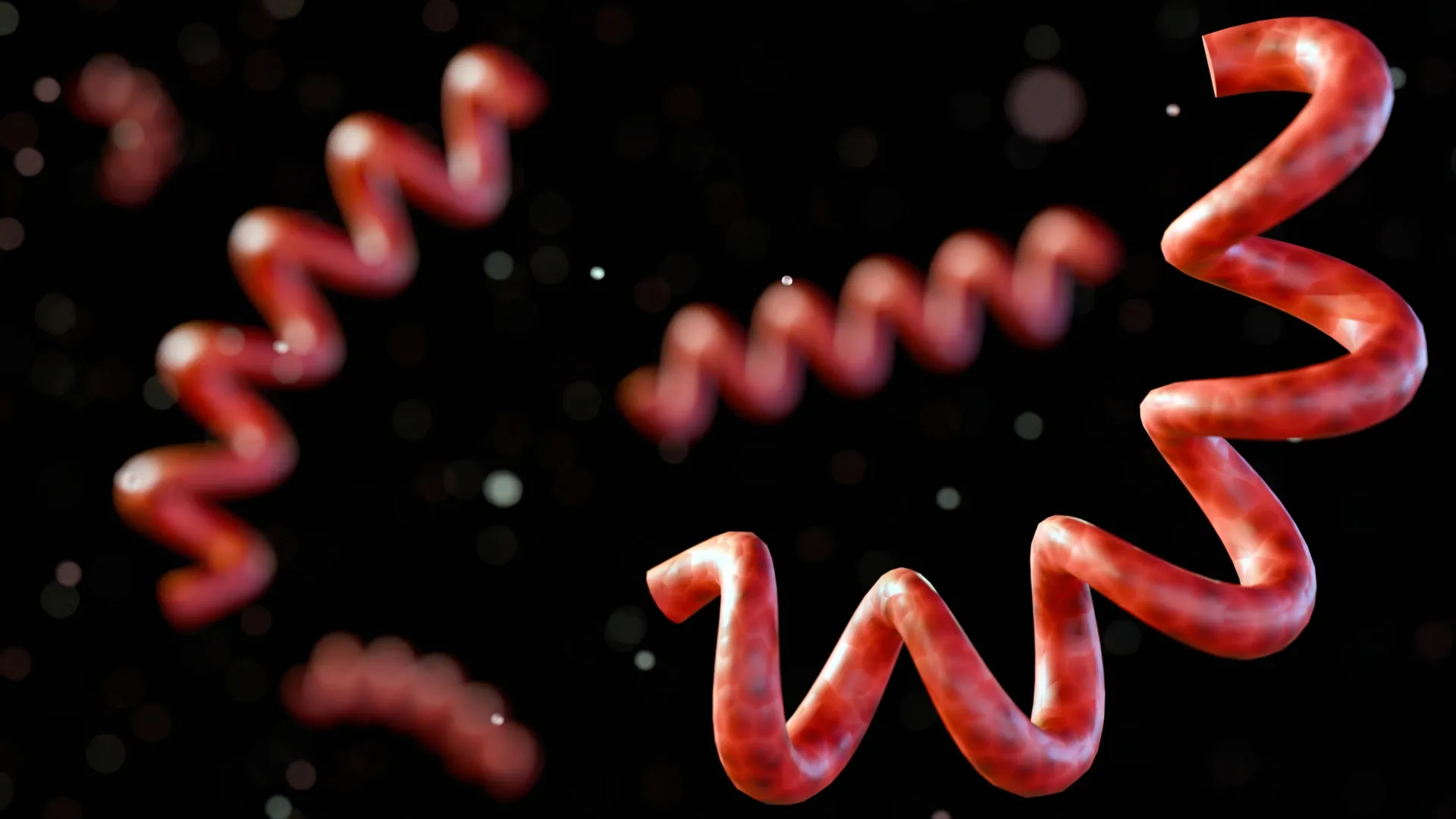
Scientists have successfully reconstructed the genome of Treponema pallidum from human remains that are about 5,500 years old, discovered in the Sabana de Bogotá region of Colombia. This bacterium is responsible for several serious infectious diseases today, including syphilis. The findings, published in the journal Science, significantly expand what researchers know about how long these infections have affected human populations.
The remains were excavated from a rock shelter near present-day Bogotá and date back roughly 5,500 years. By identifying this ancient genome, researchers have extended the known genetic history of Treponema pallidum by more than 3,000 years. The evidence adds weight to the idea that treponemal diseases have circulated in the Americas far earlier than previously documented.
"Our findings show the unique potential of paleogenomics to contribute to our understanding of the evolution of species, and potential health risks for past and present communities," said geneticist Lars Fehren-Schmitz at the University of California, Santa Cruz.
What Are Treponemal Diseases?
Treponema pallidum is a spiral-shaped bacterium that exists today in three closely related subspecies. Each causes a different disease: syphilis, yaws, and bejel. A fourth treponemal disease, pinta, is caused by Treponema carateum or Treponema pallidum subsp. carateum. No complete genome of the pathogen responsible for pinta has yet been recovered, which leaves questions about its evolutionary relationships and classification.
Despite their nearly identical genetic makeup, scientists still do not know when or how these different disease forms emerged. While skeletal remains can sometimes show signs of infection, genetics often tell a more complex story. Large gaps remain between what bones can reveal and what ancient DNA can confirm about disease evolution.
A Lost Lineage of a Familiar Pathogen
In this study, researchers confirmed that the ancient DNA belonged to the species Treponema pallidum, but it did not match any of the known forms that cause disease today. Although closely related to modern strains, the ancient genome split off early in the bacterium's evolutionary history.
"One possibility is that we uncovered an ancient form of the pathogen that causes pinta, which we know little about, but is known to be endemic in Central to South America and causes symptoms localized to the skin," said Anna-Sapfo Malaspinas at the University of Lausanne and group leader at the SIB Swiss Institute of Bioinformatics. "At this time, we cannot prove this is the case, but it is a lead worth investigating further."
Based on genetic analysis, scientists estimate that this ancient strain separated from other T. pallidum lineages about 13,700 years ago. In contrast, the three modern subspecies appear to have diverged much later, around 6,000 years ago. These timelines support earlier research and highlight how diverse treponemal pathogens were in the distant past.
"Current genomic evidence, along with our genome presented here, does not resolve the long-standing debate about where the disease syndromes themselves originated, but it does show there's this long evolutionary history of treponemal pathogens that was already diversifying in the Americas thousands of years earlier than previously known," said Elizabeth Nelson, a molecular anthropologist and paleopathologist at SMU.
A Genetic Puzzle With Modern Implications
Tracing the origins of treponemal diseases is especially challenging because the bacteria are extremely similar at the genetic level. At the same time, they spread in different ways and can cause very different symptoms, making their evolutionary paths difficult to untangle.
"Our results push back the association of T. pallidum with humans by thousands of years, possibly more than 10,000 years ago in the Late Pleistocene," said researcher Davide Bozzi at the University of Lausanne and SIB Swiss Institute of Bioinformatics.
The discovery builds on long-term archaeological and genetic work at the Tequendama 1 site. Earlier studies by archaeologist Miguel Delgado of the Universidad Nacional de La Plata in Argentina and Fehren-Schmitz provided detailed background on the skeleton itself.
An Unexpected Find in Massive DNA Data
The pathogen was not discovered intentionally at first. Researchers originally sequenced the individual's DNA to study ancient human population history, producing about 1.5 billion fragments of genetic data, far more than is typical. During routine screening, teams at the University of California, Santa Cruz and the University of Lausanne independently detected traces of T. pallidum and decided to investigate together.
Although bacterial DNA made up only a tiny portion of the total genetic material, the depth of sequencing allowed the team to reconstruct the pathogen's genome without using specialized enrichment techniques.
The diseases caused by T. pallidum (bejel, yaws, and syphilis) can leave marks on bones, but only under certain conditions and not in all infected individuals. Most ancient genomes of this bacterium have been recovered from teeth or bones that clearly showed signs of disease. In this case, the skeleton showed no visible evidence of infection. Researchers sampled a tibia, or shin bone, which is not commonly used for ancient DNA studies. The success of this approach suggests that even bones without obvious disease markers can preserve valuable genetic information.
Why Ancient Disease History Matters Today
By learning how infectious diseases emerged and changed in the past, scientists hope to better anticipate how they might evolve in the future. This knowledge could help modern societies prepare for potential health threats.
Before publishing the results, the research team shared their findings with communities in Colombia, recognizing the discovery's importance to the country's medical history. They consulted local scholars, students, and community members, and engaged with stakeholders through presentations and interviews. All required permits for export and study were obtained.
"This process was essential because the findings are deeply connected to Colombia's medical and cultural history," said Delgado. "Engaging scholars, students, and Indigenous and non-Indigenous community members ensures the results are ethically communicated and interpreted in partnership with local communities. This approach builds trust, supports responsible stewardship of sensitive discoveries, and reinforces local ownership of knowledge."
An International Collaboration
In addition to Nelson, Bozzi, Malaspinas, Delgado, and Fehren-Schmitz, the research was co-led by Nasreen Broomandkhoshbacht, now at the University of Vermont. The broader team included Kalina Kassadjikova of the University of California, Santa Cruz; Jane Buikstra of Arizona State University; Carlos Eduardo G. Amorim of California State University, Northridge; Melissa Estrada Pratt of the Instituto Colombiano de Antropología e Historia in Bogotá, Colombia; Gilbert Greub of the University of Lausanne and Lausanne University Hospital in Switzerland; Nicolas Rascovan of the Institut Pasteur in Paris; and David Šmajs of Masaryk University in the Czech Republic.
Story Source:
Materials provided by University of Lausanne. Note: Content may be edited for style and length.
Journal Reference:
- Davide Bozzi, Nasreen Z. Broomandkhoshbacht, Miguel Delgado, Jane E. Buikstra, Carlos Eduardo G. Amorim, Kalina Kassadjikova, Melissa Pratt Estrada, Gilbert Greub, Nicolas Rascovan, David Šmajs, Lars Fehren-Schmitz, Anna-Sapfo Malaspinas, Elizabeth A. Nelson. A 5500-year-old Treponema pallidum genome from Sabana de Bogotá, Colombia. Science, 2026; 391 (6783) DOI: 10.1126/science.adw3020
Cite This Page: