
A hidden bat virus is infecting humans
- Date:
- February 1, 2026
- Source:
- Columbia University's Mailman School of Public Health
- Summary:
- Researchers in Bangladesh have identified a bat-borne virus, Pteropine orthoreovirus, in patients who were initially suspected of having Nipah virus but tested negative. All had recently consumed raw date-palm sap, a known pathway for bat-related infections. Genetic analysis confirmed live virus in several samples, pointing to active human infection. The finding raises concerns that dangerous bat viruses may be circulating undetected alongside Nipah.
- Share:
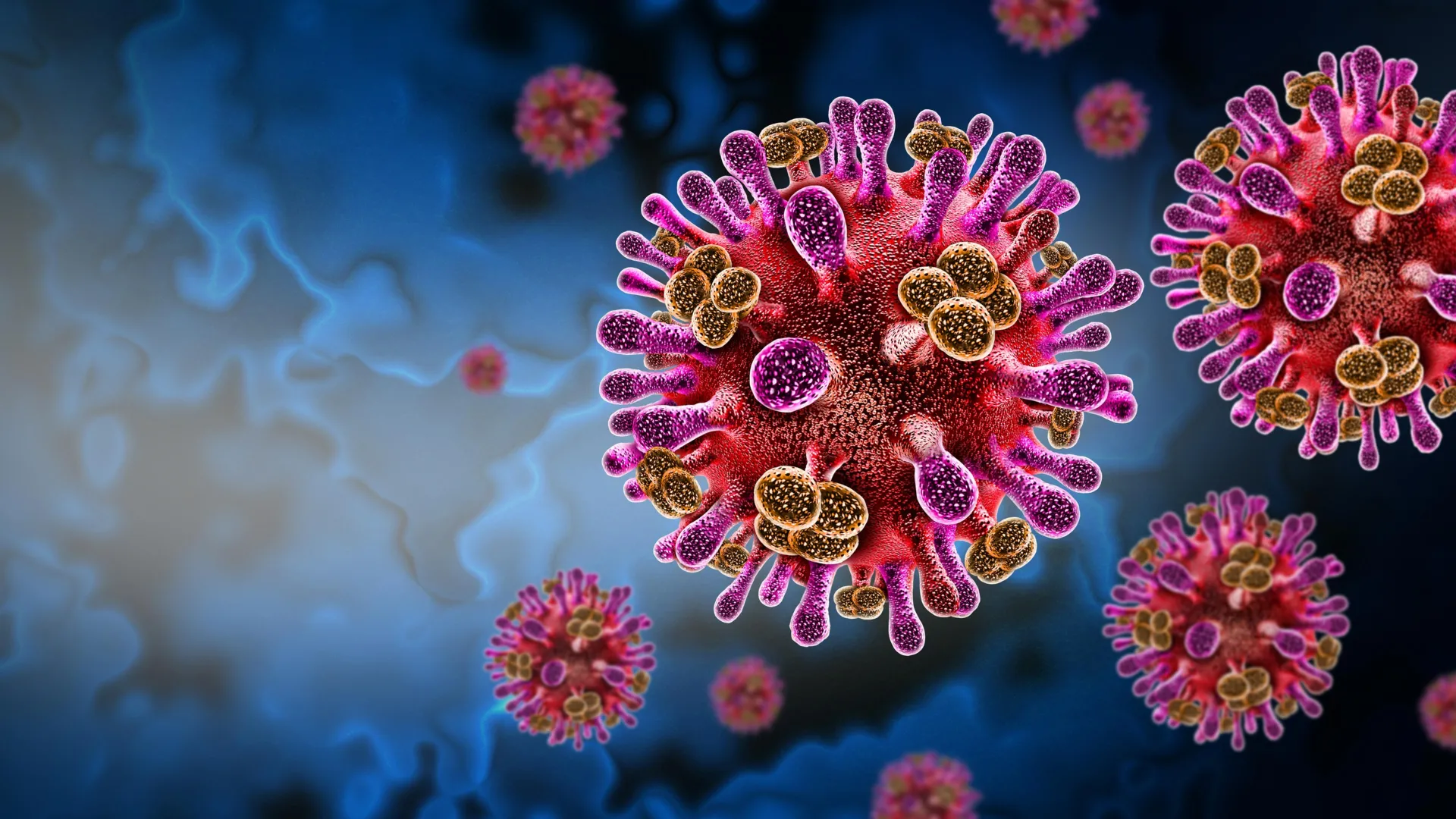
Researchers studying infectious diseases have discovered Pteropine orthoreovirus (PRV), a bat-borne virus, in stored throat swab samples and virus cultures from five patients in Bangladesh. These individuals were originally suspected of having Nipah virus infection but later tested negative. The finding places PRV among the growing number of animal-to-human viruses identified in the country and indicates it should be considered when doctors evaluate illnesses that resemble Nipah. The research was published in the journal Emerging Infectious Diseases.
All five patients had recently consumed raw date palm sap, a sweet liquid commonly collected during winter and frequently visited by bats. This sap is already known as a major pathway for Nipah virus transmission in Bangladesh. Bats are recognized as natural hosts for many zoonotic viruses, including rabies, Nipah, Hendra, Marburg, and SARS-CoV-1.
"Our findings show that the risk of disease associated with raw date palm sap consumption extends beyond Nipah virus," said Nischay Mishra, PhD, associate professor of epidemiology at the Center for Infection and Immunity (CII), Columbia University Mailman School of Public Health, and senior author of the study. "It also underscores the importance of broad-spectrum surveillance programs to identify and mitigate public health risks from emerging bat-borne viruses."
Nipah-Like Illnesses Reveal a Different Cause
Between December 2022 and March 2023, the five patients were hospitalized with symptoms typical of Nipah virus infection (including fever, vomiting, headache, fatigue, increased salivation, and neurological). Despite these signs, laboratory testing using PCR and serology ruled out Nipah virus. To investigate further, researchers applied high-throughput, agnostic viral capture sequencing (VCS) to patient samples. This approach revealed genetic material from PRV in archived throat swabs. In three cases, scientists were also able to grow the virus in culture, confirming the presence of active infection.
The patients were identified through a Nipah virus surveillance program jointly run by the Institute of Epidemiology, Disease Control and Research (IEDCR), Bangladesh; International Centre for Diarrheal Disease Research, Bangladesh (icddr,b); and the U.S. Centers for Disease Control and Prevention (CDC).
Advanced Technology Detects Overlooked Viruses
Viral Capture Sequencing (VCS) is a patented method developed at the CII at Columbia University. It allows scientists to screen for all known viral infections in vertebrates, including viruses carried by bats. The technique matches the sensitivity of standard polymerase chain reaction (PCR) testing while simultaneously searching for thousands of viruses and generating near-complete genome sequences. A related tool, Bacterial Capture Sequencing (BCS), detects disease-causing bacteria and genes linked to antibiotic resistance. Both technologies are approved for use in clinical and research settings.
All five patients in the study experienced severe illness. In contrast, PRV infections reported in nearby countries have often been milder. This difference suggests that less serious cases in Bangladesh may be occurring without being diagnosed.
"A new addition of zoonotic spillover causes respiratory and neurological complications following consumption of raw date palm sap next to Nipah virus infection," says Tahmina Shirin, PhD, Director, Institute of Epidemiology, Disease Control, and Research (IEDCR), as well as the National Influenza Centre (NIC) in Bangladesh.
Linking Bat Reservoirs to Human Infection
In more recent work supported by the U.S. Department of Agriculture, Mishra and his colleagues traced the likely source of infection by identifying genetically similar Pteropine orthoreoviruses in bats captured near where the human cases occurred, close to the Padma River Basin (unpublished data).
"This [research] provides critical evidence linking bat reservoirs to human infection. We are now working to understand the spillover mechanisms from bats to humans and domestic animals, as well as the broader ecology of emerging bat-borne viruses in communities along the Padma River Basin," says Ariful Islam, bat-borne disease ecologist and epidemiologist at Charles Sturt University, Australia, and co-first author of the study.
The study was co-led by Sharmin Sultana, assistant professor of Virology and Senior Scientific Officer at the Institute of Epidemiology, Disease Control and Research (IEDCR) in Bangladesh. Additional contributors include James Ng, Sunil Kumar Dubey, Cheng Guo, and W. Ian Lipkin of the CII; Manjur Hossain Khan of IEDCR; Mohammed Ziaur Rahman and Moinuddin Satter of icddr,b; Joel M. Montgomery of the CDC's National Center for Emerging and Zoonotic Infectious Diseases; and Lisa Hensley of the Zoonotic and Emerging Disease Research Unit at the United States Department of Agriculture.
The research was funded through United States Department of Agriculture agreements with Columbia University (NACA-58-3022-2-021, NACA- 58-3022-4-053).
Story Source:
Materials provided by Columbia University's Mailman School of Public Health. Note: Content may be edited for style and length.
Journal Reference:
- Sharmin Sultana, Ariful Islam, James Ng, Sunil Kumar Dubey, Manjur Hossain Khan, Cheng Guo, Mohammed Ziaur Rahman, Joel M. Montgomery, Syed Moinuddin Satter, Tahmina Shirin, W. Ian Lipkin, Lisa Hensley, Nischay Mishra. Bat Reovirus as Cause of Acute Respiratory Disease and Encephalitis in Humans, Bangladesh, 2022–2023. Emerging Infectious Diseases, 2025; 31 (12) DOI: 10.3201/eid3112.250797
Cite This Page: