
Scientists discover the body’s hidden “off switch” for inflammation
- Date:
- February 19, 2026
- Source:
- University College London
- Summary:
- A new human study has uncovered how the body naturally turns off inflammation. Researchers found that fat-derived molecules called epoxy-oxylipins rein in immune cells that can otherwise drive chronic disease. Using a drug to boost these molecules reduced pain faster and lowered harmful inflammatory cells. The discovery could pave the way for safer treatments for arthritis, heart disease, and other inflammation-related conditions.
- Share:
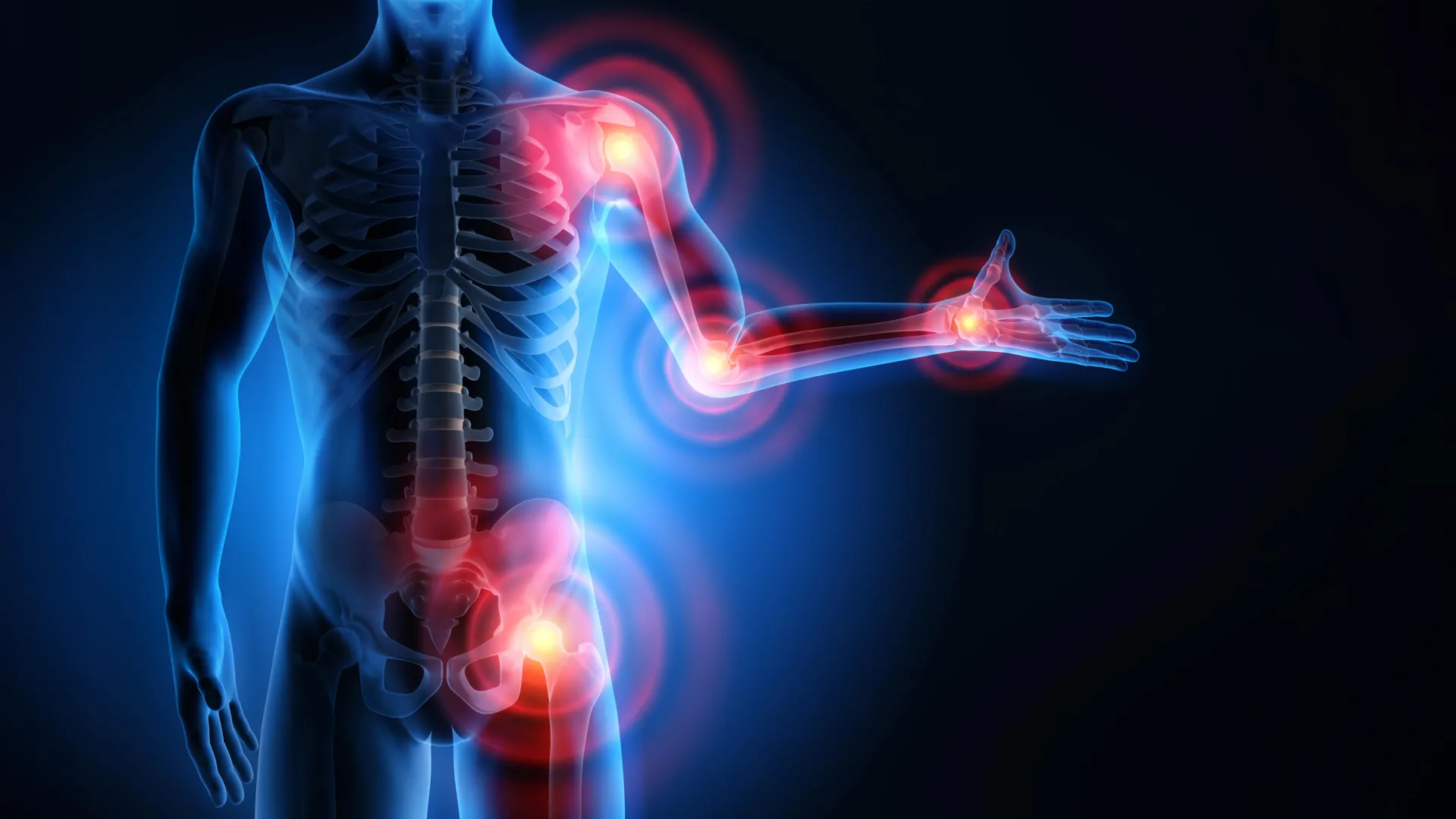
Researchers at University College London have identified a biological process that helps the body shut down inflammation once it is no longer needed. The discovery could pave the way for new treatments for chronic diseases that affect millions of people around the world.
Inflammation is an essential defense mechanism that protects us from infection and injury. However, if it continues unchecked, it can contribute to serious conditions including arthritis, heart disease, and diabetes. Until now, scientists did not clearly understand how the body transitions from an active immune attack to a healing phase.
Fat Derived Molecules That Calm the Immune System
The study, published in Nature Communications, found that small fat-based molecules known as epoxy-oxylipins act as natural regulators of the immune response. These molecules help prevent the buildup of specific immune cells called intermediate monocytes*, which are associated with chronic inflammation -- linked to tissue damage, illness and disease progression.
To explore this process, researchers conducted a carefully controlled experiment in healthy volunteers. Participants received a small injection of UV-killed E. coli bacteria in the forearm. This triggered a temporary inflammatory response -- pain, redness, heat and swelling -- similar to what occurs after infection or injury.
Volunteers were divided into two groups: prophylactic arm and therapeutic arm.
At different stages, participants were given a drug called GSK2256294. This medication blocks an enzyme known as soluble epoxide hydrolase (sEH), which normally breaks down epoxy-oxylipins.
In the prophylactic arm, 24 volunteers participated -- 12 received the drug and 12 received placebo (placebo). They were treated two hours before inflammation began to test whether boosting epoxy-oxylipins early could prevent harmful immune changes.
In the therapeutic arm, another 24 volunteers -- 12 treated and 12 untreated (placebo) -- received the drug four hours after inflammation had started. This approach reflected how treatment would occur in real world settings once symptoms appear.
Boosting Protective Lipids Reduced Harmful Immune Cells
In both groups, blocking sEH increased levels of epoxy-oxylipins. Participants who received the drug experienced faster pain resolution and had significantly lower levels of intermediate monocytes in both blood and tissue -- the immune cells linked to chronic inflammation and disease. Notably, the medication did not meaningfully change visible symptoms such as redness or swelling.
Further investigation showed that one specific epoxy-oxylipin, 12,13-EpOME, works by suppressing a protein signaling pathway known as p38 MAPK, which drives monocyte transformation. Laboratory experiments and additional testing in volunteers who received a p38 blocking drug confirmed this mechanism.
First author Dr. Olivia Bracken (UCL Department of Ageing, Rheumatology and Regenerative Medicine) said: "Our findings reveal a natural pathway that limits harmful immune cell expansion and helps calm inflammation more quickly.
"Targeting this mechanism could lead to safer treatments that restore immune balance without suppressing overall immunity.
"With chronic inflammation ranked as a major global health threat, this discovery opens a promising avenue for new therapies."
Corresponding author Professor Derek Gilroy (UCL Division of Medicine) said: "This is the first study to map epoxy-oxylipin activity in humans during inflammation.
"By boosting these protective fat molecules, we could design safer treatments for diseases driven by chronic inflammation."
He added: "This was an entirely human-based study with direct relevance to autoimmune diseases, as we used a drug already suitable for human use -- one that could be repurposed to treat flares in chronic inflammatory conditions, an area currently bereft of effective therapies."
Scientists chose to investigate epoxy-oxylipins because previous animal research suggested they can reduce inflammation and pain. However, their role in human biology had not been clearly defined. Unlike well known inflammatory signals such as histamine and cytokines, epoxy-oxylipins belong to a lesser studied pathway that researchers believed might help naturally quiet the immune system.
Next Steps for Arthritis and Heart Disease Research
The findings open the possibility of clinical trials to test sEH inhibitors as treatments for diseases such as rheumatoid arthritis and cardiovascular disease.
Dr. Bracken said: "For instance, rheumatoid arthritis is a condition in which the immune system attacks the cells that line your joints. sEH inhibitors could be trialled alongside existing medications to investigate if they can help prevent or slow down joint damage incurred by the condition."
Dr. Caroline Aylott, Head of Research Delivery at Arthritis UK, said: "The pain of arthritis can affect how we move, think, sleep and feel, along with our ability to spend time with loved ones. Pain is incredibly complex and is affected by many different factors. We also know that everybody's pain is different.
"That is why it is important that we invest in research like this, that helps us understand what causes and influences people's experience of pain.
"We are excited to see the results of this study which has found a natural process that could stop inflammation and pain. We hope in the future that this will lead to new pain management options for people with arthritis."
The study was funded by Arthritis UK and included researchers from UCL, King's College London, University of Oxford, Queen Mary University of London, and the National Institute of Environmental Health Sciences, USA.
Notes
*Intermediate monocytes are white blood cells that help fight infection and repair tissue. In short bursts, they help coordinate the immune response and support recovery, but if they persist or grow in excess, they keep the immune system switched on, leading to chronic inflammation.
Story Source:
Materials provided by University College London. Note: Content may be edited for style and length.
Journal Reference:
- Olivia V. Bracken, Parinaaz Jalali, James R. W. Glanville, Larrissa Benvenutti, Emma S. Chambers, Hugh Trahair, Madhur Motwani, Karen T. Feehan, Jamie G. Evans, Jhonatan de Souza Carvalho, Roel P. H. De Maeyer, Arne N. Akbar, Fred B. Lih, Darryl C. Zeldin, David Bishop-Bailey, Matthew L. Edin, Derek W. Gilroy. Epoxy-oxylipins direct monocyte fate in inflammatory resolution in humans. Nature Communications, 2026; 17 (1) DOI: 10.1038/s41467-025-67961-5
Cite This Page: