
Scientists were wrong about lifespan. Your genes matter way more than we thought
Your lifespan might be written in your DNA far more than anyone realized.
- Date:
- April 13, 2026
- Source:
- Weizmann Institute of Science
- Summary:
- For years, scientists believed our lifespan was mostly shaped by environment and chance, with genetics playing only a minor role. But a new study from the Weizmann Institute flips that idea on its head, revealing that genes may actually account for about half of the differences in how long people live. By analyzing massive twin datasets—including twins raised apart—and using innovative simulations to filter out deaths from accidents and other external causes, researchers uncovered a hidden genetic influence that had been masked for decades.
- Share:
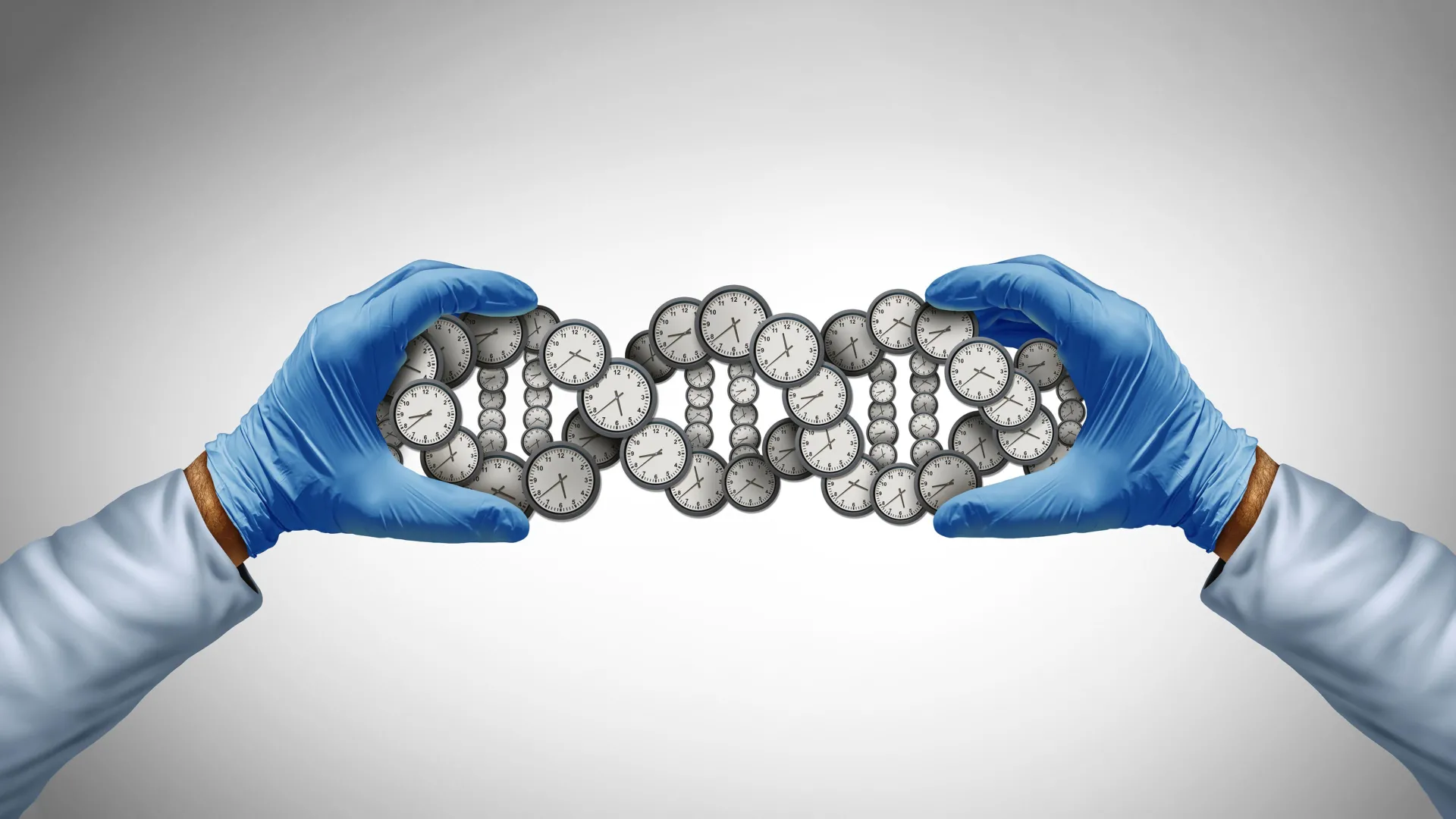
What influences how long we live, and how much of that is written in our genes? For many years, scientists believed genetics played only a modest role. Earlier estimates suggested that inherited factors explained about 20 to 25 percent of lifespan differences, and some large studies even placed the number below 10 percent.
A new study from the Weizmann Institute of Science, published in Science, challenges that long-standing view. The researchers report that genetics may account for roughly half of the variation in human lifespan, which is at least double previous estimates. The study was led by Ben Shenhar from the lab of Prof. Uri Alon in Weizmann's Molecular Cell Biology Department.
"For many years, lifespan was attributed mainly to non-genetic factors, fueling skepticism about genetic determinants of longevity."
Why Earlier Estimates Missed the Mark
To reach this conclusion, the team analyzed three extensive twin databases from Sweden and Denmark. For the first time in this type of research, they also included data from twins who were raised apart. This allowed them to better separate genetic influences from environmental ones.
The researchers found that earlier estimates were skewed by what scientists call extrinsic mortality. This includes deaths caused by accidents, infections, and environmental factors. Because older datasets did not include detailed causes of death, it was not possible to separate these external influences from deaths linked to biological aging.
To overcome this challenge, the team created a new analytical approach. They used mathematical models along with simulations of virtual twins to distinguish deaths caused by aging from those due to external factors. By filtering out these outside influences, the researchers uncovered a much stronger genetic signal than previously recognized. The findings align with what is seen in other complex human traits and in animal studies.
Up to age 80, the risk of dying from dementia shows a heritability of about 70 percent – far higher than that of cancer or heart disease.
Implications for Aging Research and Medicine
These results could reshape how scientists think about aging and longevity. If genetics plays a larger role than assumed, it strengthens the case for searching for specific genes that influence lifespan.
"For many years, human lifespan was thought to be shaped almost entirely by non-genetic factors, which led to considerable skepticism about the role of genetics in aging and about the feasibility of identifying genetic determinants of longevity," says Shenhar. "By contrast, if heritability is high, as we have shown, this creates an incentive to search for gene variants that extend lifespan, in order to understand the biology of aging and, potentially, to address it therapeutically."
Research Support and Funding
Prof. Uri Alon's research is supported by the Sagol Institute for Longevity Research; the Knell Family Institute for Artificial Intelligence; the Moross Integrated Cancer Center; the David and Fela Shapell Family Center for Genetic Disorders Research; the Zuckerman STEM Leadership Program; and the Rising Tide Foundation.
Prof. Alon is the incumbent of the Abisch-Frenkel Professorial Chair.
Story Source:
Materials provided by Weizmann Institute of Science. Note: Content may be edited for style and length.
Journal Reference:
- Ben Shenhar, Glen Pridham, Thaís Lopes De Oliveira, Naveh Raz, Yifan Yang, Joris Deelen, Sara Hägg, Uri Alon. Heritability of intrinsic human life span is about 50% when confounding factors are addressed. Science, 2026; 391 (6784): 504 DOI: 10.1126/science.adz1187
Cite This Page: