
You don’t need to lose weight to reverse prediabetes, study finds
- Date:
- March 19, 2026
- Source:
- The Conversation
- Summary:
- For years, people with prediabetes have been told the same thing: lose weight or risk developing diabetes. But new research flips that idea on its head, showing that blood sugar can return to normal even without shedding pounds. The key isn’t just how much fat you carry—it’s where it’s stored. Harmful fat deep in the abdomen fuels inflammation and disrupts insulin, while fat under the skin can actually support healthier metabolism.
- Share:
There’s a long-held belief in diabetes prevention that weight loss is the main way to lower disease risk. Our new study challenges this.
For decades, people diagnosed with prediabetes – a condition affecting up to one in three adults depending on age – have been told the same thing by their doctors: eat healthily and lose weight to avoid developing diabetes.
This approach hasn’t been working for all. Despite unchanged medical recommendations for more than 20 years, diabetes prevalence continues rising globally. Most people with prediabetes find weight-loss goals hard to reach, leaving them discouraged and still at high risk of diabetes.
Our latest research, published in Nature Medicine, reveals a different approach entirely. We found that prediabetes can go into remission – with blood sugar returning to normal – even without weight loss.
About one in four people in lifestyle intervention programs bring their blood sugar back to normal without losing any weight. Remarkably, this weight-stable remission protects against future diabetes just as effectively as remission achieved through weight loss.
This represents a significant shift in how doctors might treat overweight or obese patients at high risk for diabetes. But how is it possible to reduce blood glucose levels without losing weight, or even while gaining weight?
The answer lies in how fat is distributed throughout the body. Not all body fat behaves the same way.
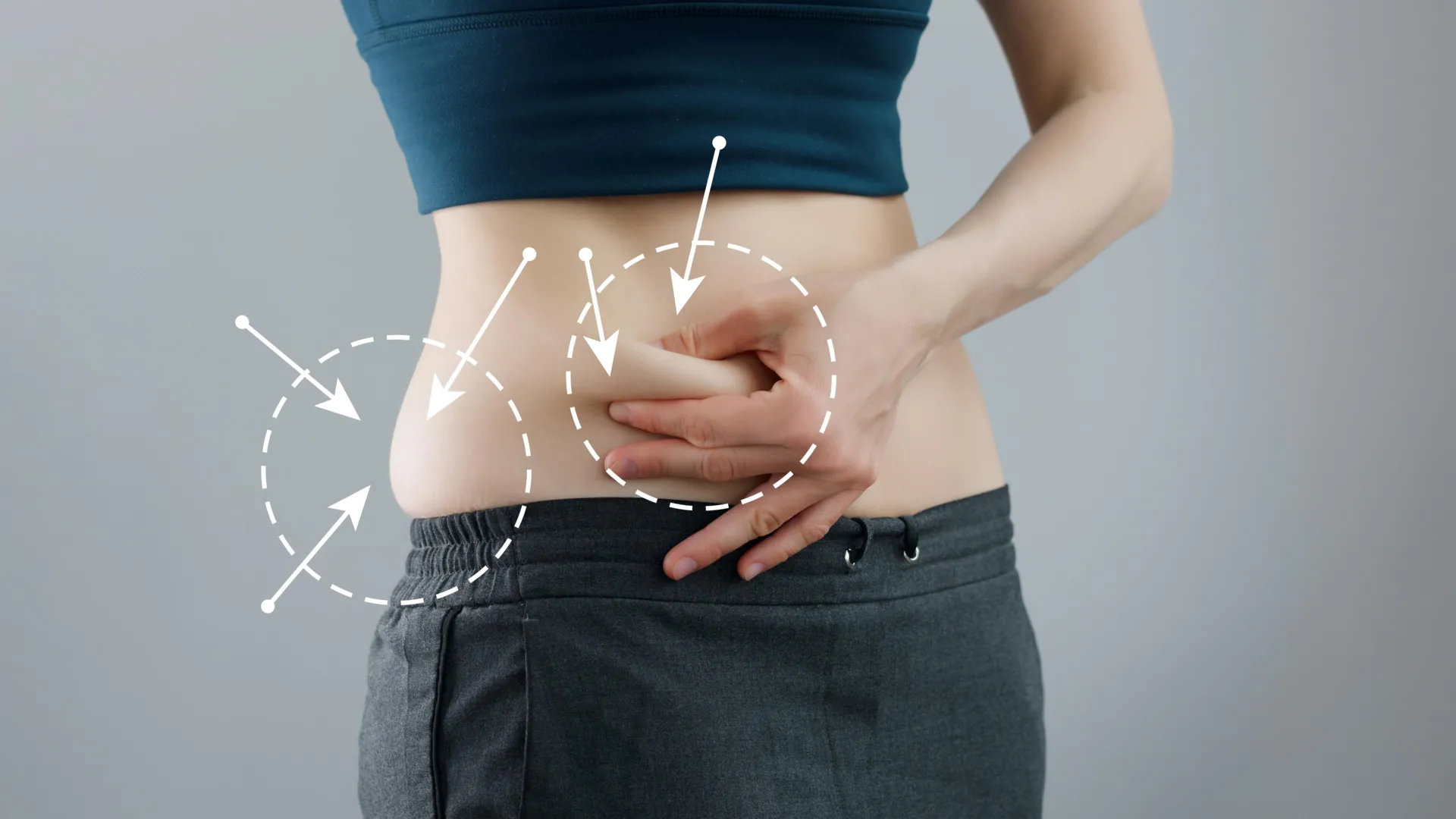
The visceral fat deep in our abdomen, surrounding our internal organs, acts as a metabolic troublemaker. This belly fat drives chronic inflammation that interferes with insulin – the hormone responsible for controlling blood sugar levels. When insulin can’t function properly, blood glucose rises.
In contrast, subcutaneous fat – the fat directly under our skin – can be beneficial. This type of fat tissue produces hormones that help insulin work more effectively. Our study shows that people who reverse prediabetes without weight loss shift fat from deep within their abdomen to beneath their skin, even if their total weight stays the same.
We’ve also uncovered another piece of the puzzle. Natural hormones that are mimicked by new weight-loss medications like Wegovy and Mounjaro appear to play a crucial role in this process. These hormones, particularly GLP-1, help pancreatic beta cells secrete insulin when blood sugar levels rise.
People who reverse their prediabetes without losing weight seem to naturally enhance this hormone system, while simultaneously suppressing other hormones that typically drive glucose levels higher.
Targeting fat redistribution, not just weight loss
The practical implications are encouraging. Instead of focusing only on the scales, people with prediabetes can aim to shift body fat with diet and exercise.
Research shows that polyunsaturated fatty acids, abundant in Mediterranean diets rich in fish oil, olives and nuts, may help reduce visceral belly fat. Similarly, endurance training can decrease abdominal fat even without overall weight loss.
This doesn’t mean weight loss should be abandoned as a goal – it remains beneficial for overall health and diabetes prevention. However, our findings suggest that achieving normal blood glucose levels, regardless of weight changes, should become a primary target for prediabetes treatment.
This approach could help millions of people who have struggled with traditional weight-loss programs but might still achieve meaningful health improvements through metabolic changes.
For healthcare providers, this research suggests a need to broaden treatment approaches beyond weight-focused interventions. Monitoring blood glucose improvements and encouraging fat redistribution through targeted nutrition and exercise could provide alternative pathways to diabetes prevention for patients who find weight loss particularly difficult.
The implications extend globally, where diabetes represents one of the fastest-growing health problems. By recognizing that prediabetes can improve without weight loss, we open new possibilities for preventing a disease that affects hundreds of millions worldwide and continues rapidly expanding.
This research fundamentally reframes diabetes prevention, suggesting that metabolic health improvements – not just weight reduction – should be central to clinical practice. For the many people living with prediabetes who have felt discouraged by unsuccessful weight-loss attempts, this offers renewed hope and practical alternative strategies for reducing their diabetes risk.
Story Source:
Materials provided by The Conversation. Original written by Andreas L. Birkenfeld and Reiner Jumpertz-von Schwartzenberg, University of Tübingen. Note: Content may be edited for style and length.
Journal Reference:
- Arvid Sandforth, Elsa Vazquez Arreola, Robert L. Hanson, Nicolai J. Wewer Albrechtsen, Jens Juul Holst, Robert Ahrends, Cristina Coman, Felicia Gerst, Estela Lorza-Gil, Yurong Cheng, Leontine Sandforth, Sarah Katzenstein, Marlene Ganslmeier, Jochen Seissler, Hans Hauner, Nikolaos Perakakis, Robert Wagner, Jürgen Machann, Fritz Schick, Andreas Peter, Rainer Lehmann, Cora Weigert, Jennifer Maurer, Hubert Preissl, Martin Heni, Julia Szendrödi, Stefan Kopf, Michele Solimena, Peter Schwarz, Matthias Blüher, Hans-Ulrich Häring, Martin Hrabé de Angelis, Annette Schürmann, Stefan Kabisch, Knut Mai, Andreas F. H. Pfeiffer, Stefan Bornstein, Michael Stumvoll, Michael Roden, Norbert Stefan, Andreas Fritsche, Andreas L. Birkenfeld, Reiner Jumpertz von Schwartzenberg. Prevention of type 2 diabetes through prediabetes remission without weight loss. Nature Medicine, 2025; 31 (10): 3330 DOI: 10.1038/s41591-025-03944-9
Cite This Page: