
Hidden ocean heat is creeping toward Antarctica’s fragile ice shelves
- Date:
- April 30, 2026
- Source:
- University of Cambridge
- Summary:
- Deep beneath the Southern Ocean, a quiet but alarming shift is underway: warm water is creeping closer to Antarctica, and scientists are now seeing it clearly for the first time. By combining decades of ship data with robotic float measurements and machine learning, researchers uncovered that a massive pool of heat—circumpolar deep water—has expanded and edged toward the continent over the past 20 years.
- Share:
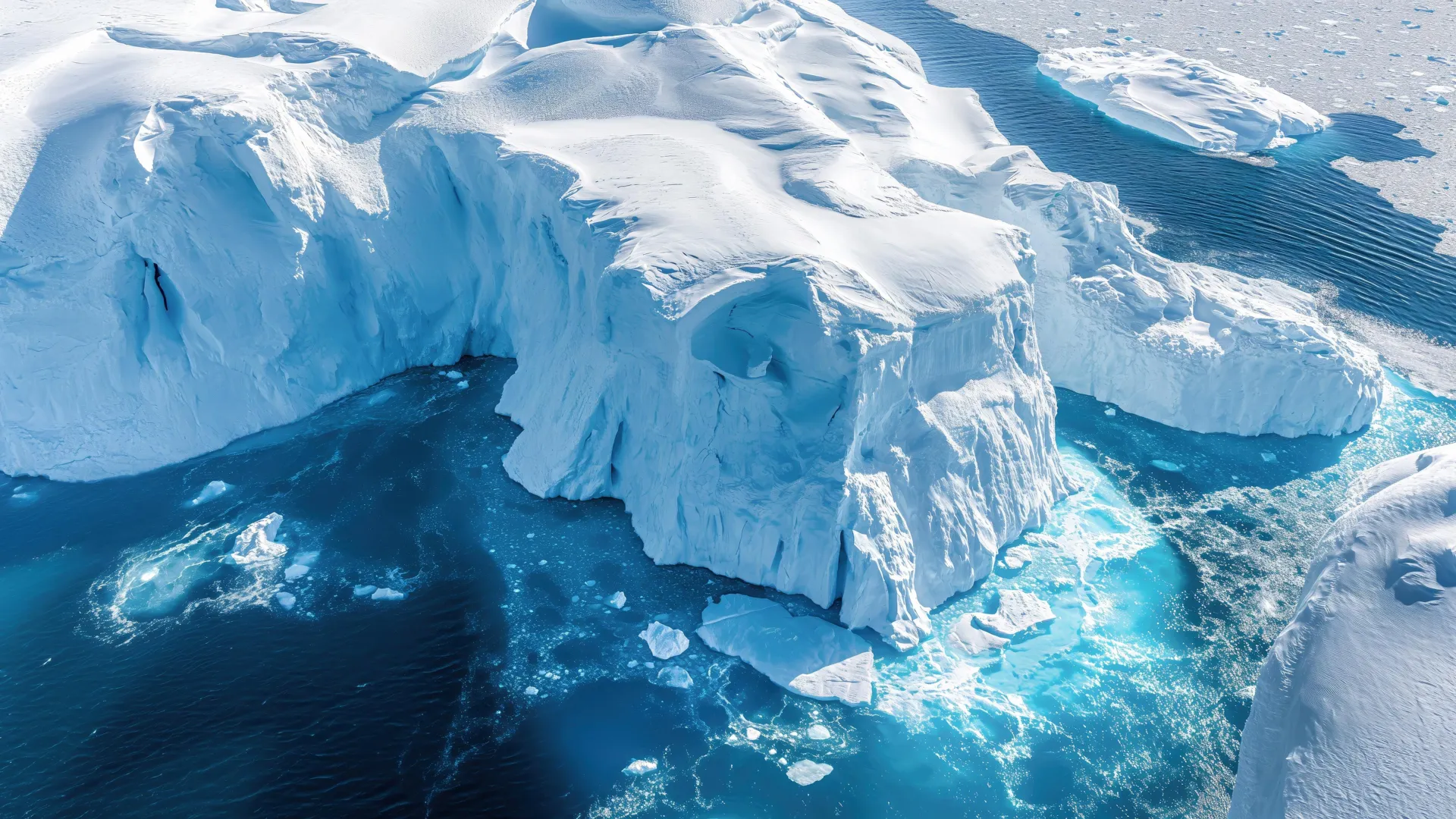
A major new study drawing on decades of ocean data has found clear evidence that heat from the deep ocean is shifting toward Antarctica. This change poses a growing threat to the continent's delicate ice shelves, which line its coast and help stabilize the ice sheet.
Researchers led by the University of Cambridge, working with colleagues from the University of California, analyzed long-term measurements collected by research ships and robotic ocean instruments. Their findings show that a large body of relatively warm water, known as 'circumpolar deep water', has expanded and gradually moved closer to the Antarctic continental shelf over the past two decades.
First Clear Evidence of a Long-Predicted Shift
Until now, scientists lacked enough continuous data to confirm this warming trend. "It's concerning, because this warm water can flow beneath Antarctic ice shelves, melting them from below and destabilizing them," said Joshua Lanham, lead author of the study at Cambridge Earth Sciences.
Ice shelves act as barriers that hold back Antarctica's inland glaciers and ice sheets. Together, these frozen reserves contain enough water to raise global sea levels by about 58 meters.
According to Lanham, this is the first time researchers have directly observed deep-ocean heat shifting across the Southern Ocean. "It's something that had been predicted by climate models due to global warming, but we hadn't seen it in data."
Combining Ship Records and Floating Sensors
Historically, scientists relied on ship-based surveys of the Southern Ocean, which circles Antarctica. These surveys were typically conducted about once every ten years and provided detailed snapshots of temperature, salinity and nutrient levels. However, the gaps between measurements made it difficult to track long-term changes in how heat moves through the ocean.
To improve the picture, the research team combined these ship records with data from a global network of autonomous floats. These drifting instruments, known as Argo floats, continuously measure conditions in the upper ocean and offer more frequent observations, although they have been in operation for a shorter period.
Using machine learning techniques, the team merged the float data with patterns identified in the ship measurements. This approach allowed them to reconstruct a detailed, month-by-month record of ocean conditions over the past 40 years, revealing the steady advance of warmer waters.
Antarctica's Cold Buffer Is Weakening
"In the past, the ice sheets were protected by a bath of cold water, preventing them from melting. Now it looks like the ocean's circulation has changed, and it's almost like someone turned on the hot tap and now the bath is getting warmer!" said Prof. Sarah Purkey, one of the senior authors of the study from Scripps Institution of Oceanography.
Purkey noted that this expansion of warm water is consistent with what scientists expect in a warming world. More than 90 percent of excess heat from global warming is absorbed by the oceans, and the Southern Ocean takes in a large share of that heat.
Global Climate Implications Beyond Antarctica
The consequences extend beyond melting ice. "The Southern Ocean plays a key role in regulating global heat and carbon storage, so changes in heat distribution here have wider implications for the global climate system," said Prof. Ali Mashayek, another senior author from Cambridge Earth Sciences.
Near the poles, extremely cold and dense water forms and sinks into the deep ocean. As it sinks, it pulls heat, carbon and nutrients downward, helping drive a global system of currents sometimes described as a conveyor belt. This system includes the Atlantic Meridional Overturning Circulation (AMOC), which moves water throughout the Atlantic.
Climate models, including those used by the IPCC, suggest that rising air temperatures and increased freshwater from melting ice are already reducing the formation of this dense water in the North Atlantic. This process could weaken the AMOC.
A Change Already Underway
Similar shifts are now expected in the Southern Ocean. Models have indicated that less cold, dense water will form around Antarctica, allowing warmer circumpolar deep water to move closer to the continent and fill the gap.
"We can now see this scenario is already emerging in the observations," said Lanham. "This isn't just a possible future scenario suggested by models; it's something that is happening now, bringing wider implications for how carbon, nutrients and heat are cycled through the global ocean."
Story Source:
Materials provided by University of Cambridge. Note: Content may be edited for style and length.
Journal Reference:
- Joshua Lanham, Sarah Purkey, Kaushik Srinivasan, Matthew Mazloff, Laura Cimoli, Ali Mashayek. Poleward migration of warm Circumpolar Deep Water towards Antarctica. Communications Earth, 2026; 7 (1) DOI: 10.1038/s43247-026-03426-x
Cite This Page: