
Are your memories real? Physicists revisit the Boltzmann brain paradox
- Date:
- May 3, 2026
- Source:
- Santa Fe Institute
- Summary:
- A new analysis of the “Boltzmann brain” paradox suggests our memories and sense of reality could, in theory, be random illusions born from cosmic chaos. By uncovering circular reasoning in how physicists think about time and entropy, the study raises fresh doubts about what we can truly know about the past.
- Share:
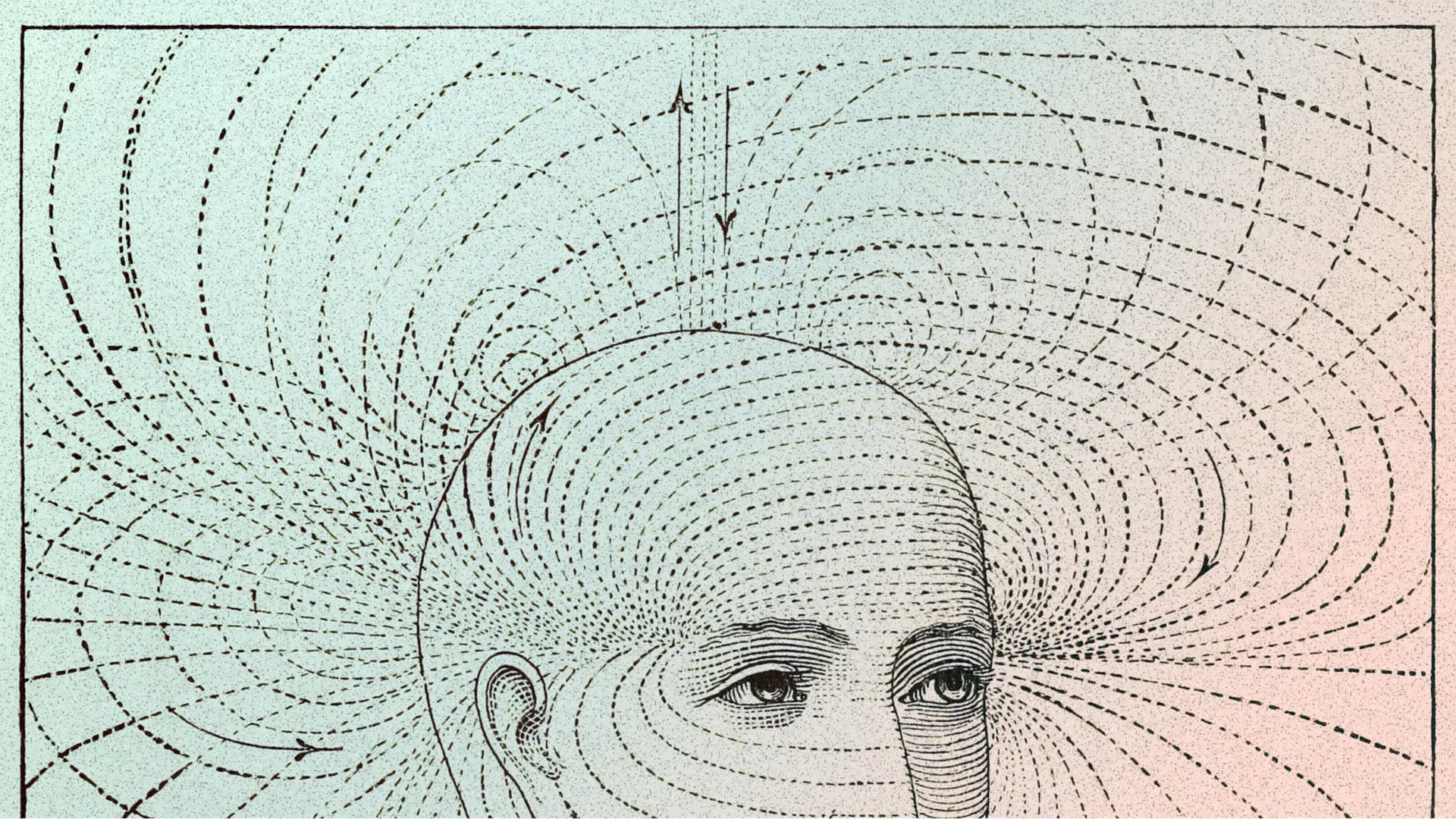
In a new study, SFI Professor David Wolpert, SFI Fractal Faculty member Carlo Rovelli, and physicist Jordan Scharnhorst take a fresh look at a famous and unsettling idea in physics and cosmology known as the "Boltzmann brain" hypothesis. This concept suggests that our memories, perceptions, and observations might not reflect a real past at all. Instead, they could have formed randomly through fluctuations in entropy, giving the appearance of a coherent history that never actually occurred.
The puzzle comes from a deep tension within statistical physics. A key foundation for understanding why time seems to move in one direction is Boltzmann's H theorem, a central principle in statistical mechanics tied to the second law of thermodynamics. That law explains why entropy tends to increase over time, giving us a sense of past and future.
However, the H theorem itself is time-symmetric, meaning it does not prefer one direction of time over another. This creates a surprising implication. From a strictly formal standpoint, it is more probable for the patterns that make up our memories and observations to arise from random entropy fluctuations than from a real sequence of past events. Put simply, physics appears to allow the possibility that our memories are not reliable records but instead detailed illusions produced by chance. This unsettling idea is what defines the Boltzmann brain hypothesis.
How Assumptions About Time Shape the Debate
To better understand this problem, the researchers built a formal framework that examines how different assumptions affect conclusions about entropy and memory. Their work connects the Boltzmann brain hypothesis, the second law of thermodynamics, and the related "past hypothesis," which assumes the universe began in a state of low entropy.
A crucial issue is which points in time are treated as fixed when analyzing how entropy evolves. Some approaches take the current state of the universe as given and work outward from there. Others assume a low-entropy starting point at the Big Bang. Importantly, the laws of physics do not specify which of these perspectives is correct, leaving room for interpretation.
Circular Reasoning in Entropy and Memory Arguments
The study introduces what the authors call the "entropy conjecture" to highlight a key problem in many existing arguments. They show that discussions about entropy, time, and memory often rely on subtle circular reasoning. In these cases, assumptions about the past are used to support conclusions, such as the reliability of memory or the direction in which entropy increases. Those same conclusions are then used to justify the original assumptions.
Rather than settling the debate, the researchers focus on making these hidden structures clear. By separating the role of physical laws from the assumptions we use to interpret them, the study provides a more transparent way to think about long-standing questions surrounding time, entropy, and the nature of memory.
Story Source:
Materials provided by Santa Fe Institute. Note: Content may be edited for style and length.
Journal Reference:
- David Wolpert, Carlo Rovelli, Jordan Scharnhorst. Disentangling Boltzmann Brains, the Time-Asymmetry of Memory, and the Second Law. Entropy, 2025; 27 (12): 1227 DOI: 10.3390/e27121227
Cite This Page: