
Cancer’s favorite escape trick may actually make it easier to kill
- Date:
- June 4, 2026
- Source:
- Baylor College of Medicine
- Summary:
- Scientists have uncovered a surprising new way the immune system fights cancer, overturning a core belief that has guided immunology for decades. The research found that when cancer cells shut down a key immune-recognition molecule called MHC I—a common trick used to hide from “killer” T cells—they can actually become more vulnerable to attack by a different group of immune cells known as CD4+ “helper” T cells.
- Share:
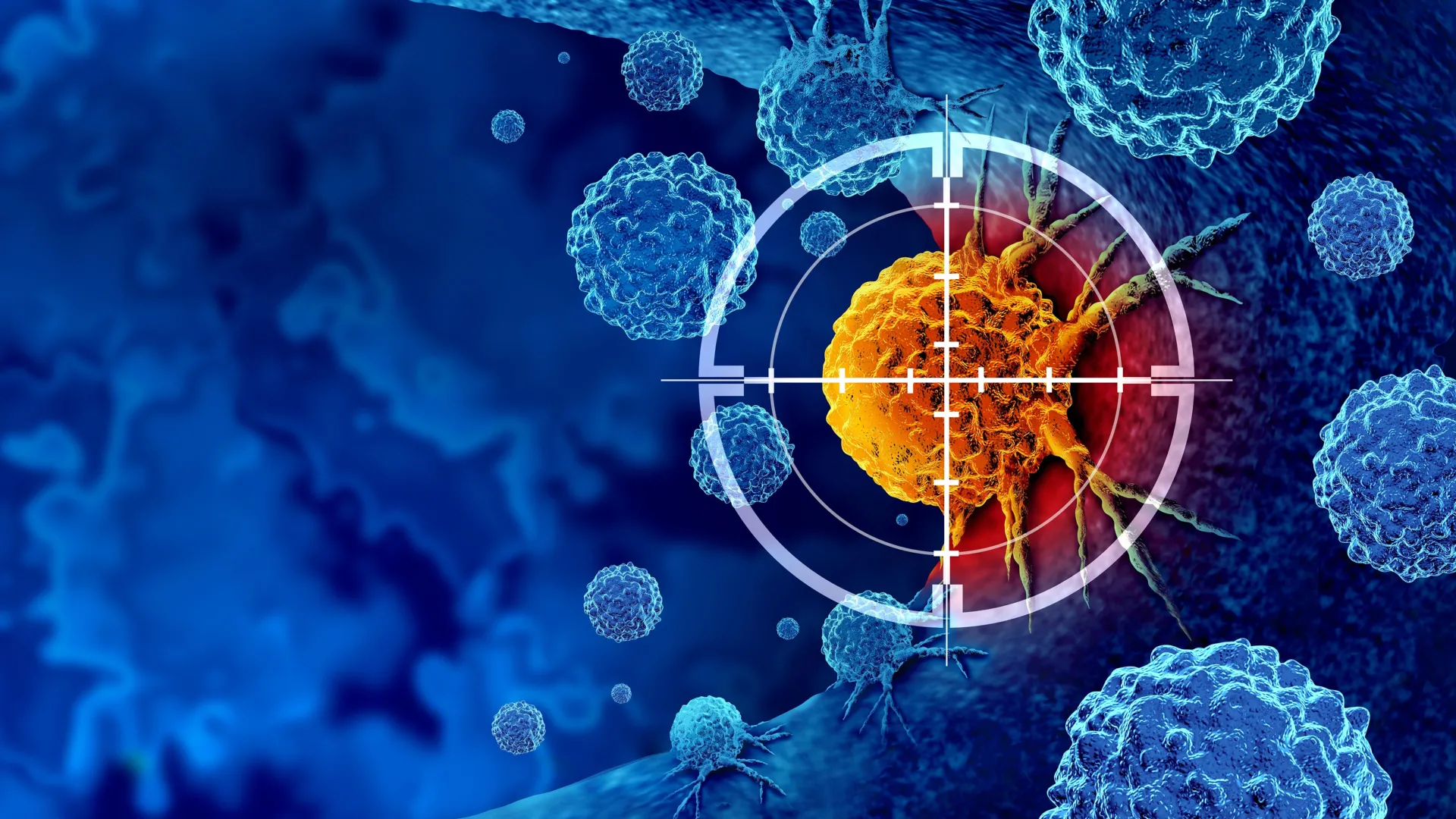
Scientists have uncovered an unexpected way the immune system can attack cancer, a finding that challenges a long-standing principle in immunology and could lead to new approaches for cancer treatment and bone marrow transplantation.
The research was led by Dr. Pavan Reddy, director of the Dan L Duncan Comprehensive Cancer Center at Baylor College of Medicine (BCM), in collaboration with Dr. Arul Chinnaiyan, S P Hicks Endowed Professor of Pathology, and Dr. Marcin Cieslik, assistant professor of pathology, both at the University of Michigan Rogel Cancer Center. Their findings were published in Nature Immunology.
Discovery Challenges a Core Immunology Principle
The immune system uses proteins known as major histocompatibility complexes (MHC) to help identify threats, including cancer cells and foreign (allogeneic) cells. For decades, scientists believed that MHC class I molecules primarily communicated with CD8+ T cells, often called "killer" T cells, while MHC class II molecules activated CD4+ T cells, commonly known as "helper" T cells.
This division has shaped much of modern immunology and cancer research.
The new study suggests the relationship is more complex than previously thought. The researchers identified a previously unrecognized role for the MHC class I pathway in immune responses driven by CD4+ T cells, challenging the traditional view that these pathways operate separately.
The project was the result of a years-long collaboration involving graduate students Emma Lauder and Meng-Chih Wu from BCM and Mahnoor Gondal from the University of Michigan, along with colleagues who contributed to multiple aspects of the research.
Cancer Cells Become Vulnerable When MHC I Is Lost
Using advanced transcriptomic analyses and functional studies in both mouse models and human samples, the researchers examined what happens when cancer cells lose MHC I expression.
Many tumors reduce or eliminate MHC I as a way to avoid detection by CD8+ T cells. However, the team discovered that this strategy may come with a significant downside.
When MHC I levels were reduced, cancer cells became more susceptible to attacks from CD4+ T cells. These helper T cells triggered ferroptosis, a form of cell death driven by iron-dependent oxidative stress.
In other words, cancer cells that evade one branch of the immune system may become more vulnerable to another.
Implications for Cancer and Bone Marrow Transplantation
The researchers found that this ferroptosis response was not limited to cancer. Similar effects were observed in models of graft-versus-host disease, a serious complication that can occur after bone marrow transplantation.
To determine whether these findings were relevant in real-world patients, Chinnaiyan's team analyzed large transcriptomic and clinical datasets from people who had received checkpoint inhibitor therapies for solid tumors. Their analysis showed correlations between the newly identified immune mechanism and patient outcomes.
The results indicate that lowering MHC I expression can increase the ability of CD4+ T cells to destroy target cells, whether those cells are cancerous or allogeneic.
According to the researchers, these findings raise the possibility of developing therapies that better harness CD4+ T cells, particularly against tumors that have learned to evade traditional CD8+ T cell attacks. The study also suggests that MHC class I may play a broader role in determining how sensitive tissues are to CD4+ T cell-mediated damage.
Potential for Future Immunotherapies
"Our work, if further validated, will have implications for T cell-mediated immune responses beyond cancer and transplant immunology," Reddy said. "This may allow for the development of novel strategies that target MHC class I and CD4+ T cells to leverage the beneficial side of immunity or mitigate unwanted immune responses."
Additional contributors to the study included Emma Lauder, Mahnoor Gondal, Meng-Chih Wu, Akira Yamamoto, Laure Maneix, Dongchang Zhao and Yaping Sun. The researchers are affiliated with Baylor College of Medicine, the University of Michigan and the Howard Hughes Medical Institute.
The work was supported by NIH grants (P01CA039542, P01HL149633, R01HL152605, R01CA217156, R01AI165563, CA125123, OD036336, and OD038251) and by Cancer Prevention and Research Institute of Texas grants (RR220033 and RP240432).
Story Source:
Materials provided by Baylor College of Medicine. Note: Content may be edited for style and length.
Journal Reference:
- Emma Lauder, Mahnoor Gondal, Meng-Chih Wu, Akira Yamamoto, Laure Maneix, Dongchang Zhao, Yaping Sun, Marcin Cieslik, Arul M. Chinnaiyan, Pavan Reddy. MHC class I on target cells regulates CD4 T cell-mediated immunity. Nature Immunology, 2026; 27 (5): 1000 DOI: 10.1038/s41590-026-02480-z
Cite This Page: