
DNA time stamps reveal the strawberry’s surprising origins
- Date:
- June 19, 2026
- Source:
- Nanjing Agricultural University The Academy of Science
- Summary:
- Researchers have created a new way to reconstruct the evolutionary history of complex plant genomes by analyzing genetic traces left by transposable elements. The technique revealed that modern strawberries were assembled through multiple ancient genome-merging events, shedding new light on how major crop species evolved.
- Share:
Many of the world's most important crops have unusually complex genomes created through repeated rounds of whole-genome duplication and hybridization. These so-called polyploid genomes contain multiple sets of chromosomes inherited from different ancestral species. However, determining exactly how those genomes were assembled can be extremely difficult, especially when the original ancestor species are extinct or unknown.
A new study introduces a genome-wide approach for untangling these complex genetic histories. The method takes advantage of evolutionary signatures left behind by long terminal repeat retrotransposons, a type of mobile DNA sequence. By comparing patterns of similarity among these elements across chromosomes, researchers can identify distinct subgenomes and estimate when major genome-merging events occurred. When applied to the cultivated octoploid strawberry, the technique revealed a step-by-step evolutionary history shaped by multiple rounds of allopolyploidization, providing new insight into how complex plant genomes form and diversify over millions of years.
Why Polyploid Genomes Are Difficult To Decipher
Whole-genome duplication has played a major role in plant evolution, helping drive innovation, adaptation, and the emergence of many crop species. In allopolyploid plants, chromosome sets originate from different ancestral genomes. These chromosome groups, known as subgenomes, continue to evolve and interact long after the original hybridization events.
Identifying those subgenomes is crucial for understanding how a species evolved. Traditional approaches often depend on comparing a polyploid genome with known diploid ancestors. The problem is that many ancestral species are either extinct or have not yet been identified.
Transposable elements offer another source of information. Long terminal repeat retrotransposons accumulate in characteristic patterns within specific evolutionary lineages, preserving molecular evidence of past events. Although scientists have long recognized their potential value, reliable methods for converting those patterns into accurate subgenome assignments have remained limited. As a result, new tools are needed to reconstruct polyploid genome evolution without relying on known progenitor species.
New Method Reconstructs Genome History
Researchers from the U.S. Department of Agriculture and collaborating institutions describe such a tool in the journal Horticulture Research. The team developed a bioinformatic framework capable of reconstructing the evolutionary history of complex polyploid genomes.
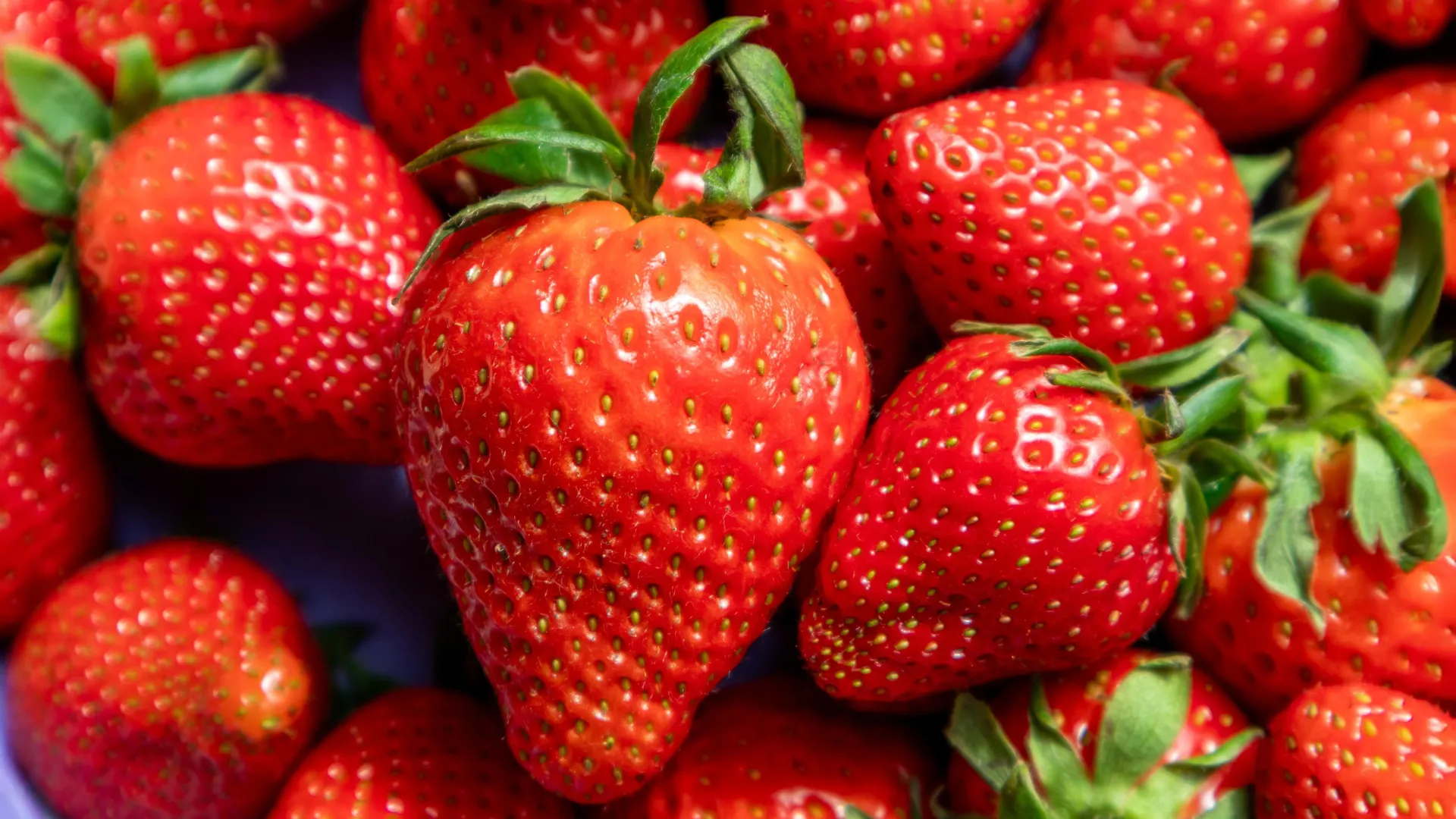
To demonstrate the method, they reexamined the cultivated octoploid strawberry (Fragaria × ananassa). Using a serial similarity matrix built from long terminal repeat retrotransposons, the researchers clarified the structure of the strawberry's subgenomes and uncovered multiple ancient genome-merging events that contributed to the modern species. The findings help resolve long-standing questions about the strawberry's evolutionary origins.
The framework follows genome evolution across three broad stages: before ancestral species diverged, during their separate evolutionary histories, and after their genomes merged. Retrotransposons that expanded during the period of divergence retain signatures unique to specific subgenomes.
By calculating similarity matrices for these elements across chromosomes and examining how they cluster at different similarity thresholds, the researchers generated what they call a "serial similarity matrix." This approach captures evolutionary signals that accumulated over different periods of time.
Testing the Approach in Crops
Before applying the technique to strawberry, the team tested it in well-studied allopolyploid crops, including teff and cotton. In both cases, the method successfully distinguished known subgenomes and separated events that occurred before and after polyploidization.
The researchers also evaluated the approach using artificially constructed polyploid genomes. Those tests confirmed that the method is sensitive to both divergence times and the abundance of transposable elements.
What the Strawberry Genome Revealed
When the method was applied to octoploid strawberry, it identified four distinct subgenomes and uncovered evidence for three sequential allopolyploidization events that occurred approximately 3.1-4.2 million years ago, 1.9-3.1 million years ago, and 0.8-1.9 million years ago.
The results support close evolutionary relationships between two strawberry subgenomes and the species Fragaria vesca and Fragaria iinumae. At the same time, the findings challenge previous models that proposed additional diploid progenitor species.
According to the analysis, some contributors to the strawberry genome may have been extinct or remain unsampled, underscoring the complexity of polyploid genome evolution.
"This work demonstrates how transposable elements can function as evolutionary time stamps embedded in plant genomes," said one of the study's senior authors. "By focusing on when and where these elements expanded, we can reconstruct genome history even when direct ancestral references are missing. This method provides a powerful new lens for studying polyploid crops and moves beyond reliance on incomplete progenitor data, offering a more objective and reproducible framework for evolutionary genomics."
Implications for Crop Research and Breeding
The potential applications extend well beyond strawberries. Many economically important crops, including wheat, cotton, and sugarcane, are polyploids with similarly complex evolutionary histories.
More accurate identification of subgenomes could improve gene annotation, trait mapping, and comparative genomic studies. Those advances could, in turn, support precision breeding efforts and help accelerate crop improvement.
By making it possible to reconstruct genome evolution without known ancestors, the serial similarity matrix approach adds a valuable new tool for studying biodiversity, speciation, and adaptation. The framework may also prove useful for investigating other complex polyploid organisms, helping connect evolutionary biology with practical agricultural research.
This work was supported by the National Institute of Food and Agriculture (NIFA) -- Specialty Crop Research Initiative (SCRI) Grant 2022-51181-38241 to Q.Y.
Story Source:
Materials provided by Nanjing Agricultural University The Academy of Science. Note: Content may be edited for style and length.
Journal Reference:
- Haomin Lyu, Shujun Ou, Won Cheol Yim, Qingyi Yu. Deciphering octoploid strawberry evolution with serial LTR similarity matrices for subgenome partition. Horticulture Research, 2025; 12 (8) DOI: 10.1093/hr/uhaf132
Cite This Page: