
Scientists find the “Achilles’ heel” of deadly gut bacteria
Scientists have identified a shared weak spot in some of the world’s most dangerous diarrhea-causing bacteria, opening the door to a potentially game-changing vaccine.
- Date:
- July 5, 2026
- Source:
- Washington University in St. Louis
- Summary:
- Researchers discovered an “Achilles’ heel” shared by E. coli, Shigella, and other diarrhea-causing bacteria: enzymes they use to breach the gut’s protective mucus layer. By targeting this common vulnerability, scientists may be able to develop a single vaccine that prevents several major diarrheal infections before they even begin.
- Share:
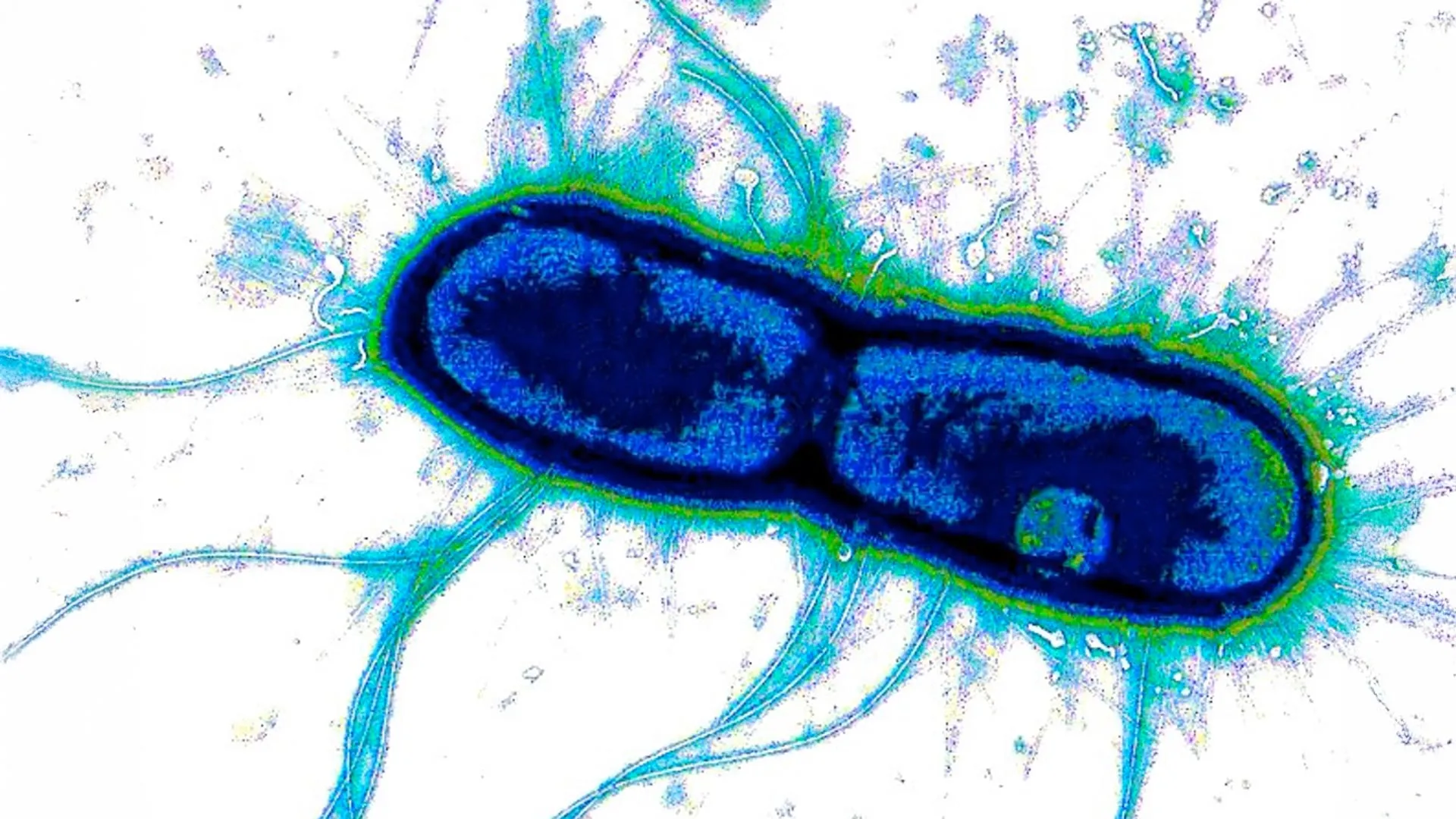
Enterotoxigenic E. coli and Shigella are responsible for hundreds of millions of infections worldwide each year and remain among the leading causes of fatal diarrheal disease, particularly in children. Despite decades of research, scientists have not yet developed effective vaccines against either pathogen. One major challenge is that the bacterial features typically targeted by vaccines vary widely between strains.
Now, researchers at Washington University School of Medicine in St. Louis have identified a biological vulnerability shared by these dangerous gut bacteria, raising the possibility of a single vaccine that could protect against both.
A team from WashU Medicine, working with collaborators at the University of Missouri and the International Centre for Diarrhoeal Disease Research in Bangladesh, found that enterotoxigenic E. coli (the leading cause of travelers' diarrhea), Shigella, and several other disease-causing bacteria depend on three closely related enzymes to penetrate the gut's protective mucus layer and establish infection.
Using samples from infected patients and volunteers who had been exposed to the bacteria, the researchers showed that antibodies directed against a common region of these enzymes can neutralize all three. By blocking the enzymes, the antibodies prevent the bacteria from crossing the intestinal mucus barrier.
The findings, published June 15 in PNAS, suggest that a future combination vaccine could potentially protect against multiple major causes of severe diarrhea.
"For something so common and so deadly to young children, it's striking that we still don't have a vaccine for either of these pathogens," said James M. Fleckenstein, MD, a professor of medicine in the Division of Infectious Diseases at WashU Medicine and co-senior author on the study. "What's exciting here is that we've found a kind of Achilles' heel or weak point they share that we might be able to target to protect against both."
How Gut Pathogens Break Through the Body's Defenses
Before they can cause disease, gut pathogens must first get through a thick mucus layer that lines the intestines. This protective coating acts as a barrier, keeping harmful microbes away from intestinal tissues and even helping keep the body's beneficial bacteria in check.
According to Fleckenstein, this early stage of infection may offer an opportunity to stop disease before it starts, without harming helpful microorganisms.
Enterotoxigenic E. coli (ETEC), which causes gastrointestinal illness unlike the harmless strains of E. coli commonly found in the gut, and Shigella use closely related enzymes to cut through the proteins that give mucus its structure. Once they break through this barrier, the bacteria can release toxins that trigger diarrhea.
Fleckenstein's laboratory previously identified one of these enzymes in disease-causing E. coli. The enzyme, known as EatA, breaks down a key structural component of intestinal mucus. The new study revealed that two similar enzymes, SepA and Pic, produced by Shigella and other diarrhea-causing bacteria, perform the same function.
Antibodies That Block Multiple Pathogens
Working with coauthor Ali Ellebedy, PhD, the Leo Loeb Professor in the WashU Medicine Department of Pathology & Immunology, Fleckenstein and colleagues isolated antibodies from people in Bangladesh who had naturally contracted ETEC infections as well as from volunteers intentionally exposed to the bacteria in controlled studies.
The team discovered that antibodies capable of blocking EatA could also neutralize SepA and Pic. Antibodies are proteins produced by the immune system that recognize specific targets and attach to them, helping the body eliminate threats.
To better understand how this protection works, structural biologists at the University of Missouri, including first author David P. Buckley, PhD, a postdoctoral research associate, used cryo-electron microscopy, a method that rapidly freezes molecules so they can be imaged in extraordinary detail.
Their analysis revealed exactly where the most effective antibodies bind. The antibodies targeted a region shared by all three enzymes, explaining how a single antibody can disable the mucus-degrading machinery used by multiple pathogens. The discovery also provides vaccine developers with a specific target that could be used to stimulate protective antibody responses before infection occurs.
"This study establishes EatA as a viable vaccine candidate capable of providing protection across multiple pathogens," said Zachary Berndsen, PhD, an assistant professor of biochemistry at the University of Missouri and co-senior author on the study. "By identifying the key regions of EatA that are targeted by neutralizing antibodies capable of inhibiting its enzymatic function, we've established a foundation for rational vaccine design -- a major advance toward development of effective therapeutics that have the potential to save many lives."
Evidence From Children in Bangladesh
The findings build on earlier research involving children in Dhaka, Bangladesh. Those studies showed that children who naturally developed antibodies against EatA were less likely to become ill, while children lacking those antibodies faced a higher risk of infection.
The researchers say the need for effective vaccines extends well beyond developing countries. Enterotoxigenic E. coli has been linked to major foodborne outbreaks in the United States. Because it can be difficult for many clinical laboratories to distinguish it from harmless E. coli strains, infections are often missed or underreported.
Fleckenstein also noted that heavy reliance on antibiotics to treat these infections contributes to the growing problem of antibiotic resistance, which can spread globally.
Moving Toward Vaccine Development
The research team is now taking steps toward developing vaccines based on these findings.
"These bacteria have evolved right alongside us, and they've gotten very good at breaching our defenses," Fleckenstein said. "If we can block that first step, we have a chance to stop these infections before they ever take hold."
This work was supported by the National Institute of Allergy and Infectious Diseases (NIAID) of the National Institutes of Health (NIH), grant numbers R01 AI089894 and R01 AI126887, and by the Department of Veterans Affairs, grant number 5I01BX001469-05. The content is solely the responsibility of the authors and does not necessarily represent the official views of the NIH or the Department of Veterans Affairs.
Story Source:
Materials provided by Washington University in St. Louis. Note: Content may be edited for style and length.
Journal Reference:
- David P. Buckley, Marjahan Akhtar, Mahima Thapa, Aaron Schmitz, Jackson Turner, Tim J. Vickers, Nazia Khatoon, M. Hasanul Kaisar, Jonathan A. Coggin, Debayan Ganguli, Alaullah Sheikh, Renee M. Laird, Frédéric Poly, Chad K. Porter, Fernando Ruiz-Perez, Mark J. Miller, Fahima Chowdhury, Tafiqur R. Bhuiyan, Firdausi Qadri, Sergio Trillo-Muyo, Brendan Dolan, Sjoerd van der Post, Ali Ellebedy, Zachary T. Berndsen, James M. Fleckenstein. Human enterotoxigenic Escherichia coli (ETEC) infections elicit antibodies that broadly neutralize mucinases of pathogenic Escherichia coli and Shigella. Proceedings of the National Academy of Sciences, 2026; 123 (25) DOI: 10.1073/pnas.2614012123
Cite This Page: