
AI finds a surprising monkeypox weak spot that could rewrite vaccines
- Date:
- December 12, 2025
- Source:
- University of Texas at Austin
- Summary:
- Researchers used AI to pinpoint a little-known monkeypox protein that provokes strong protective antibodies. When the team tested this protein as a vaccine ingredient in mice, it produced a potent immune response. The discovery could lead to simpler, more effective mpox vaccines and therapies. It may also help guide future efforts against smallpox.
- Share:
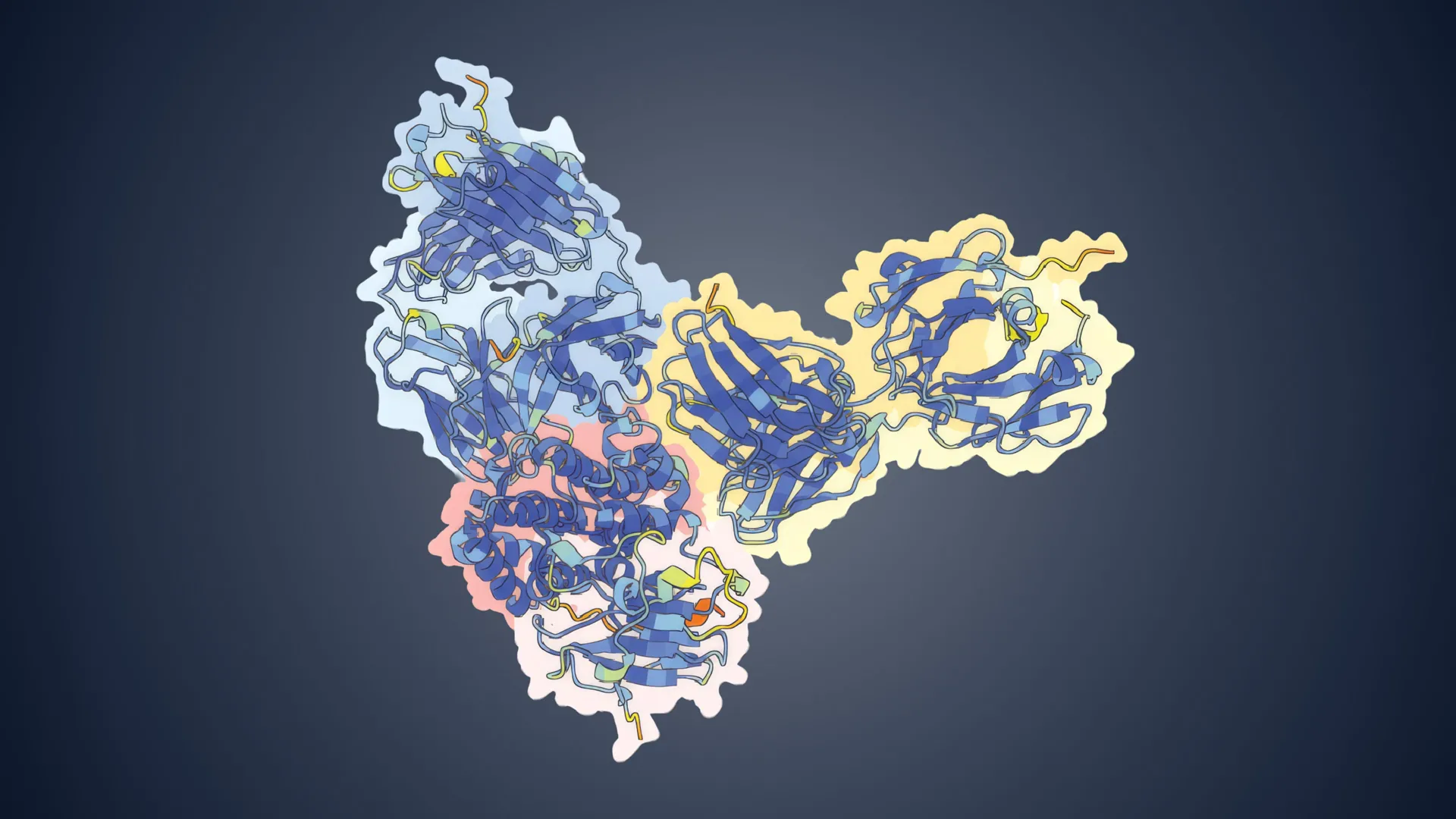
With support from artificial intelligence, an international group of scientists has taken an important early step toward creating more effective defenses against the monkeypox virus (MPXV). This virus can cause intense pain and, in severe cases, death, with the greatest risk to children, pregnant women and people with compromised immune systems. In a study published in Science Translational Medicine, the researchers reported that mice produced strong neutralizing antibodies after receiving a viral surface protein identified through AI analysis. The result suggests a promising direction for future mpox vaccines or antibody treatments.
During 2022, mpox spread across many countries and sickened more than 150,000 people. The illness caused flulike symptoms along with rashes and lesions, and nearly 500 people died. Health officials relied on smallpox vaccines to protect those most vulnerable, but these vaccines are costly and difficult to manufacture because they use a whole, weakened virus.
"Unlike a whole-virus vaccine that's big and complicated to produce, our innovation is just a single protein that's easy to make," said Jason McLellan, a professor of molecular biosciences at The University of Texas at Austin and co-lead author of the study.
Identifying Powerful Antibodies From Patients
The study's other lead authors, Rino Rappuoli and Emanuele Andreano at the Fondazione Biotecnopolo di Siena in Italy, identified 12 antibodies that neutralize MPXV. They found these antibodies by analyzing blood from people who had recovered from the virus or who had previously been vaccinated. Although the antibodies were clear, the team did not yet know which parts of the virus they targeted.
MPXV displays many different proteins on its surface, and at least one of them is essential for spreading infection. Some of the newly discovered antibodies were known to interfere with this process, but researchers did not know which surface protein was responsible. To design new treatments or vaccines, they needed to determine the correct pairing between antibody and viral protein. This key viral feature is known as an antigen.
AI Pinpoints a Previously Overlooked Viral Protein
To solve this puzzle, McLellan's group used the AlphaFold 3 model to predict which of the roughly 35 viral surface proteins were likely to bind strongly to the patient-derived antibodies. The model identified a protein called OPG153 with high confidence, and laboratory tests confirmed the prediction. This finding indicated that OPG153 could serve as a valuable target for developing antibody-based therapies or for designing a new type of vaccine that activates the immune system to fight mpox.
"It would have taken years to find this target without AI," said McLellan, who also holds the Robert A. Welch Chair in Chemistry and helps lead Texas Biologics, a UT Austin research group focused on therapeutic innovation. "It was really exciting because no one had ever considered it before for vaccine or antibody development. It had never been shown to be a target of neutralizing antibodies."
Because MPXV is closely related to the virus responsible for smallpox, this discovery may support the creation of improved vaccines or treatments for smallpox as well, a disease of concern due to its ease of transmission and high mortality rate.
Toward Next-Generation Vaccines and Antibody Therapies
The team is now refining versions of the antigen and antibodies that could be more effective, less expensive and easier to manufacture compared with current options that rely on weakened poxviruses. Their long-term goal is to test these mpox and smallpox vaccine antigens and antibody treatments in humans. McLellan refers to their strategy as "reverse vaccinology."
"We started with people who survived infection with monkeypox virus, isolated antibodies that they naturally produced and worked backward to find what part of the virus acted as the antigen for those antibodies. Then we engineered the antigen to elicit similar antibodies in mice," McLellan said.
UT Austin has filed a patent application for the use of OPG153 (and its derivatives) as a vaccine antigen. The Fondazione Biotecnopolo di Siena has filed a patent application for antibodies that target OPG153.
Additional UT Austin contributors include Emily Rundlet, Ling Zhou and Connor Mullins.
Funding support for this work came in part from the Welch Foundation.
Story Source:
Materials provided by University of Texas at Austin. Note: Content may be edited for style and length.
Journal Reference:
- Ida Paciello, Emily J. Rundlet, Ling Zhou, Giulia Realini, Federica Perrone, Giulio Pierleoni, Marco Troisi, Jeanne Postal, Florence Guivel-Benhassine, Françoise Porrot, Connor M. Mullins, Davide Moschese, Maria Vittoria Cossu, Federico Sabaini, Silvia Accordini, Natasha Gianesini, Rebeca Passarelli Mantovani, Francesca Panza, Massimiliano Fabbiani, Mario Tumbarello, Spinello Antinori, Concetta Castilletti, Francesca Montagnani, Olivier Schwartz, Rino Rappuoli, Jason S. McLellan, Emanuele Andreano. Antigen-agnostic identification of poxvirus broadly neutralizing antibodies targeting OPG153. Science Translational Medicine, 2025; 17 (828) DOI: 10.1126/scitranslmed.aeb3840
Cite This Page: