
Scientists find a weak spot in deadly fungus that shut down hospital intensive care units
A lethal hospital fungus may finally have a weakness and scientists think they know where to strike.
- Date:
- December 23, 2025
- Source:
- University of Exeter
- Summary:
- A deadly hospital fungus that resists nearly every antifungal drug may have an unexpected weakness. Researchers discovered that Candida auris activates specific genes during infection to hunt for nutrients it needs to survive. This insight came from a new living-host model that allowed scientists to watch the fungus in action. The findings could eventually lead to new treatments or allow current drugs to be repurposed.
- Share:
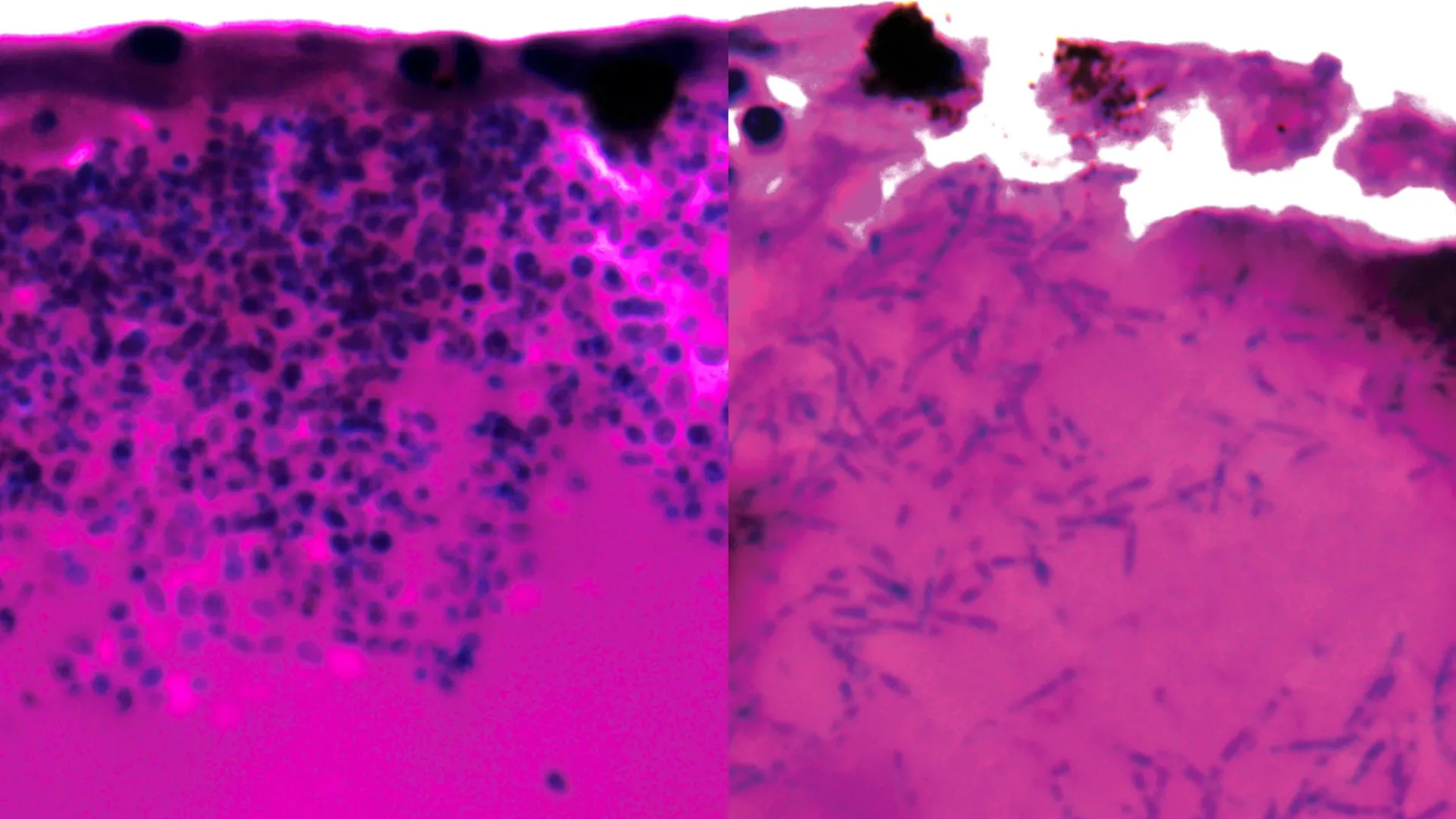
Scientists have identified a genetic mechanism that could point to new ways of treating a rare but deadly fungal infection that has forced multiple hospital intensive care units to shut down. The finding offers early hope against a pathogen that has been difficult to control and nearly impossible to treat once it spreads.
Candida auris is especially dangerous for people who are already critically ill, leaving hospitals highly exposed to outbreaks. Although the fungus can exist on the skin without causing symptoms, patients who depend on ventilators face a much greater risk. Once infection occurs, about 45 percent of patients die, and the fungus is resistant to all major types of antifungal drugs. This resistance makes treatment extremely challenging and allows the pathogen to persist in hospital wards.
A global health threat with mysterious origins
The infection was first detected in 2008, and its origin is still unknown. Since then, outbreaks have been reported in more than 40 countries, including the UK. Candida auris, also called Candidozyma auris, is now recognized as a serious global health threat and appears on the World Health Organization's critical priority fungal pathogens list. In the UK, reported cases have continued to rise steadily.
Studying infection in a living model
Researchers at the University of Exeter have now taken a major step forward by examining how genes are activated during Candida auris infection. This marks the first time such genetic activity has been studied in a living host using an approach based on fish larvae. The study was published in the Nature portfolio journal Communications Biology and was supported by Wellcome, the Medical Research Council (MRC), and the National Center for Replacement, Reduction and Refinement (NC3Rs).
The researchers say the results could help identify a biological target for new antifungal treatments or even allow existing drugs to be reused, if the same genetic behavior is confirmed during infection in humans.
The project was co-led by NIHR Clinical Lecturer Hugh Gifford of the University of Exeter's MRC Center for Medical Mycology (CMM). He said: "Since it emerged, Candida auris has wreaked havoc where it takes hold in hospital intensive care units. It can be deadly for vulnerable patients, and health trusts have spent millions on the difficult job of eradication. We think our research may have revealed an Achilles heel in this lethal pathogen during active infection, and we urgently need more research to explore whether we can find drugs that target and exploit this weakness."
Why traditional research models fell short
One of the biggest obstacles in studying Candida auris has been its ability to survive high temperatures. When combined with its unusually strong tolerance for salt, this has led some researchers to suggest it may have originated in tropical oceans or marine animals. These traits also made it difficult to study using conventional laboratory models.
To overcome this, the Exeter team developed a new infection model using Arabian killifish. The eggs of this species can survive at temperatures similar to the human body, making them suitable for observing infection in conditions that closely resemble real illness.
Genetic activity reveals possible vulnerabilities
During the experiments, researchers observed that Candida auris can change its shape by forming elongated fungal structures known as filaments. These structures may help the fungus search for nutrients while infecting a host.
The team also analyzed which genes were activated or switched off during infection to identify possible weak points. Several of the genes that became active are responsible for producing nutrient pumps that capture iron-scavenging molecules and transport iron into fungal cells. Because iron is essential for survival, this process may represent a critical vulnerability.
Co-senior author Dr. Rhys Farrer of the University of Exeter's MRC Centre for Medical Mycology said: "Until now, we've had no idea what genes are active during infection of a living host. We now need to find out if this also occurs during human infection. The fact that we found genes are activated to scavenge iron gives clues to where Candida auris may originate, such as an iron-poor environment in the sea. It also gives us a potential target for new and already existing drugs."
Hope for future treatments
Dr. Gifford, who also works as a resident physician in intensive care and respiratory medicine at the Royal Devon & Exeter Hospital, emphasized the clinical importance of the findings. He said: "While there are a number of research steps to go through yet, our finding could be an exciting prospect for future treatment. We have drugs that target iron scavenging activities. We now need to explore whether they could be repurposed to stop Candida auris from killing humans and closing down hospital intensive care units."
The Arabian killifish larvae model was developed with support from an NC3Rs project grant as an alternative to using mouse and zebrafish models, which are commonly used to study interactions between pathogens and their hosts. Dr. Katie Bates, NC3Rs Head of Research Funding, said: "This new publication demonstrates the utility of the replacement model to study Candida auris infection and enable unprecedented insights into cellular and molecular events in live infected hosts. This is a brilliant example of how innovative alternative approaches can overcome key limitations of traditional animal studies."
The paper is titled 'Xenosiderophore transporter gene expression and clade-specific filamentation in Candida auris killifish (Aphanius dispar) infection' and is published in the Nature portfolio journal Communications Biology.
Story Source:
Materials provided by University of Exeter. Note: Content may be edited for style and length.
Journal Reference:
- Hugh Gifford, Tina Bedekovic, Nicolas Helmstetter, Jack Gregory, Qinxi Ma, Alexandra C. Brand, Duncan Wilson, Johanna Rhodes, Mark Ramsdale, Tetsuhiro Kudoh, Rhys A. Farrer. Xenosiderophore transporter gene expression and clade-specific filamentation in Candida auris killifish (Aphanius dispar) infection. Communications Biology, 2025; 8 (1) DOI: 10.1038/s42003-025-09321-z
Cite This Page: