
Age does not stop nerve healing after spinal cord injury
- Date:
- January 3, 2026
- Source:
- American Academy of Neurology
- Summary:
- As spinal cord injuries increasingly affect older adults, new research reveals a surprising pattern in recovery. The study shows that aging does not appear to slow the healing of nerves themselves, with older patients regaining strength and sensation at rates similar to younger people. However, age makes a clear difference in how well people recover everyday abilities like walking, mobility, and self-care.
- Share:
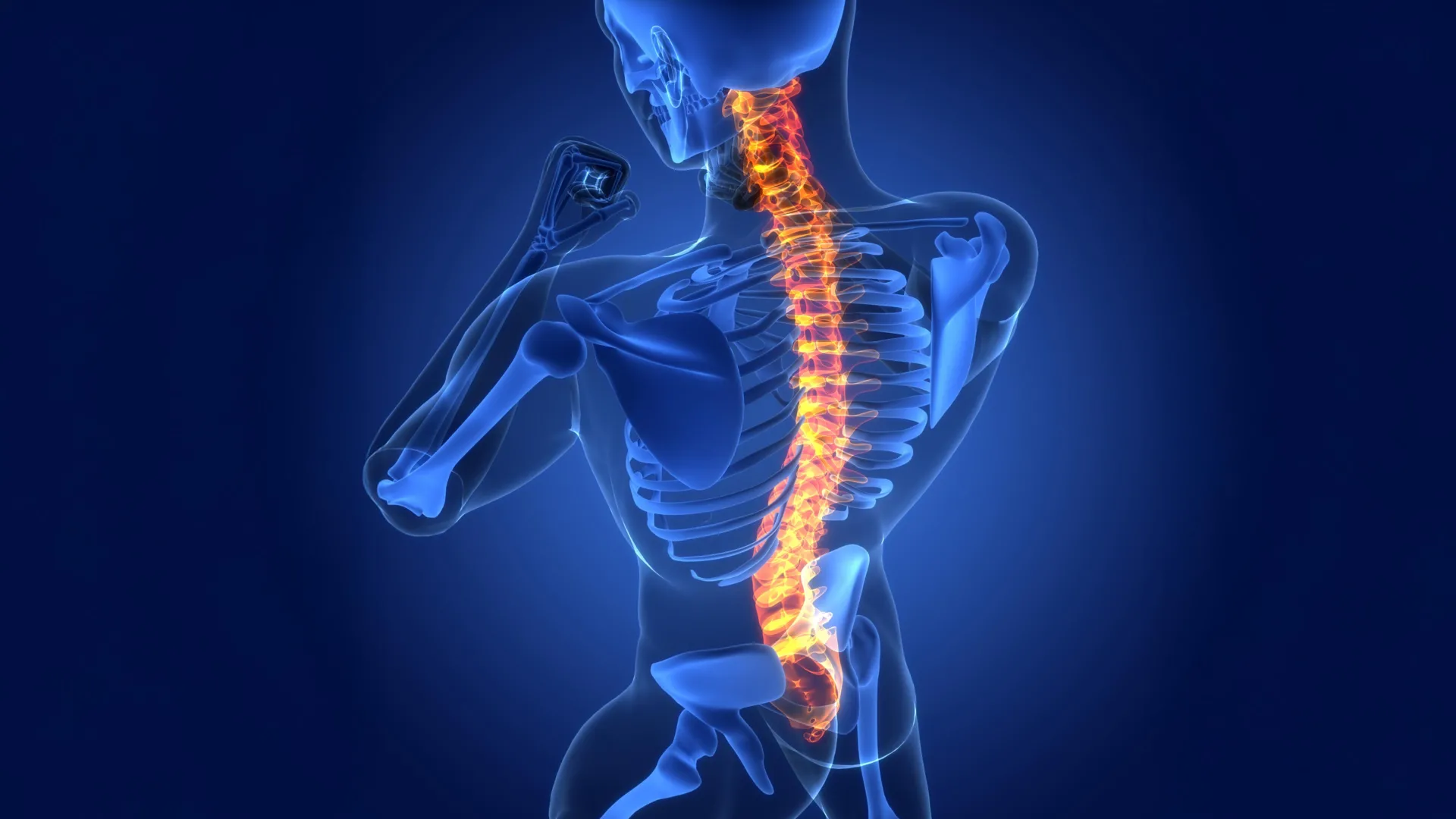
A study published on December 23, 2025, in Neurology, the medical journal of the American Academy of Neurology, examined how age may influence recovery following a spinal cord injury.
"With population growth and improvements in medicine, the number of people diagnosed with spinal cord injury is increasing and the average age at the time of injury is rising," said study author Chiara Pavese, MD, PhD, of the University of Pavia in Pavia, Italy. "Despite substantial advances in medicine and surgery over the past decades, the rate of recovery after spinal cord injury has remained the same. Our results may help researchers design studies tailored by people's age to evaluate new therapies and approaches for people with spinal cord injury."
Nerve Function Recovers Regardless of Age
The researchers found that age did not appear to affect neurological recovery. Older participants regained motor strength and sensory abilities, such as feeling light touch or a pin prick, at levels similar to younger individuals.
These findings suggest that the body's ability to recover nerve function after a spinal cord injury remains largely consistent across different age groups.
Everyday Function Declines With Increasing Age
While nerve recovery was not linked to age, functional recovery showed a different pattern. Older adults experienced greater difficulty regaining independence in daily activities, including feeding, bathing, managing bladder and bowel function, and moving around.
They also showed poorer improvement on walking assessments. These tests measured how quickly a person could walk a short distance, either independently or with assistance such as a cane.
Tracking Recovery in More Than 2,000 Patients
The study included 2,171 people with spinal cord injuries, with an average age of 47. All participants were admitted to spinal care units involved in the European Multicenter Study about Spinal Cord Injury.
Researchers followed participants for one year after their injuries and repeatedly assessed their physical and functional abilities. They then analyzed how age was related to the degree of recovery over that period.
Functional Scores Show Clear Age-Related Differences
No connection was found between age and neurological outcomes, including strength in the arms and legs or sensory responses.
In contrast, functional recovery differed notably by age. Independence in daily activities was measured on a scale from zero to 100, with higher scores reflecting better function. At the time of admission to a spinal care unit, participants had an average score of 31. After one year, the average score increased to 35.
The researchers found that each additional decade of age was linked to a 4.3 point decrease in improvement on this scale. Older participants also showed less progress on every walking-related test compared with younger participants.
These findings remained consistent after accounting for the type of spinal cord injury and its severity.
Recovery Challenges Increase After Age 70
The study identified a particularly noticeable drop in functional recovery among people older than 70.
"People older than 70 need specific approaches to rehabilitation that take into account other conditions they may be living with, such as cardiovascular disease, diabetes or osteoporosis, and help them with recovery that applies to their daily lives," Pavese said.
Study Limitations and Funding
One limitation noted by the researchers was that many individuals included in the original database were no longer part of the study after one year. Limited information was available about why these participants dropped out or whether they died during that time.
Because those who left the study may have differed from those who remained, this could have influenced the results.
The study was supported by the Swiss National Science Foundation, Wings for Life Research Foundation, European Union's Horizon 2020 research and innovation program, Swiss State Secretariat for Education, Research and Innovation and Italian Ministry of Health.
Story Source:
Materials provided by American Academy of Neurology. Note: Content may be edited for style and length.
Journal Reference:
- Chiara Pavese, Giorgio Scivoletto, Mariangela Puci, Rüdiger Rupp, Martin Schubert, Frank Röhrich, Josina Waldmann, Norbert Weidner, Yorck B. Kalke, Rainer Abel, Doris Maier, Jiri Kriz, Harvinder S. Chhabra, Kerstin Rehahn, Cristina Montomoli, Armin Curt, Catherine R. Jutzeler. The Relationship Between Age and Recovery After Spinal Cord Injury. Neurology, 2026; 106 (2) DOI: 10.1212/WNL.0000000000214516
Cite This Page: