
A hidden loop is powering deadly pancreatic cancer
- Date:
- January 10, 2026
- Source:
- Cold Spring Harbor Laboratory
- Summary:
- Pancreatic cancer is notoriously hard to treat, often resisting therapies that target its most common mutations. Researchers have now uncovered a hidden three-part loop that fuels tumor growth, involving the cancer drivers SRSF1, AURKA, and MYC. By targeting just one part of this loop with a specially designed molecule, they were able to shut down all three at once. The result was a dramatic loss of tumor cell survival, offering new hope for smarter, more effective treatments.
- Share:
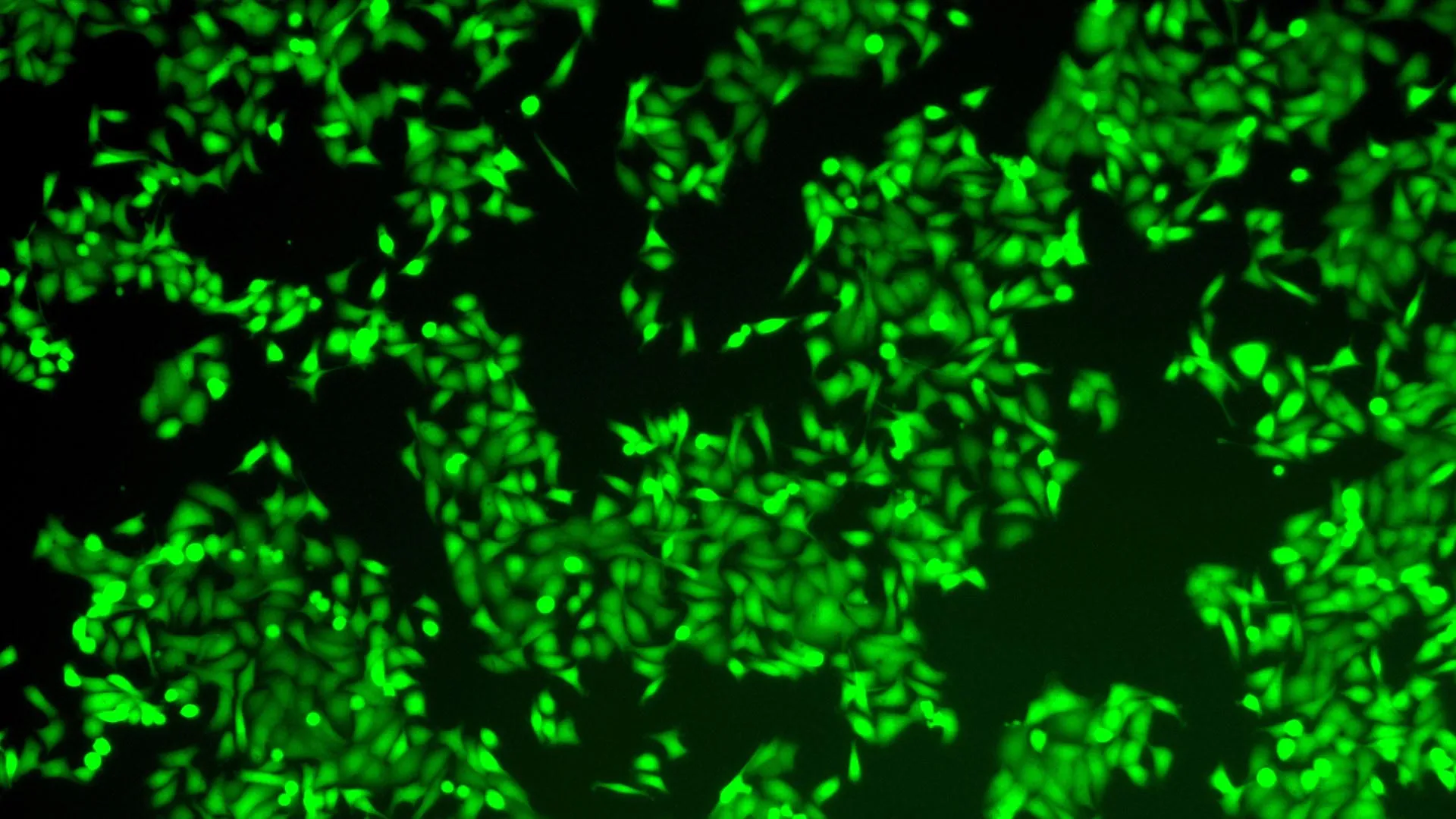
Pancreatic ductal adenocarcinoma (PDAC) is both the most common and the deadliest type of pancreatic cancer. Most treatment strategies focus on blocking a frequently mutated cancer gene known as KRAS. While this approach can work in some cases, many PDAC tumors eventually evade these therapies. Researchers believe that combining treatments that hit additional molecular targets could someday help doctors overcome this resistance.
In 2023, researchers in the lab of Cold Spring Harbor Laboratory (CSHL) Professor Adrian Krainer identified a protein called SRSF1 as an early trigger of PDAC tumor formation. By taking a deeper look at data from that study, a new team led by former CSHL graduate student Alexander Kral discovered that SRSF1 is not acting on its own. Instead, it operates as part of a three-part molecular system that drives the cancer to become more aggressive.
"Our theory was that some of the changes caused by increased levels of SRSF1 were playing a role in the accelerated tumor growth we were seeing," Kral explains. "We homed in on a molecule we thought could be an important driver of this called Aurora kinase A (AURKA). We found it's part of a complex regulatory circuit that includes not only AURKA and SRSF1, but another key oncogene called MYC."
How a Self-Reinforcing Cancer Circuit Works
Within this system, SRSF1 controls AURKA by altering how its genetic instructions are processed through a mechanism known as alternative splicing. This leads to higher levels of AURKA, which then helps stabilize and protect the MYC protein. MYC, in turn, boosts production of SRSF1, setting the entire process in motion again and allowing the cancer-promoting loop to continue.
"Bits and pieces of this circuit were known previously, but we didn't have the full picture until now," Krainer says. "Once we figured out alternative splicing of AURKA was involved, we could start looking into ways to disrupt it."
Collapsing the Circuit With a Single Target
To interfere with this process, the team created an antisense oligonucleotide (ASO) designed to alter how AURKA is spliced. ASOs are short synthetic molecules that the Krainer lab has extensive experience developing. The group previously created Spinraza, the first-ever FDA-approved treatment for spinal muscular atrophy.
Based on their earlier findings, the researchers expected the new ASO to block AURKA splicing. Instead, in pancreatic cancer cells, the effect was far more dramatic. The treatment caused the entire cancer-driving circuit to fall apart. Tumor cells lost viability and activated apoptosis, a form of programmed cell death.
"It's like killing three birds with one stone," Krainer explains. "SRSF1, AURKA, and MYC are all oncogenes contributing to PDAC progression. Just by targeting AURKA splicing with our ASO, we see the loss of these other two molecules as well."
Looking Toward Future Cancer Therapies
The Krainer lab is continuing to improve the ASO, although any potential use in patients remains far in the future. Krainer emphasizes that major medical advances often begin with this kind of foundational research. Spinraza followed a similar path before going on to save thousands of lives. With further refinement, this work could one day contribute to a new and effective treatment for pancreatic cancer.
Story Source:
Materials provided by Cold Spring Harbor Laboratory. Note: Content may be edited for style and length.
Journal Reference:
- Alexander J. Kral, Lu Jia, GeunYoung Sim, Ledong Wan, Yuma Ishigami, Adrian R. Krainer. Splice-switching ASOs targeting the AURKA 5′ UTR collapse an SRSF1-AURKA-MYC oncogenic circuit in pancreatic cancer. Molecular Cell, 2026; 86 (1): 60 DOI: 10.1016/j.molcel.2025.12.004
Cite This Page: