
A hidden immune loop may drive dangerous inflammation with age
- Date:
- January 24, 2026
- Source:
- University of Minnesota Medical School
- Summary:
- Aging immune cells may be sabotaging the body from within. Researchers found that macrophages produce a protein that locks them into a chronic inflammatory state, making infections like sepsis more deadly in older adults. Turning off this signal reduced inflammation and improved survival in older models. The findings hint at future treatments that could dial back harmful immune overreactions.
- Share:
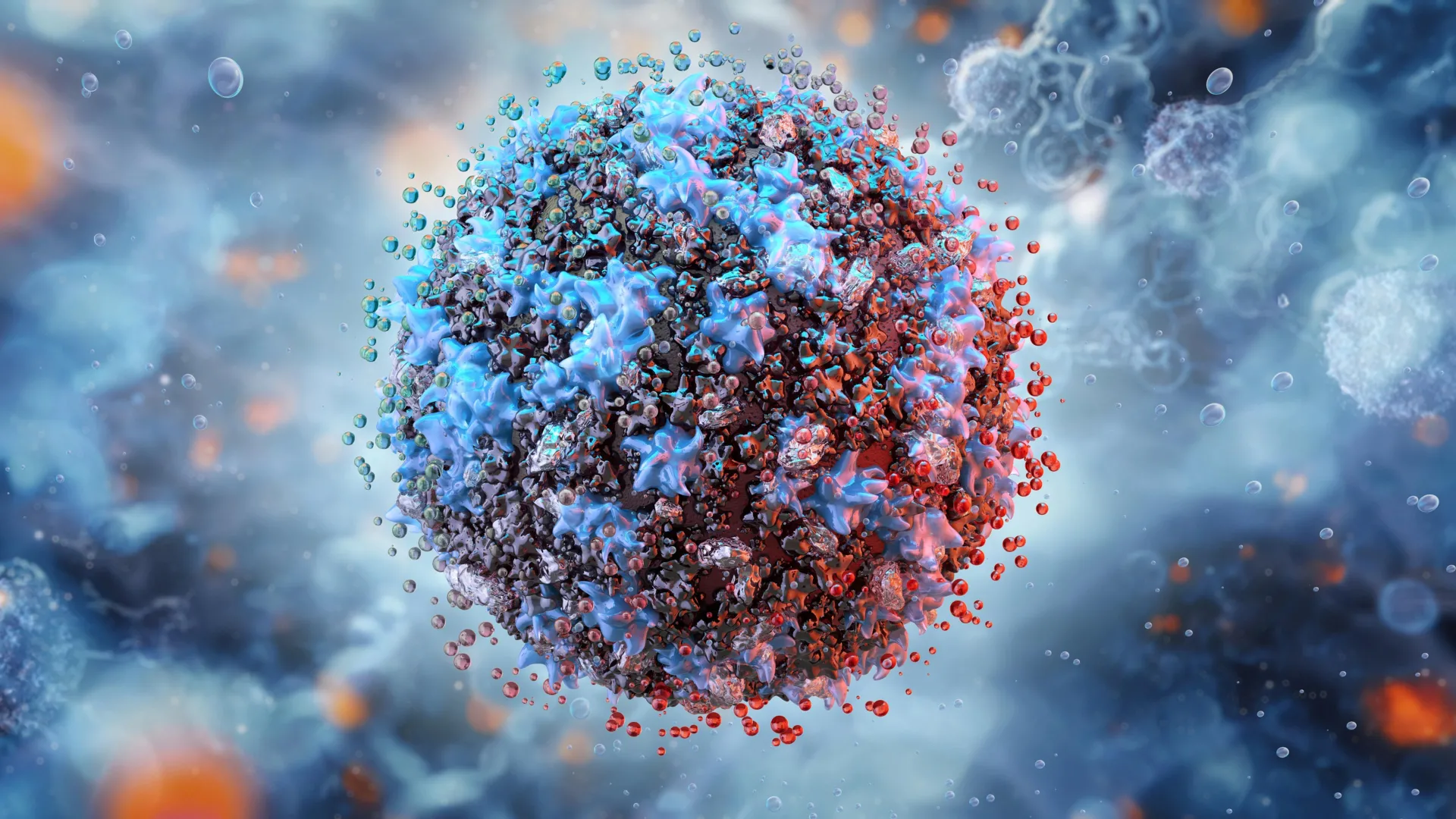
As people grow older, the immune system often becomes less balanced and more prone to dysfunction. This shift can leave older adults more vulnerable to serious conditions such as sepsis. New research from scientists at the University of Minnesota sheds light on why this happens, showing how certain immune cells called macrophages remain locked in an inflammatory state as the body ages in preclinical models. The study was published today in Nature Aging.
The researchers discovered that aging macrophages produce a protein known as GDF3. This protein sends signals back to the same cells that produce it, reinforcing inflammatory activity and ultimately worsening the body's response to sepsis. The work, led by biochemistry graduate student In Hwa Jang, found that GDF3 acts through a pathway involving SMAD2/3, causing lasting changes to the genome. These changes lead macrophages to release higher levels of inflammatory cytokines.
A Potential Target for Future Treatments
"Macrophages are critical to the development of inflammation; in our study, we identified a pathway which is used to maintain their inflammatory status," said Christina Camell, PhD, an associate professor with the University of Minnesota Medical School and College of Biological Sciences. "Our findings suggest that this pathway could be blocked to prevent the amplified inflammation that can be damaging to organ function and may be a promising target for future treatments that reduce harmful inflammation."
Further experiments showed that deleting the GDF3 gene reduced harmful inflammatory responses to bacterial toxins. The team also found that medications that block the GDF3-SMAD2/3 signaling pathway changed how inflammatory macrophages in fat tissue behave and improved survival in older preclinical models exposed to severe infection. In addition, through a collaboration with Pamela Lutsey (School of Public Health) and analysis of data from the Atherosclerosis Risk in Communities Study (ARIC), the researchers found that GDF3 levels are linked to inflammatory signaling in older adults.
Next Steps and Ongoing Research
More research is needed to identify the precise molecular components involved in this pathway and to clarify how it controls specific inflammatory signals. Building on these findings, Dr. Camell recently received a 2025 AFAR Discovery Award, which will support further studies into how these inflammatory macrophages affect multiple metabolic organs and overall metabolic healthspan.
Funding and Support
This research was supported by the National Institute of Health [grants F99AG095479, R00AG058800, R01AG069819, R01AG079913], the McKnight Land-Grant Professorship, the Glenn Foundation for Medical Research/AFAR 2025 Discovery Award, the Diana Jacobs Kalman/AFAR Scholarships for Research in the Biology of Aging and the Medical Discovery Team on the Biology of Aging. The Atherosclerosis Risk in Communities study has been funded in whole or in part with Federal funds from the National Heart, Lung, and Blood Institute, National Institutes of Health, Department of Health, and Human Services, under Contract nos. (75N92022D00001, 75N92022D00002, 75N92022D00003, 75N92022D00004, 75N92022D00005). SomaLogic Inc. conducted the SomaScan assays in exchange for use of ARIC data. This work was supported in part by NIH/NHLBI grant R01 HL134320.
Story Source:
Materials provided by University of Minnesota Medical School. Note: Content may be edited for style and length.
Journal Reference:
- In Hwa Jang, Anna Carey, Victor Kruglov, Katie Nguyen, Jeffrey R. Misialek, Stephanie H. Cholensky, Declan M. Smith, Suxia Bai, Timothy Nottoli, David A. Bernlohr, Pamela L. Lutsey, Christina D. Camell. GDF3 promotes adipose tissue macrophage-mediated inflammation via altered chromatin accessibility during aging. Nature Aging, 2025; 6 (1): 127 DOI: 10.1038/s43587-025-01034-6
Cite This Page: