
Wolves are stealing cougar kills in Yellowstone, study finds
- Date:
- March 3, 2026
- Source:
- Oregon State University
- Summary:
- In Yellowstone’s wild chess match between wolves and cougars, it turns out the real power play is theft. After tracking nearly a decade of GPS data and thousands of kill sites, researchers found that wolves often muscle in on cougar kills—sometimes even killing the cats—but cougars never return the favor. Instead of fighting back, cougars adapt. As elk numbers dropped, they shifted toward hunting more deer, which they can eat quickly and in safer terrain, helping them dodge wolf encounters.
- Share:
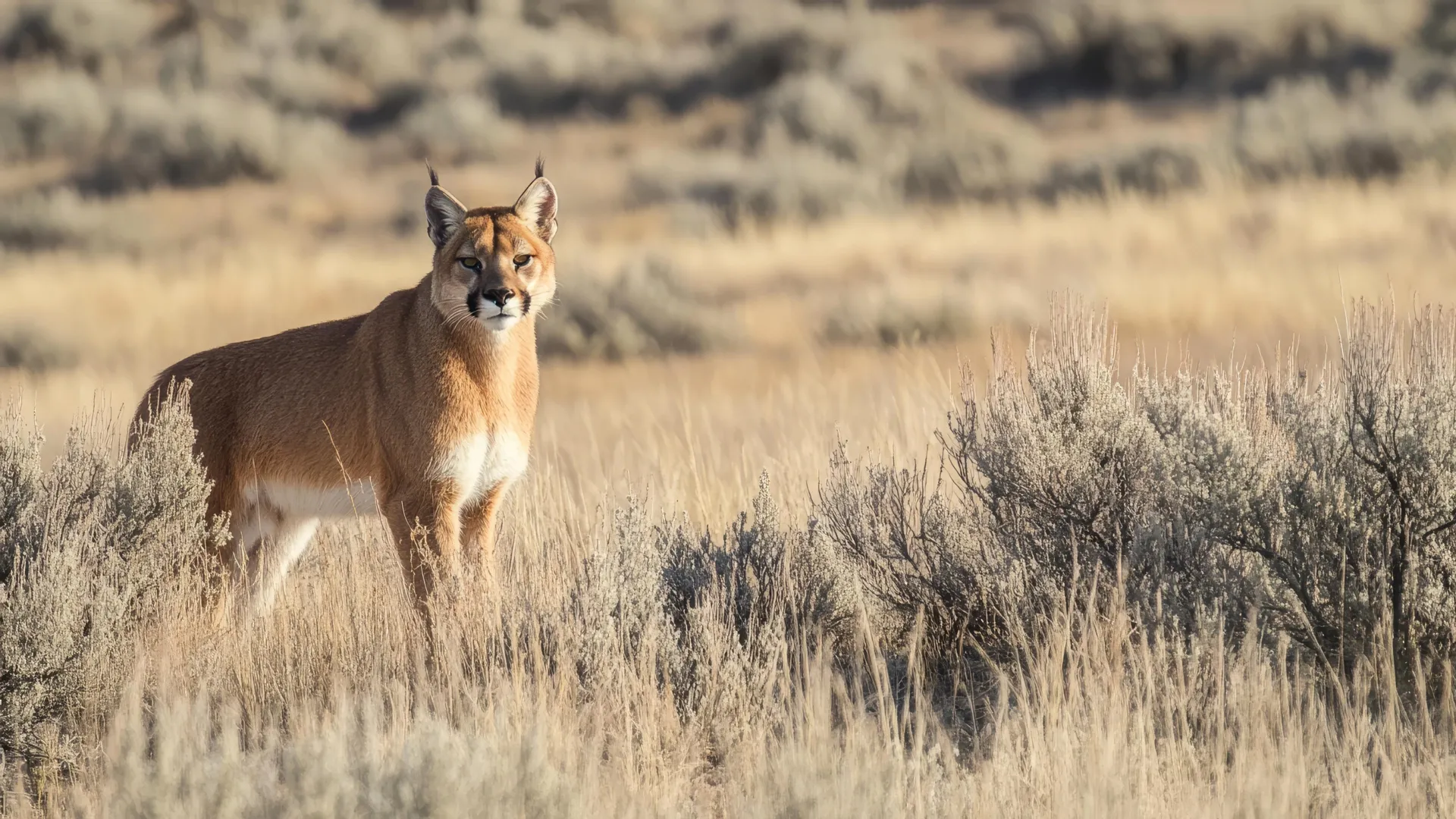
A new study sheds light on the tense relationship between wolves and cougars in Yellowstone National Park. Researchers found that many of their encounters begin when wolves take over prey that cougars have already killed. To reduce these risky run ins, cougars have adjusted by targeting smaller animals, which helps them avoid crossing paths with wolf packs.
The research comes as wolf and cougar territories increasingly overlap across the western United States. While wolves were sometimes responsible for killing cougars, scientists found no evidence of cougars killing wolves.
How Cougars Avoid Wolf Encounters
The study also revealed that cougars steer clear of areas where wolves have recently made kills. They tend to remain near escape terrain, such as trees they can quickly climb if threatened.
As elk numbers declined in Yellowstone, cougars shifted their focus toward deer. Because deer are smaller and can be eaten more quickly, this change reduces the amount of time cougars spend at a carcass, lowering the chance that wolves will show up.
Nine Years of GPS Tracking and Field Investigations
Published this week in PNAS, the study draws on nine years of GPS tracking data from collared wolves and cougars. Researchers also conducted field investigations at nearly 4,000 possible kill sites throughout the park.
The findings suggest that peaceful coexistence between these two apex predators depends less on the total amount of prey available and more on having a variety of prey species and access to safe escape terrain.
"In North America and worldwide, carnivore communities are undergoing major changes," said Wesley Binder, a doctoral student at Oregon State University and lead author of the study. "Our research provides insight into how two apex predators compete, which informs recovery efforts."
A Changing Landscape in the American West
For much of the 20th century, federal and state policies nearly wiped out both wolves and cougars in the United States. Cougars began recovering in the 1960s and 1970s under legal protections. Wolves were reintroduced starting in 1995, including in Yellowstone. Today, both predators are expanding into parts of the western U.S. where they had long been absent.
"You've had these places that in the last 20, 30 years have had cougars come back, and now wolves are coming back as well," Binder said. "There are a lot of people asking questions like, 'What are our ecological communities going to look like now that we have both of these large carnivores back on the landscape?'"
Binder began his doctoral work at Oregon State in 2022 after spending nearly ten years monitoring cougars in Yellowstone through the Yellowstone Cougar Project. His efforts included installing 140 remote cameras in the park's northern region and capturing and fitting cougars with tracking collars.
Why Wolves Hold the Upper Hand
Decades of research have shown that wolves usually dominate these interactions because they hunt in packs, while cougars are solitary. In many predator systems, smaller or less dominant carnivores face a tradeoff. They risk being killed but may benefit by scavenging from dominant predators. Cougars, however, rarely scavenge from other carnivores and are skilled hunters on their own, leaving scientists uncertain about what truly shapes their interactions with wolves.
This new research offers clearer answers.
- Scientists examined 3,929 potential kill sites linked to wolves and cougars. Of these, 852 were wolf feeding events and 520 were cougar feeding events.
- Wolves were responsible for 716 kills and scavenged 136 times. Their primary prey included elk (542), bison (201), and deer (90).
- Cougars made 513 kills and scavenged just seven times, focusing mostly on elk (272) and deer (220).
- Comparing data from 1998-2005 and 2016-2024 revealed major shifts:
- Among wolves, bison increased in their diet from 1% to 10%, while elk declined from 95% to 63%.
- For cougars, elk dropped from 80% to 52%, while deer rose from 15% to 42%.
Machine Learning Reveals Asymmetric Conflict
The team used confirmed kill site data to train machine learning models that combined GPS movement patterns with likely kill locations. This approach allowed them to match predator movements with probable feeding events and better understand when and where wolves and cougars interact.
The results showed a striking imbalance. About 42% of wolf-cougar interactions occurred at predicted sites where cougars had made a kill. Only one interaction took place at a site where a wolf had killed prey.
Between 2016-24, researchers recorded 12 adult cougar deaths, two of which were caused by wolves. In both cases, there was no nearby escape terrain. Wolves did not eat the cougars but instead consumed the elk the cougars had killed.
During the same period, 90 wolf deaths were documented. None were attributed to cougars. Most wolf deaths were linked to natural causes or human activity.
Co-authors of the study include Joel S. Ruprecht, Rebecca Hutchinson and Taal Levi of Oregon State's College of Agricultural Sciences; Jack Rabe of the University of Minnesota and Yellowstone Center for Resources; and Matthew Metz and Daniel Stahler of Yellowstone Center for Resources. Hutchinson is also affiliated with Oregon State's College of Engineering.
Story Source:
Materials provided by Oregon State University. Note: Content may be edited for style and length.
Journal Reference:
- Wesley Binder, Joel S. Ruprecht, Jack Rabe, Matthew C. Metz, Rebecca Hutchinson, Daniel R. Stahler, Taal Levi. Diets, dominance hierarchies, and kleptoparasitism drive asymmetrical interactions between wolves and cougars. Proceedings of the National Academy of Sciences, 2026; 123 (6) DOI: 10.1073/pnas.2511397123
Cite This Page: