
This missing vitamin could stop cancer cells in their tracks
- Date:
- April 20, 2026
- Source:
- University of Lausanne
- Summary:
- Cancer cells are known for their “glutamine addiction,” but many can escape this weakness by switching to alternative fuels. Researchers found that vitamin B7 acts like a metabolic “license,” enabling this escape route through a key enzyme. Without biotin, cancer cells lose that flexibility and stop growing. Mutations in a cancer-linked gene can make this vulnerability even stronger, offering a promising new target for therapy.
- Share:
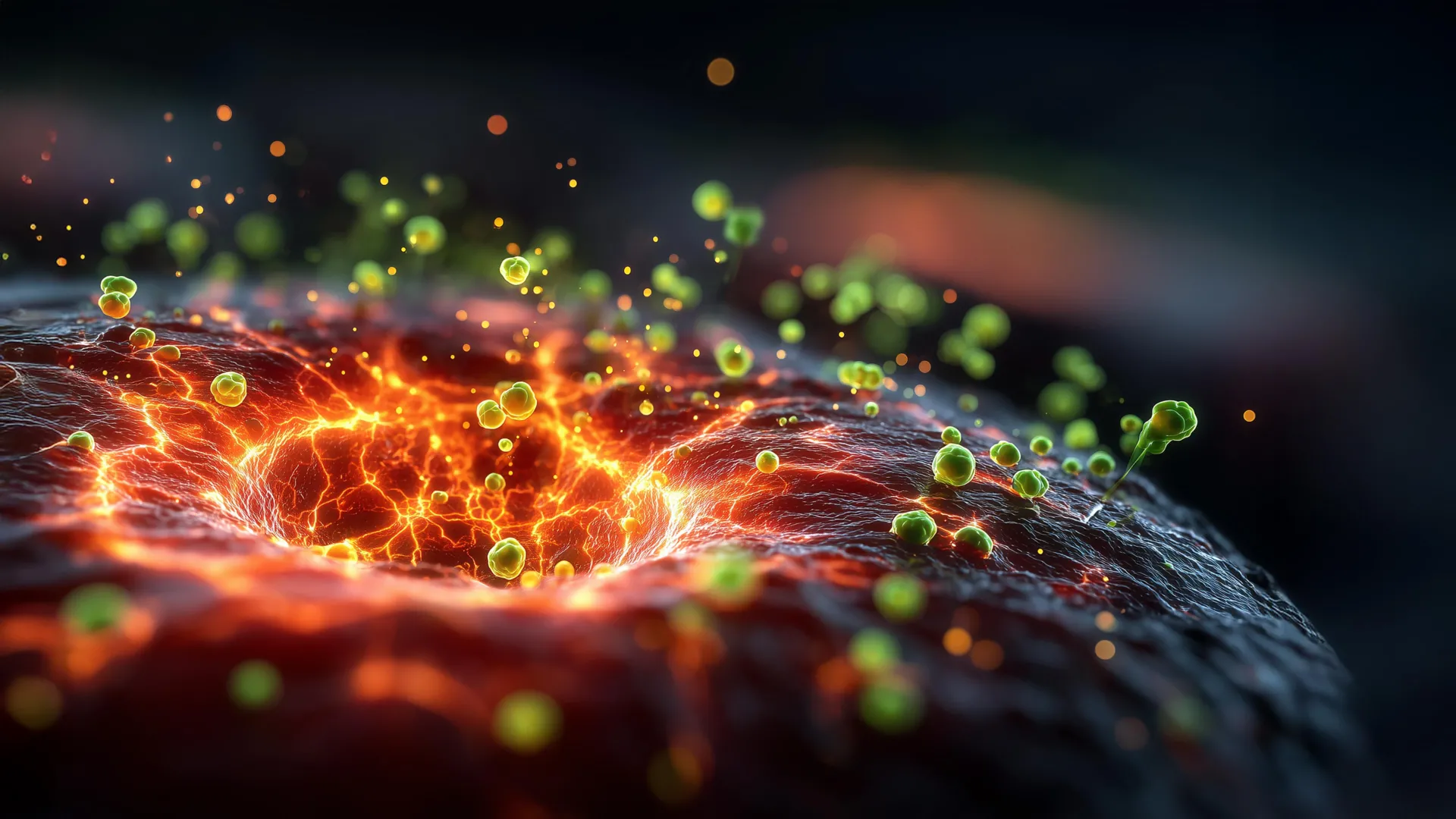
Researchers at the University of Lausanne (Unil) have uncovered a new biological mechanism that exposes a critical vulnerability in tumor cells when they are deprived of vitamin B7.
All cells must adjust to changes in nutrient supply to survive. However, some cells become especially reliant on glutamine, an amino acid that plays a major role in metabolism. Glutamine provides essential components needed to build proteins and DNA, and without it, cells cannot continue to grow and divide.
Cancer cells are a prime example. Many tumors exhibit what scientists call "glutamine addiction," meaning they depend heavily on this nutrient. Although this dependency is considered a weakness, many cancers find ways to work around it. In a study published in the journal Molecular Cell, a team led by Alexis Jourdain, assistant professor in the Department of Immunobiology (DIB) at Unil's Faculty of Biology and Medicine (FBM), sheds new light on the cellular processes behind this adaptability.
How Pyruvate and Vitamin B7 Keep Cells Growing
The research, led by Dr. Miriam Lisci, a postdoctoral scientist in Prof. Jourdain's lab, focused on carbon-rich molecules, especially pyruvate. These molecules can allow cells to keep dividing even when glutamine is scarce.
The team found that this process depends on a mitochondrial enzyme called pyruvate carboxylase. This enzyme requires vitamin B7 (or biotin) to function. When vitamin B7 is not available, the enzyme stops working, and cell growth comes to a halt. In this way, biotin acts as a "metabolic license," allowing pyruvate to feed into the cell's energy system and compensate for the lack of glutamine.
FBXW7 Gene Mutations Increase Cancer Vulnerability
The study also uncovered a new role for FBXW7, a gene frequently linked to cancer. "When FBXW7 is mutated -- a situation that is frequent in certain cancers -- pyruvate carboxylase partially disappears, pyruvate can no longer be used efficiently, and cells become dependent on glutamine," explains Miriam Lisci, first author of the article.
The researchers demonstrated that specific FBXW7 mutations found in patients can directly trigger this increased dependence on glutamine. These findings were made possible through collaborations with the FBM's metabolomics and proteomics platforms, as well as with Prof. Owen Skinner's team at Northeastern University in the United States.
Why Some Cancer Treatments Fail and What Comes Next
The findings also help explain why therapies aimed at blocking glutamine do not always succeed. Cancer cells can switch to alternative metabolic pathways to survive.
"In the longer term, this research opens up new avenues for better understanding the metabolic vulnerabilities of cancers and for designing innovative therapeutic strategies that take into account the great metabolic flexibility of tumor cells, notably by targeting several metabolic pathways simultaneously," concludes Alexis Jourdain, senior author of the study.
Story Source:
Materials provided by University of Lausanne. Note: Content may be edited for style and length.
Journal Reference:
- Miriam Lisci, Fanny Vericel, Yifan Liu, Hector Gallart-Ayala, Julijana Ivanisevic, Owen S. Skinner, Alexis A. Jourdain. Functional nutrient-genetic profiling reveals biotin and FBXW7 are essential to bypass glutamine addiction. Molecular Cell, 2026; 86 (5): 901 DOI: 10.1016/j.molcel.2026.02.002
Cite This Page: