
Don’t toss cannabis leaves: Scientists found rare compounds with medical potential
Cannabis just revealed a hidden chemical treasure—rare compounds scientists never knew were there.
- Date:
- May 1, 2026
- Source:
- Stellenbosch University
- Summary:
- Scientists have uncovered a surprising new layer of complexity in Cannabis, identifying dozens of previously unknown compounds—including the first-ever evidence of rare molecules called flavoalkaloids in its leaves. These compounds, prized for their potential health benefits, were hidden among a rich mix of plant chemicals that vary dramatically even between just a few strains.
- Share:
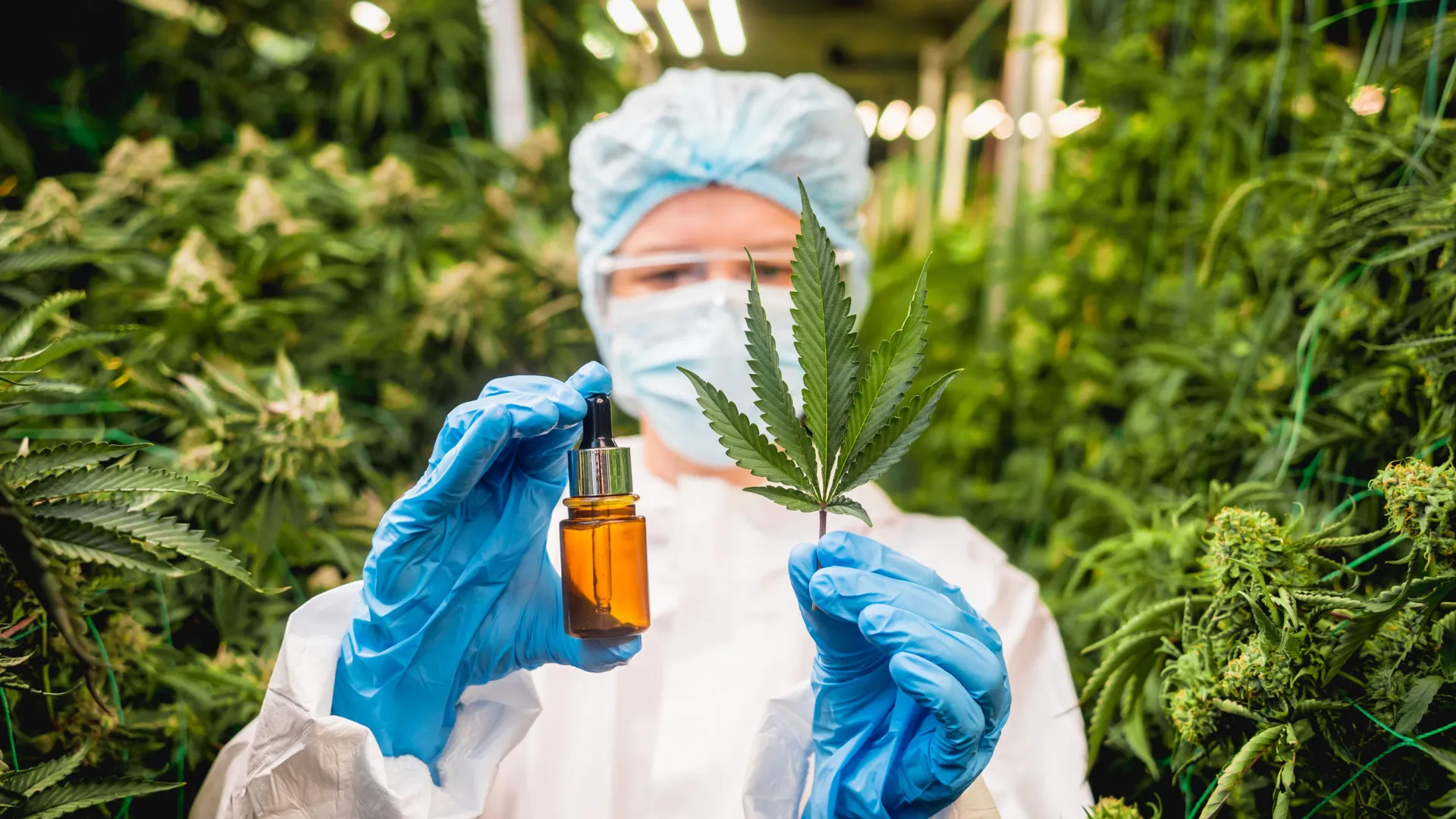
Scientists at Stellenbosch University (SU) have uncovered the first evidence of a rare group of phenolic compounds known as flavoalkaloids in Cannabis leaves, adding a surprising new dimension to the plant's chemistry.
Phenolic compounds, particularly flavonoids, are already highly valued in medicine for their antioxidant, anti-inflammatory, and anti-carcinogenic effects. This new finding suggests Cannabis may contain even more biologically important compounds than previously recognized.
Dozens of Previously Unknown Cannabis Compounds Identified
In their study, researchers analyzed three commercially grown Cannabis strains from South Africa and identified 79 phenolic compounds. Of these, 25 had never before been reported in Cannabis. Among them were 16 compounds tentatively classified as flavoalkaloids, a group that is rarely found in nature.
Interestingly, these flavoalkaloids were concentrated mainly in the leaves of just one of the strains, highlighting how much chemical variation can exist between different types of Cannabis. The findings were recently published in the Journal of Chromatography A.
Why These Compounds Are Hard To Detect
Dr. Magriet Muller, an analytical chemist in the LC-MS laboratory of the Central Analytical Facility (CAF) at Stellenbosch University and the study's first author, explains that studying plant phenolics is especially difficult because they occur in very small amounts and have highly diverse structures.
"Most plants contain highly complex mixtures of phenolic compounds, and while flavonoids occur widely in the plant kingdom, the flavoalkaloids are very rare in nature," she explains.
She also notes just how chemically complex Cannabis is. "We know that Cannabis is extremely complex -- it contains more than 750 metabolites -- but we did not expect such high variation in phenolic profiles between only three strains, nor to detect so many compounds for the first time in the species. Especially the first evidence of flavoalkaloids in Cannabis was very exciting."
Advanced Techniques Reveal Hidden Chemistry
As part of her postgraduate work in SU's Department of Chemistry and Polymer Science, Muller developed advanced analytical methods that combine comprehensive two-dimensional liquid chromatography with high-resolution mass spectrometry. These tools allow scientists to separate and identify compounds in extraordinary detail.
"We were looking for a new application for the methods that I developed, after successfully testing them on rooibos tea, grapes and wine. I then decided to apply the methods to Cannabis because I knew it was a complex sample, and that Cannabis phenolics have not been well characterized," she explains.
Prof. André de Villiers, who led the study and heads the analytical chemistry research group at SU, said the results were striking. "The excellent performance of two-dimensional liquid chromatography allowed separation of the flavoalkaloids from the much more abundant flavonoids, which is why we were able to detect these rare compounds for the first time in Cannabis."
Untapped Medical Potential in Overlooked Plant Material
According to Prof. de Villiers, the discovery underscores how much remains to be learned about Cannabis. So far, most research has focused on cannabinoids, the compounds responsible for the plant's psychoactive effects.
"Our analysis again highlights the medicinal potential of Cannabis plant material, currently regarded as waste. Cannabis exhibits a rich and unique non-cannabinoid phenolic profile, which could be relevant from a biomedical research perspective," he concludes.
The findings suggest that even parts of the plant often discarded, such as leaves, may hold valuable compounds with potential uses in medicine.
Story Source:
Materials provided by Stellenbosch University. Note: Content may be edited for style and length.
Journal Reference:
- Magriet Muller, André de Villiers. Comprehensive two-dimensional liquid chromatographic analysis of Cannabis phenolics and first evidence of flavoalkaloids in Cannabis. Journal of Chromatography A, 2025; 1754: 466023 DOI: 10.1016/j.chroma.2025.466023
Cite This Page: