
This simple Japanese eating habit could help you live longer without dieting
- Date:
- April 2, 2026
- Source:
- The Conversation
- Summary:
- Hara hachi bu, a traditional Japanese practice of eating until you’re about 80% full, is gaining attention as a simple yet powerful way to improve health and reshape our relationship with food. Rather than promoting strict dieting, it encourages slowing down, tuning into hunger cues, and eating with awareness and gratitude. Research suggests it may help reduce calorie intake, support healthier food choices, and prevent long-term weight gain.
- Share:
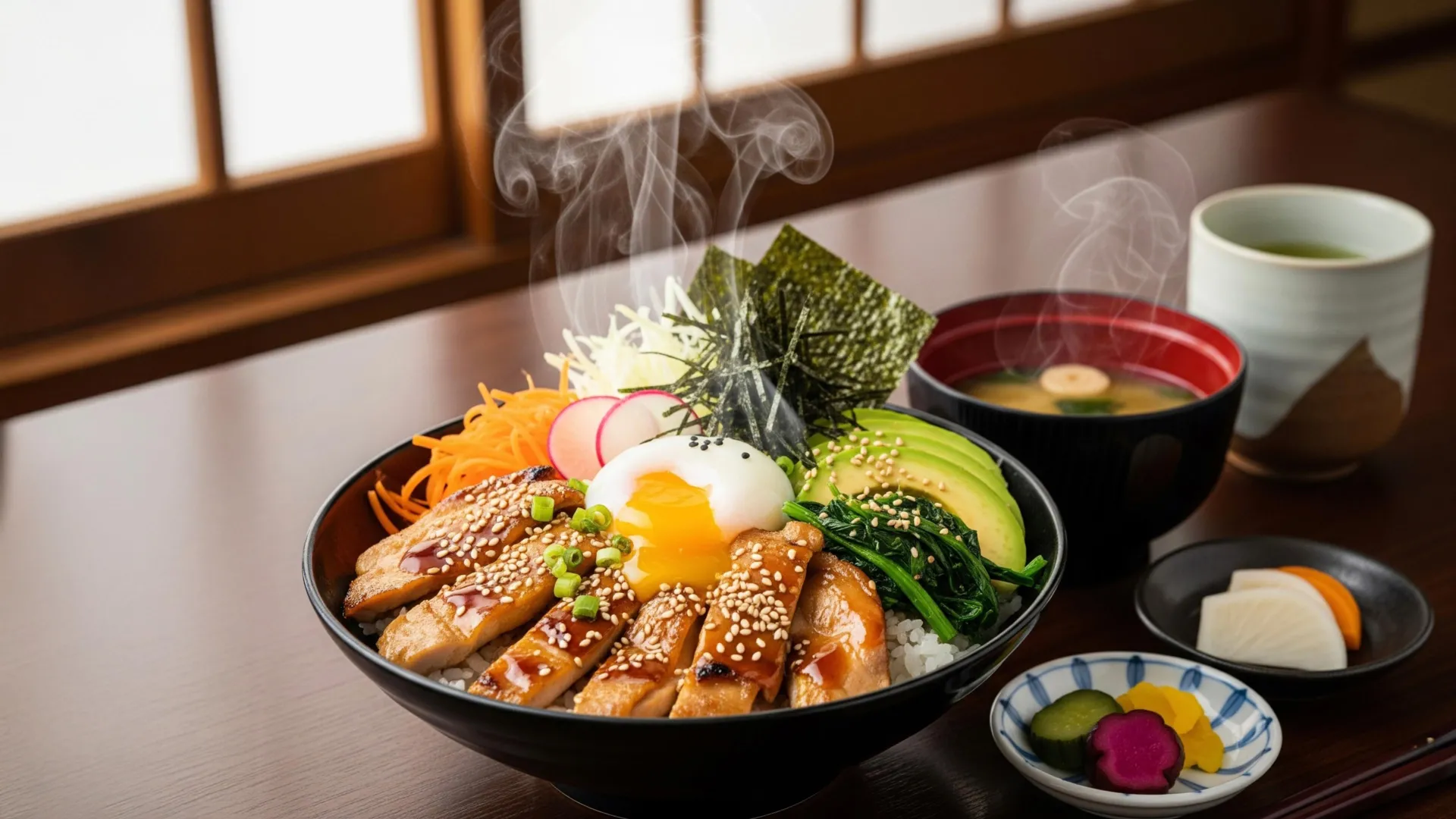
Some of the world’s healthiest and longest-living people follow the practice of hara hachi bu — an eating philosophy rooted in moderation. This practice comes from a Japanese Confucian teaching which instructs people to only eat until they’re around 80% full.
More recently, it’s been gaining attention as a strategy for weight loss. But while hara hachi bu might emphasize eating in moderation and stopping before you’re full, it shouldn’t really be as seen as a method of dietary restriction. Rather, it represents a way of eating that can help us learn to have awareness and gratitude while slowing down at mealtimes.
Research on hara hachi bu is limited. Previous studies have evaluated the overall dietary patterns of those living in regions where this eating philosophy is more commonplace, not the “80% rule” in isolation.
However, the available evidence does suggest hara hachi bu can reduce total daily calorie intake. It’s also associated with lower long-term weight gain and lower average body mass index (BMI). The practice also aligns with healthier meal-pattern choices in men, with participants choosing to eat more vegetables at mealtimes and fewer grains when following hara hachi bu.
Hara hachi bu also shares many similar principles with the concepts of mindful eating or intuitive eating. These non-diet, awareness-based approaches encourage a stronger connection with internal hunger and satiety cues. Research shows both approaches can also help reduce emotional eating and enhance overall diet quality.
Hara hachi bu may also have many advantages that go beyond losing weight.
For instance, hara hachi bu‘s focus on awareness and eating intuitively may offer a gentle and sustainable way of supporting long-term health changes. Sustainable health changes are far easier to maintain in the long-term. This may improve health and prevent weight regain, which can be a risk for those who lose weight through traditional diet approaches.
The ethos of hara hachi bu also makes perfect sense in the context of modern life and may help us develop a better relationship with the food we eat.
Evidence suggests that around 70% of adults and children use digital devices while eating. This behavior has been linked to higher calorie intake, lower fruit and vegetable intake and a greater incidence of disordered eating behaviors including restriction, binge eating and overeating.
As a dietitian, I see it all the time. We put food on a pedestal, obsess over it, talk about it, post about it – but so often, we don’t actually enjoy it. We’ve lost that sense of connection and appreciation.
Being more aware of the food we eat and taking time to taste, enjoy and truly experience it as hara hachi bu emphasizes, can allow us to reconnect with our bodies, support digestion and make more nourishing food choices.
Trying hara hachi bu
For those who might want to give hara hachi bu or taking a more mindful and intuitive approach to improve their relationship with food, here are a few tips to try:
1. Check in with your body before eating
Ask yourself: Am I truly hungry? And if so, what kind of hunger is it — physical, emotional, or just habitual? If you’re physically hungry, denying yourself may only lead to stronger cravings or overeating later. But if you’re feeling bored, tired, or stressed, take a moment to pause. Giving yourself space to reflect can help prevent food from becoming a default coping mechanism.
2. Eat without distractions
Step away from screens and give your meal your full attention. Screens often serve as a distraction from our fullness cues, which can contribute to overeating.
3. Slow down and savour each bite
Eating should be a sensory and satisfying experience. Slowing down allows us to know when we’re satiated and should stop eating.
4. Aim to feel comfortably full, not stuffed
If we think of being hungry as a one and being so full you need to lie down as a ten, then eating until you’re around “80% full” means you should feel comfortably satisfied rather than stuffed. Eating slowly and being attuned to your body’s signals will help you achieve this.
5. Share meals when you can
Connection and conversation are part of what makes food meaningful. Connection at meal times is uniquely human and a key to longevity.
6. Aim for nourishment
Ensure your meals are rich in vitamins, minerals, fibre and energy.
7. Practice self-compassion
There’s no need to eat “perfectly.” The point of hara hachi bu is about being aware of your body – not about feeling guilty over what you’re eating.
Importantly, hara hachi bu is not meant to be a restrictive eating approach. It promotes moderation and eating in tune with your body – not “eating less”.
When viewed as a means of losing weight, it risks triggering a harmful cycle of restriction, dysregulation and overeating – the very opposite of the balanced, intuitive ethos it’s meant to embody. Focusing solely on eating less also distracts from more important aspects of nutrition – such as dietary quality and eating essential nutrients.
This practice also may not suit everyone. Athletes, children, older adults and those living with illness often have higher or more specific nutritional needs so this eating pattern may not be suitable for these groups.
While often reduced to a simple “80% full” guideline, hara hachi bu reflects a much broader principle of mindful moderation. At its core, it’s about tuning into the body, honoring hunger without overindulgence and appreciating food as fuel — a timeless habit worth adopting.
Story Source:
Materials provided by The Conversation. Original written by Aisling Pigott, Lecturer, Dietetics, Cardiff Metropolitan University. Note: Content may be edited for style and length.
Cite This Page: