
Scientists were wrong about this “rule-breaking” particle
A famous particle physics mystery that once hinted at a hidden fifth force has now collapsed under the most precise calculations ever performed.
- Date:
- May 19, 2026
- Source:
- Penn State
- Summary:
- Scientists spent decades chasing signs of a mysterious new force hidden inside the muon, one of nature’s strangest particles. But after years of supercomputer calculations, researchers discovered the apparent anomaly was likely a calculation error — and the Standard Model still reigns supreme.
- Share:
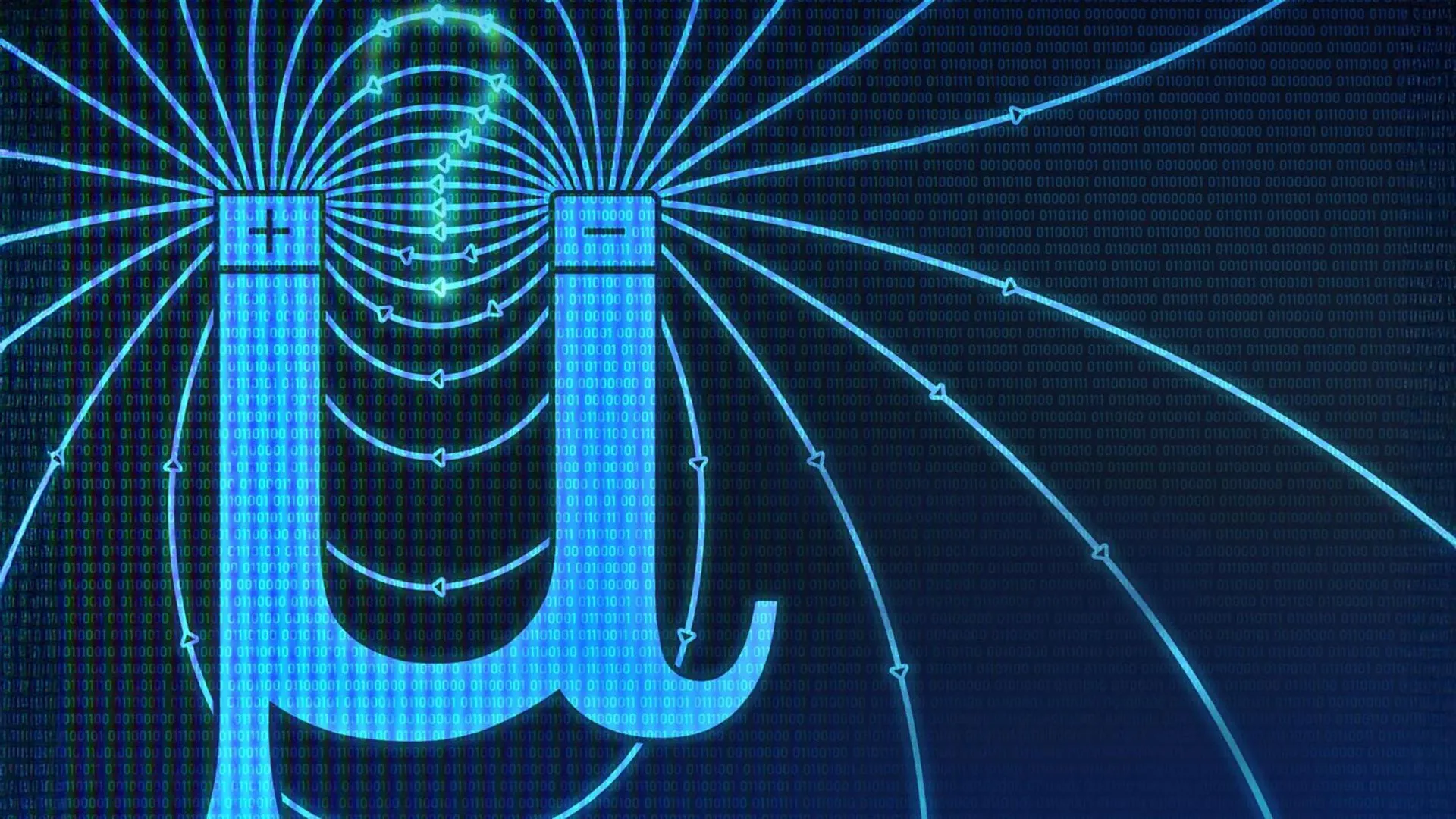
For decades, a puzzling discrepancy involving a tiny subatomic particle called the muon fueled speculation that physicists might be on the verge of discovering an entirely new force of nature. Now, an international research team led by a Penn State physicist says the mystery appears to have been solved, and the answer supports existing physics rather than overturning it.
The researchers published their findings in the journal Nature, describing one of the most precise particle physics calculations ever completed. Their work shows that the long debated mismatch between theory and experiment was likely caused by limitations in earlier calculations rather than evidence of unknown physics.
Decades of Hopes for "New Physics"
The mystery centered on the muon, a short lived particle that resembles an electron but is about 200 times heavier. For more than 60 years, measurements of the muon's magnetic behavior appeared to disagree with predictions made by the Standard Model, the framework scientists use to describe the universe's fundamental particles and forces.
That discrepancy excited physicists because it hinted at the possibility of undiscovered particles or even a new "fifth force" beyond the four known fundamental forces.
"There were many calculations in the last 60 years or so, and as they got more and more precise they all pointed toward a discrepancy and a new interaction that would upend known laws of physics," said Zoltan Fodor, distinguished professor of physics at Penn State and lead author of the study. "We applied a new method to calculate this discrepancy quantity, and we showed that it's not there. This new interaction we hoped for simply is not there. The old interactions can explain the value completely."
The team spent more than a decade refining the calculation. Their final result brought theoretical predictions and experimental measurements into agreement within less than half a standard deviation. According to Fodor, the new work confirms the Standard Model to 11 decimal places and significantly narrows the chances that unknown physics is hiding in this particular measurement.
"People ask me how it feels to make this discovery and, to be honest, I feel somewhat sad," Fodor said. "When we started to calculate this quantity, we thought we were going to have a good and trustworthy calculation for a new fifth force. Instead, we found there is no fifth force. We did find a very precise proof of not just the Standard Model, but also of quantum field theory, which is the foundation on which the Standard Model was built."
The Muon's Strange Magnetic Behavior
The research focused on a property known as the muon's magnetic moment, which describes how strongly the particle acts like a tiny magnet. Quantum theory predicts that the value should equal exactly two, representing the relationship between the particle's wobble and the magnetic field surrounding it.
In real experiments, however, the value shifts slightly because other particles briefly appear and disappear in empty space, subtly affecting the muon's behavior. This tiny deviation is known as the "anomalous magnetic moment," or g−2.
Because muons are much heavier than electrons, they are especially sensitive to these fleeting quantum effects. That sensitivity has made muon g−2 one of the most closely studied measurements in modern physics.
Experiments performed at CERN in the 1960s and 1970s, later at Brookhaven National Laboratory, and more recently at Fermi National Accelerator Laboratory all measured the muon's magnetic moment with remarkable precision. Those experiments recently earned the Breakthrough Prize in Fundamental Physics, one of the world's most prestigious science awards.
For years, the experimental measurements continued to appear inconsistent with Standard Model predictions, strengthening hopes that something entirely new might be influencing the muon.
Why the Strong Force Made the Problem So Difficult
The challenge in calculating the muon's behavior came largely from the strong force, the most powerful of the four known fundamental forces. The strong force binds quarks together inside protons, neutrons, and other particles.
Unlike gravity or electromagnetism, the strong force becomes stronger as particles move farther apart, similar to a rubber band stretching tighter the more it is pulled. Attempting to separate particles connected by the strong force requires so much energy that entirely new particles can form during the process. Those additional particles further complicate calculations.
Because of this extreme complexity, accurately predicting the muon's behavior within the Standard Model has remained one of the most difficult problems in particle physics.
Supercomputers and Lattice Quantum Chromodynamics
To tackle the problem, the researchers relied on lattice quantum chromodynamics, a computational technique that simulates the strong force using enormous supercomputers. The method divides space and time into an extremely fine grid, or lattice, allowing scientists to numerically solve the equations governing particle interactions.
"The old methodology involved collecting thousands of experimental results and reinterpreting them to get the single number, the magnetic moment of the muon," Fodor said. "Our approach was completely different. We divided space time into very small cells, a lattice, then we solved the equations of the Standard Model on that. There was an awful lot of theory, mathematics, programming, computational knowledge and computer architecture behind this calculation."
Over the past decade, lattice calculations have become increasingly powerful, but the precision needed for the muon g−2 calculation remained exceptionally difficult to achieve. The team therefore combined several approaches.
They used lattice calculations for short and medium distances between the cells while incorporating highly reliable experimental measurements for larger distances where existing data already agreed strongly. This hybrid strategy reduced uncertainty more effectively than relying on either method alone.
The researchers also simulated the equations using finer lattices than previous studies, further improving precision and reducing possible errors.
The final calculation represents the most accurate determination yet of the muon's magnetic moment. When incorporated into the full Standard Model prediction, the longstanding disagreement with experiments essentially disappears.
"The prediction combines electromagnetic, weak and strong forces, that each require vastly different theoretical tools, into a single calculation that's accurate to parts per billion," Fodor said. "It shows that we really do understand how nature works at an incredibly deep level."
What the Result Means for Physics
The findings do not completely rule out the possibility of undiscovered physics, according to the researchers. However, one of the strongest potential clues pointing beyond the Standard Model has now become far less convincing.
Future experiments may still uncover evidence of new particles or forces elsewhere, but for now, the Standard Model continues to withstand intense scrutiny.
"We didn't get the fifth force, but we did get a very nice and probably the best proof of quantum theory, which is the underlying theory of all our understanding of the most fundamental questions of nature," Fodor said.
The Penn State portion of the research was supported by the U.S. Department of Energy and the European Research Council.
Story Source:
Materials provided by Penn State. Note: Content may be edited for style and length.
Journal Reference:
- A. Boccaletti, Sz. Borsanyi, A. Cotellucci, M. Davier, Z. Fodor, F. Frech, A. Gérardin, D. Giusti, A. Yu. Kotov, L. Lellouch, Th. Lippert, A. Lupo, B. Malaescu, S. Mutzel, A. Portelli, A. Risch, M. Sjö, F. Stokes, K. K. Szabo, B. C. Toth, G. Wang, Z. Zhang. Hybrid calculation of hadronic vacuum polarization in muon g − 2 to 0.48%. Nature, 2026; 653 (8114): 373 DOI: 10.1038/s41586-026-10449-z
Cite This Page: